
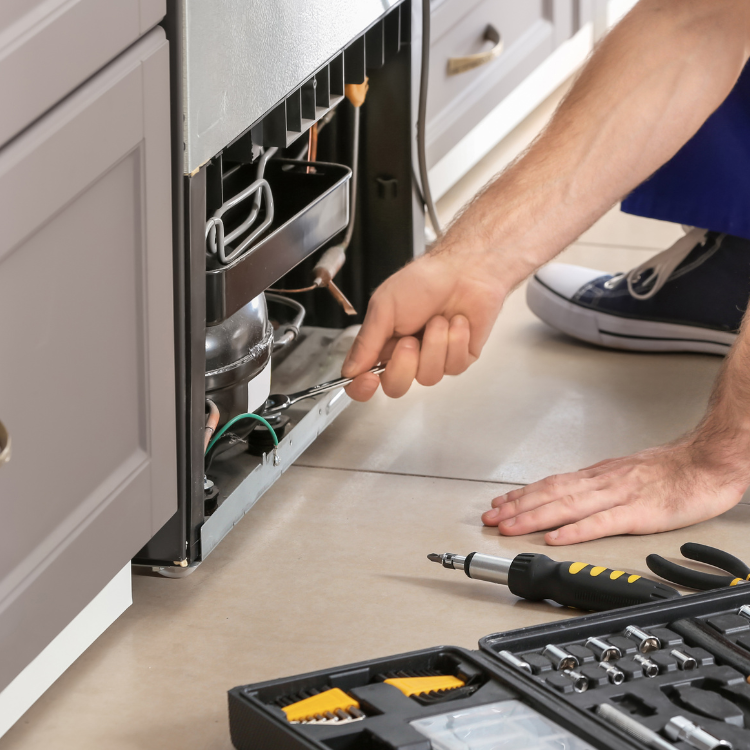
Across the commercial service industry, studies show that as many as 30–40% of repeat appliance breakdowns are traced back not to bad parts, but to poor quality control during the repair process. In restaurants, hotels, and healthcare facilities, that failure rate doesn’t just mean inconvenience; it can mean food safety violations, lost revenue, and damaged reputations. Quality assurance in commercial appliance repair is not a luxury add-on or a marketing buzzword. It is the system of checks, standards, and procedures that determines whether a repair truly restores reliability or simply delays the next failure.
For business owners in McKinney, TX, the difference between a “quick fix” and a quality-assured repair from a company like Texas True Appliance Repair can be the difference between a smooth Saturday dinner rush and a dining room full of frustrated customers. Commercial ovens, walk-in coolers, ice machines, and dishwashers work harder and under more demanding conditions than residential units. That heavy workload magnifies even small mistakes in diagnosis, installation, and calibration. Quality assurance is the discipline that keeps those mistakes from ever reaching your kitchen line, your break room, or your production floor.
At its core, quality assurance in commercial appliance repair is about predictability. It is the commitment to a consistent standard of work, from the moment the service call is taken to the final performance test after the repair. It includes everything from how technicians are trained, to which parts are chosen, to how results are documented. When handled correctly, it turns repair service from a reactive, emergency-only experience into a proactive partnership that keeps equipment stable, compliant, and efficient over the long term.
What Quality Assurance Really Means
Many companies use the phrase “quality service” without defining what that looks like in practice. In commercial appliance repair, quality assurance is a structured system, not a vague promise. It begins with documented procedures: step-by-step diagnostic processes, standardized testing methods, and clear acceptance criteria for what counts as a successful repair. For Texas True Appliance Repair in McKinney, that can mean following manufacturer-specific protocols for everything from refrigeration temperature verification to combustion analysis on gas appliances.
Another key element of true quality assurance is traceability. A reputable commercial repair provider maintains detailed records of each visit: model and serial numbers, error codes, parts installed, test results, and technician notes. This history is vital for spotting patterns, such as a recurring control board issue or power supply problem that may hint at a larger electrical or ventilation issue. Without this level of documentation, every visit is treated like a brand-new mystery, which wastes time and allows underlying problems to persist.
Quality assurance also includes defined performance benchmarks. It is not enough that a walk-in cooler “feels cold again” or that an oven “seems hot.” Technicians should verify that temperatures, pressures, and cycles fall within the manufacturer’s published specifications and relevant health or safety codes. This is particularly important in food service and healthcare facilities in McKinney, where inspections and audits are routine. A quality-assured repair ensures that your equipment is not just running, but running within safe and compliant parameters.
Finally, quality assurance incorporates accountability. When a repair is backed by a clear workmanship warranty and supported by a consistent service process, the business owner can trust that if an issue resurfaces, it will be addressed systematically, not brushed off as normal wear and tear. This culture of accountability is a central part of how Texas True Appliance Repair approaches commercial service relationships.
The Role Of Accurate Diagnosis
Every high-quality commercial repair starts with one essential step: getting the diagnosis right. Misdiagnosis is one of the most common and costly failures in the repair process. A technician who rushes to replace a compressor because the cooler is warm may miss a simple airflow restriction or control issue. The result is an expensive part replacement that doesn’t solve the problem and may even introduce new complications. Quality assurance directly targets this risk by enforcing systematic diagnostic procedures.
In a quality-focused operation, technicians in McKinney are trained to follow logical troubleshooting trees instead of guessing. They verify power supply, evaluate error codes, check sensors and switches, and test components under load. For example, in a commercial dishwasher that isn’t heating properly, a technician should confirm water temperature, cycle timing, element continuity, and relay function before deciding which component is truly at fault. This disciplined approach takes a bit more time upfront but dramatically reduces repeat callbacks and operational disruptions.
Modern commercial appliances often include onboard diagnostics, digital displays, and communication boards. Quality assurance means technicians know how to interpret these data correctly rather than simply resetting the unit and hoping for the best. Texas True Appliance Repair invests in ongoing training so technicians understand not just the “what” of an error code, but the “why” behind it, allowing them to identify root causes instead of treating symptoms. This depth of diagnosis is especially crucial in busy McKinney kitchens where hidden issues can escalate quickly under heavy use.
Accurate diagnosis is also about listening. A quality-assured technician takes time to interview kitchen staff, maintenance personnel, or managers about how and when the problem appears. Is the cooler struggling only during peak hours? Does the oven fail after long bake cycles? These operational details are vital clues. By combining technical testing with real-world usage information, a repair company can deliver repairs that align with how the equipment is actually used, not just how it was designed on paper.
Parts, Standards, And Long-Term Reliability
Even the best diagnosis can be undermined by poor parts choices. Quality assurance in commercial appliance repair extends to strict standards for parts sourcing and installation. Using off-brand or incompatible components to save a few dollars may work temporarily, but it can shorten equipment life, void warranties, and cause performance issues. In a high-volume McKinney restaurant or hotel, that short-term savings can quickly be overshadowed by downtime and lost business.
Texas True Appliance Repair follows manufacturer guidelines and industry best practices to select appropriate replacement parts. That often means using OEM (original equipment manufacturer) components or high-grade equivalents that meet or exceed the original specifications. Quality assurance protocols require technicians to verify compatibility by model and revision, not just by appearance. A relay or sensor that “looks the same” may have different ratings or behavior, leading to intermittent failures that are difficult to trace.
Proper installation is another critical piece. Compressors must be charged with the correct refrigerant type and quantity, electrical connections must be torqued and secured, and seals and gaskets must be seated correctly to maintain insulation and sanitation. In a commercial kitchen, where grease, moisture, and heat are constant factors, small installation shortcuts can rapidly degrade performance. Quality assurance includes checklists and post-installation inspections that confirm each step has been performed correctly and that no safety hazards have been introduced.
Long-term reliability is the ultimate test of parts and standards. A quality-assured repair is designed to hold up under real-world conditions: frequent door openings, rapid temperature changes, cleaning chemicals, and power fluctuations. By combining proper parts selection with meticulous installation practices, Texas True Appliance Repair helps McKinney businesses achieve longer intervals between failures, which translates into more predictable operations and lower total cost of ownership.
Testing, Verification, And Performance Checks
Once a repair is complete, quality assurance is not finished. Thorough testing and verification are essential to confirm that the equipment not only runs but performs to spec under realistic conditions. This step is where rushed service often falls short. A technician might replace a part, see the unit power on, and move to the next job, leaving the customer to discover incomplete or unstable performance later. A QA-focused approach avoids this by treating testing as a non-negotiable part of the job.
For refrigeration equipment in McKinney restaurants and convenience stores, verification means more than checking that the compressor runs. A quality-assured process includes monitoring temperature pull-down, verifying thermostat operation, checking defrost cycles, confirming door seals, and ensuring fans are moving air correctly across coils. The technician may allow the unit to run for a sufficient period to confirm that it can maintain setpoint, not just reach it momentarily.
For cooking equipment such as commercial ovens, ranges, and fryers, performance checks might include measuring actual temperatures with calibrated thermometers, confirming even heat distribution, and verifying that safety controls like high-limit thermostats and flame sensors respond correctly. In gas appliances, technicians may inspect combustion quality, venting, and gas pressure against specifications. These steps are particularly important in the context of fire safety and indoor air quality for McKinney businesses.
Documentation is the final piece of verification. Texas True Appliance Repair records key test results and communicates them to the customer. This transparency gives business owners confidence that their equipment has been evaluated thoroughly. It also creates a benchmark for future service visits, making it easier to detect gradual changes in performance that might signal developing issues.
Training, Certification, And Local Expertise
No quality assurance system can succeed without skilled technicians to carry it out. Commercial appliance repair is complex and constantly evolving as manufacturers add new technologies, controls, and efficiency features. Ongoing training and certification are therefore central to any serious QA program. In McKinney, TX, that means technicians must understand both the equipment itself and the local codes, utility conditions, and business environments in which that equipment operates.
Texas True Appliance Repair invests in regular training on major commercial brands, refrigerants, and safety standards. This includes understanding energy codes, EPA regulations around refrigerants, and food safety standards that impact how refrigeration and cooking equipment must perform. Technicians who are familiar with these frameworks are better equipped to make repairs that keep a business compliant, not just operational.
Local expertise also matters. McKinney’s climate, with hot summers and high cooling loads, puts particular stress on refrigeration and HVAC-related appliances. Voltage fluctuations or older building wiring in some commercial spaces can introduce unique challenges for sensitive electronics and control boards. A technician who knows the common local issues can anticipate problems and incorporate preventive measures into their repair strategy, such as recommending surge protection or improved ventilation.
Training in communication and customer service is another often-overlooked part of quality assurance. A technician who can clearly explain what failed, why it failed, and how to prevent future issues helps business owners make informed decisions about repair versus replacement, maintenance schedules, and equipment upgrades. This collaborative approach turns a one-time service call into an ongoing partnership focused on reliability and efficiency.
Preventive Maintenance And Proactive QA
While quality assurance is critical during a repair, it is equally important between repairs. Preventive maintenance is where QA becomes proactive rather than reactive. Instead of waiting for a cooler to fail or an oven to stop heating during peak hours, McKinney businesses can work with Texas True Appliance Repair to implement maintenance programs that catch issues early and keep equipment within optimal operating ranges.
Preventive maintenance visits often include cleaning coils, inspecting door gaskets, checking drain lines, verifying thermostat calibration, lubricating moving parts, and reviewing error logs. From a QA perspective, these visits are also an opportunity to identify patterns: a unit that consistently runs hotter than setpoint, a compressor that draws excessive amperage, or a dishwasher that shows repeated error codes. Addressing these early can prevent catastrophic failures and extend equipment life.
Quality assurance in preventive maintenance also involves standardized reporting. After each maintenance visit, detailed notes and recommendations are provided, allowing owners and managers in McKinney to plan budgets and schedule future work around less busy times. When done consistently, this documentation forms a clear history of each appliance’s condition, making it easier to justify replacement when repair costs or reliability concerns reach a tipping point.
For many commercial operations, integrating QA-driven maintenance into their operating plan reduces emergency calls, stabilizes operating costs, and supports better food safety and customer satisfaction. Instead of viewing service as a series of crises, businesses can treat it as an integral part of their quality control system, much like inventory management or staff training.
Frequently Asked Questions
How is quality assurance different from just doing a “good job” on a repair? Quality assurance is a structured system, not just a technician’s personal effort. It includes documented procedures, standardized testing, parts standards, training, and recordkeeping that apply to every job. A “good job” might depend on who shows up that day, but a QA program at Texas True Appliance Repair ensures that every commercial repair in McKinney follows the same high standard, regardless of which technician is on site.
Why does quality assurance matter so much for commercial appliances? Commercial appliances run longer hours, under heavier loads, and with higher safety and compliance stakes than residential units. A failed walk-in cooler can cause thousands of dollars in food loss and potential health violations, while a malfunctioning oven can shut down an entire kitchen. Quality assurance reduces the risk of repeat failures, ensures equipment meets code and manufacturer specs, and helps protect revenue and reputation for McKinney businesses.
Will a quality-assured repair cost more than a basic repair? The upfront cost may be similar or slightly higher, depending on parts and time spent on diagnostics and testing. However, quality-assured repairs almost always cost less over time. By using correct parts, accurate diagnosis, and thorough verification, Texas True Appliance Repair reduces callbacks, prevents premature failures, and extends equipment life. When you factor in avoided downtime, lost product, and emergency service calls, QA-focused repairs are typically the more economical choice for commercial operations.
How can I tell if my current service provider follows quality assurance practices? Look for signs such as detailed invoices and service reports, clear explanations of diagnostics and test results, use of OEM or high-quality parts, and a written warranty on workmanship. Ask whether technicians are trained on your specific brands and whether they check performance against manufacturer specifications, not just basic functionality. If your provider rarely documents their findings or seems to rely on trial-and-error part replacement, their QA process may be weak.
Does Texas True Appliance Repair offer proactive quality-focused maintenance plans? Yes. In addition to one-time repairs, Texas True Appliance Repair provides preventive maintenance services for commercial customers in McKinney, TX. These plans are built around quality assurance principles: scheduled inspections, standardized checklists, documented performance data, and clear recommendations. By combining proactive maintenance with high-quality repair practices, businesses can keep their critical appliances running reliably and reduce the risk of expensive, disruptive breakdowns. If you are considering a partner for Commercial Appliance Repair, choosing a company that embeds QA into every step of service is one of the most effective ways to protect your operation.