
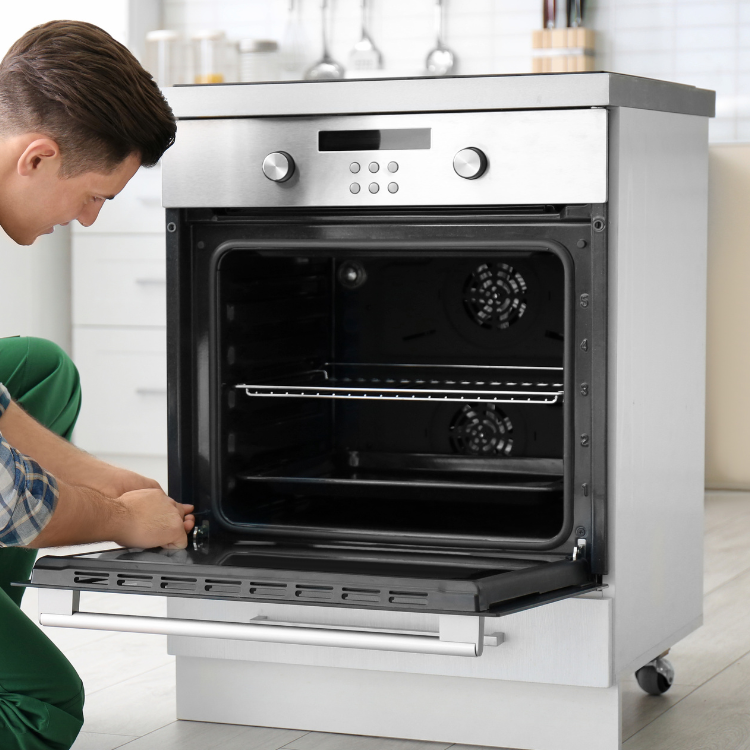
If your oven in McKinney, TX is turning on but not getting hot, the cause is often something you can narrow down quickly. This guide walks you through safe checks for common heating failures, what symptoms usually point to, and when to call a local appliance repair technician from Texas True Appliance Repair.
Last night, you set the oven to bake and waited for that steady preheat glow. This morning, the display still comes on, the fan may run, or the light might work, but the temperature never really climbs. By dinner time, you are stuck with undercooked food and a kitchen that feels “almost” functional.
Before you schedule service, it helps to know what to check first and what symptoms typically mean. Below, you will find practical troubleshooting steps, a few safety notes, and a short decision table to help you describe the problem accurately.
Quick Answer
If your oven won’t heat, start with the simplest causes: confirm the correct mode (bake vs. broil), verify the temperature setting, and check for error codes. Then listen for signs of heating such as a steady relay click or the glow of an element (for electric ovens). If the oven runs but never warms, the issue is commonly tied to the bake system (heating element, igniter, or related control). Texas True Appliance Repair can diagnose the failing component and get your oven working again.
What to Check First
These steps are meant to be quick, safe, and useful for deciding whether you can keep testing or you should call for professional oven repair services.
1) Confirm the mode
Many “won’t heat” complaints come from selecting broil when you meant bake, or vice versa. Double-check the control panel and make sure you are not in a cleaning cycle.
2) Look for error codes
If the oven has a display, note any codes or blinking indicators. Even a simple “temp error” helps narrow the cause.
3) Test the preheat behavior
Observe what happens during preheat. Does it turn on but stay cold? Does the fan run without heat? Does the oven shut off early?
Safety first: Unplug the oven or switch off power at the breaker before removing panels or touching wiring. If you are unsure, stop and let a professional handle the electrical checks.
Practical tip: Write down what you see and hear. For example: “display works, light works, no heat, fan runs” is more helpful than “it does not heat.” That description speeds up diagnosis.
Main Things Customers Should Understand
Oven problems usually fall into a few categories. The symptom pattern matters because it can point to the bake system, the temperature sensing, or the control that manages heat cycles.
| What you notice | Most likely area | What a technician will typically check |
|---|---|---|
| Oven display turns on, but it never warms up | Bake heating circuit or related control | Bake element or igniter performance, power delivery, and heat management components |
| Oven light and fan work, but no temperature rise | Heating system not engaging | Signals that trigger heating, heating element/igniter function, and temperature sensing |
| Oven heats briefly, then stops | Thermal control or temperature sensing issue | Temperature readings, overheating protection behavior, and cycling logic |
| Broil works, but bake does not | Bake-specific component | Bake element/igniter and bake-side wiring or controls |
| Only one rack position works well | Uneven heating or element issue | Element condition and heat distribution behavior |
Professional observation: In real homes around McKinney, TX, “the oven turns on but does not heat” often comes down to a bake-side failure. That can be as simple as a component that no longer responds correctly during the heat cycle, or as complex as a control board issue that prevents stable temperature regulation.
Where matching symptoms helps you decide
If you can identify whether bake is the problem while broil works, that is a strong clue. If everything looks normal on the panel but the oven never reaches temperature, it is usually not a user settings issue. At that point, professional appliance repair services are the most reliable route because the fix may require component-level testing.
Related repairs you may also notice
If your kitchen appliance issues are growing, you may already be seeing patterns across the suite. For example, many households need help with other built-in or freestanding appliances. Texas True Appliance Repair also handles oven and range repair and can help with microwave repair if you are troubleshooting multiple cooking appliances at once.
Why This Matters in McKinney, TX
In McKinney, TX, ovens get used year-round for family meals, holiday hosting, and quick weeknight cooking. When the oven will not heat properly, it can disrupt your whole routine, not just one dish. Also, many homes in the area have older electrical setups or appliances that have been powered through multiple seasons. That matters because heat-related failures often show up under repeated use, and a small problem can become a bigger one if you keep running the oven without heating.
Texas True Appliance Repair serves McKinney and nearby areas including Allen, Frisco, Plano, and Prosper, so you can get local appliance repair help without guessing at the cause.
Need oven repair services in McKinney?
Describe what your oven does during preheat and whether bake or broil works. Texas True Appliance Repair can help pinpoint the failing heating or temperature system.
Contact Texas True Appliance RepairCommon Mistakes to Avoid
These are the mistakes that commonly waste time, increase wear on parts, or create safety risk.
- Repeatedly running a “cold” oven: If the oven never warms, continuing to run it can put extra stress on heating components and controls.
- Ignoring mode and temperature settings: A wrong mode (like broil instead of bake) can look like a heating failure.
- Skipping error-code notes: Screens that blink or display codes can guide diagnosis. If you do not note them, you lose useful information.
- Touching internal wiring without power off: Oven repairs can involve electrical parts. If you cannot safely access components, stop and call a professional.
- Assuming all “no heat” issues are the same: Bake-only failure, fan-only behavior, and brief heat cycles typically point to different parts of the heating system.
Customer Checklist
- Confirm the oven is set to bake (not broil) and the temperature is reasonable (for example, 350°F).
- Check for any error codes or unusual blinking indicators during preheat.
- Note what works: display, clock, oven light, fan, and any sounds during preheat.
- Observe whether the oven ever gets warm, even slightly, within 10 to 15 minutes.
- Write down whether broil works while bake does not.
- Take a quick photo of the control panel settings (helpful when explaining the issue).
- If you need to open panels, ensure power is off before touching anything inside.
Representative Scenario (Anonymized)
A Plano, TX homeowner reported that the oven light came on and the fan ran, but the oven never reached cooking temperature. Bake and broil settings were tested: broil produced heat while bake stayed cold. After confirming the settings and noting that there were no obvious control errors, the likely cause centered on the bake heating system rather than the general power supply. A technician from Texas True Appliance Repair then tested the bake-side components and corrected the part that was failing to deliver consistent heat during the bake cycle.
Comparison: DIY troubleshooting vs. professional oven repair
| Approach | Best for | Limitations |
|---|---|---|
| Basic checks (settings, mode, error codes) | Simple user issues, code-driven problems, quick symptom identification | Cannot confirm component-level failures like bake heating or temperature sensing |
| Component replacement attempts | When you are confident about the failing part and can test safely | High risk of misdiagnosis and safety concerns around electrical access |
| Professional appliance repair technician diagnosis | When the oven runs but never heats, heats briefly then stops, or fails bake-only | Requires scheduling and service time, but targets the actual root cause |
Frequently Asked Questions
Why does my oven turn on but not heat?
When the display, light, or fan works but the oven never warms, it usually points to a problem in the bake heating system or the components that manage heat cycling. For example, the heating element or igniter may not be engaging properly, or the oven may not be receiving the correct signals to start and maintain temperature. Temperature sensing issues can also create symptoms that feel like “no heat” because the oven may stop heating when readings do not match the set point.
How can I tell if it is the bake system or something else?
A simple way to narrow it down is to test whether broil works while bake does not. If broil produces heat but bake stays cold, that strongly suggests a bake-side failure rather than a general power issue. Also note whether the oven heats briefly and then stops, since that can indicate temperature control behavior rather than a complete power loss. Writing down what works and what does not helps a technician diagnose faster.
Is it safe to keep using an oven that won’t heat?
It is not a good idea to keep running the oven if it never warms. Even if the panel and fan appear normal, a heating failure can prevent the oven from reaching safe cooking temperatures. Repeated attempts can also increase wear on heating components and controls. If you have already confirmed the correct mode and settings and the oven still will not heat, it is best to stop using it and get professional oven repair services.
What information should I have ready when I call for service?
Have the following ready: what the oven does during preheat (display, light, fan), whether you see any error codes, whether bake or broil works, and how long you waited before noticing it never warms. If you can, note whether it ever gets warm even slightly. This information helps a professional appliance repair technician focus on the correct heating or temperature components during diagnosis.
Can Texas True Appliance Repair help with other kitchen appliances too?
Yes. If you are troubleshooting multiple appliances in your kitchen, Texas True Appliance Repair can assist with other common failures like dishwasher repair services or refrigerator repair services. Keeping everything working properly can reduce repeat disruptions, especially during busy weeks when you rely on multiple appliances for meals and cleanup.
Get help from Texas True Appliance Repair
When your oven won’t heat, accurate diagnosis makes the difference between guessing and fixing the right component. Texas True Appliance Repair serves McKinney, TX and surrounding areas, and can help you get back to reliable baking and cooking.
(469) 596-1814