
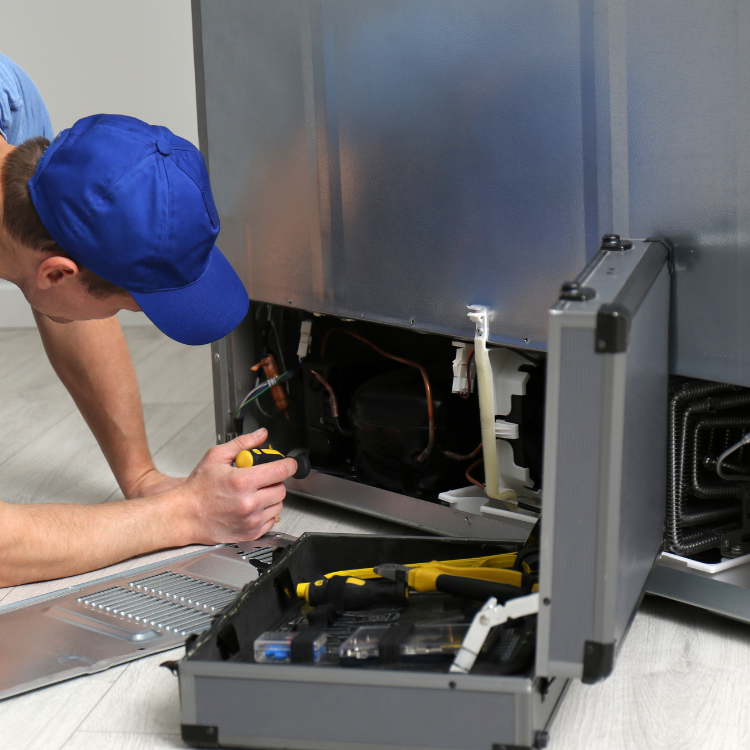
Ice Machine Repair for Businesses
When your ice machine stops making ice, service slows down fast, and staff end up improvising. This guide helps you understand what to check first, what common failures look like, and when to involve a professional appliance repair technician for commercial kitchen equipment repair in McKinney, TX and the surrounding North Texas area.
It starts with a simple complaint: “We are not getting enough ice for lunch rush.” By the time you notice it is not consistent, your team is already running short on drinks, food prep, and customer orders.
In McKinney, TX, many restaurants, break rooms, and small commercial facilities rely on steady ice production during warm months. When the machine loses performance, the problem can be more than “just a dirty unit.”
This guide explains the most common causes behind poor ice output and what you can safely check before calling in commercial appliance repair services. You will also see a practical decision table to help you choose the right next step.
Quick Answer
If your commercial ice machine is not producing ice, start with simple, safe checks: confirm power is on, review the water supply and drain conditions, and look for obvious blockages or buildup around the unit. If ice production is slow, cubes look off, or the machine cycles repeatedly, the issue is often tied to components that need professional diagnosis. Texas True Appliance Repair can help with commercial appliance repair services, including ice machine repair for businesses, and coordinate the next steps based on what the unit is doing. For appliance repair services tailored to your setup, contact Texas True Appliance Repair.
What to Check First
Before you schedule local appliance repair company service, you can narrow down the problem and reduce downtime. These checks are meant to be practical and low-risk for a business owner or manager.
1) Confirm basic operation
Verify the unit is powered, not in a paused mode, and that any indicator lights reflect normal operation. If the machine is “on” but not producing, that points to a functional fault rather than a simple shutoff.
2) Check water and drainage
Ice machines depend on water flow and proper drainage. If water is restricted or draining poorly, production can slow or stop. Look for obvious kinks, clogs, or blocked lines near the unit.
3) Inspect the area around the unit
Make sure the machine has clear clearance around it and that vents or intake areas are not obstructed. In busy commercial kitchens, paper, boxes, or cleaning residue can reduce airflow.
Main Things Customers Should Understand
Ice machines are designed for continuous use, but they still rely on a few key systems. When one system fails, it can affect cube formation, batch timing, and overall output.
- Water quality and scale buildup: Mineral deposits can interfere with components involved in freezing and melting cycles, leading to weak cubes or slow production.
- Mechanical and control components: If the unit cycles without completing a freeze cycle or repeatedly restarts, the underlying issue may involve parts that require professional appliance repair technician diagnostics.
- Airflow and environmental conditions: Poor airflow around the machine can reduce performance. This is especially relevant in commercial areas where equipment is packed tightly.
- Commercial kitchen equipment repair compatibility: A business ice machine is not the same as a household unit. The repair approach needs to match the equipment type and usage pattern.
Professional observation: In day-to-day commercial kitchen equipment repair, the “symptoms” often show up as one of three patterns: not producing at all, producing slowly, or producing ice that looks irregular. Those patterns help narrow down whether the problem is tied more to water flow, freezing performance, or control behavior.
Decision table: repair vs. other next steps
| What you observe | Most likely issue area | Practical next step |
|---|---|---|
| No ice production, but the unit seems powered | Control behavior, water delivery, or freezing cycle components | Schedule commercial appliance repair services to diagnose the root cause and restore consistent production. |
| Slow production or “short” batches | Restricted water flow, buildup affecting performance, or cycling issues | Have a professional technician inspect the system and verify water flow and cycle behavior. |
| Ice looks unusual (odd shape, inconsistent size) | Freezing performance and related component conditions | Request a professional inspection of the freezing process so you do not keep running the unit with reduced output. |
| Machine repeatedly restarts or stops mid-cycle | System faults that interrupt operation | Pause further operation and book service to prevent extended downtime and additional strain on components. |
Why This Matters in McKinney, TX
In McKinney, TX, many businesses plan around steady service during busier stretches, including warmer periods when guests expect cold drinks and kitchens depend on reliable prep. If an ice machine underperforms, it can affect not only beverages, but also food handling workflows.
Texas True Appliance Repair serves McKinney and nearby areas such as Allen, Frisco, Plano, Prosper, Richardson, and Little Elm. Having local appliance repair services that understand commercial kitchen equipment repair needs can reduce guesswork when your equipment is already disrupting the day.
Get a practical diagnosis for your ice machine
If you are seeing low output, irregular ice, or repeated cycling, Texas True Appliance Repair can help you move from troubleshooting to a clear repair plan for commercial appliance repair services.
Contact Texas True Appliance RepairCommon Mistakes to Avoid
When a commercial ice machine fails, it is tempting to keep it running until the next scheduled maintenance window. That can cost you more downtime than necessary.
- Assuming it is “just dirty” and skipping diagnostics: Buildup can contribute to poor performance, but repeated cycling or no production often involves other components.
- Ignoring water supply and drainage conditions: Even if the machine is otherwise fine, restricted water flow or draining issues can prevent consistent ice formation.
- Restarting the machine repeatedly: If the unit is stopping mid-cycle, frequent restarts can prolong downtime and complicate diagnosis.
- Using the wrong troubleshooting approach for commercial equipment: Commercial models are built for continuous use. A residential mindset can miss key causes.
Customer Checklist
- Note when the problem started and whether output is stopping completely or just slowing down.
- Confirm power is on and check any machine status indicators.
- Verify water supply lines and check for obvious blockages or kinks near the unit.
- Check that drainage is not obstructed around the machine area.
- Inspect airflow clearance around the unit and remove any nearby obstructions.
- List any changes since last week, such as cleaning methods, filter changes, or equipment moved within the space.
- Decide whether you can pause production to prevent repeated cycling while waiting for service.
Representative scenario (anonymized)
A restaurant in McKinney reported that their ice machine stopped producing full batches during the middle of the day. The staff confirmed the unit had power, but they saw inconsistent cycles and irregular cube results. Instead of continuing to restart the machine, the manager gathered basic observations about water flow and the machine’s behavior, then scheduled commercial appliance repair services with Texas True Appliance Repair. The repair process focused on restoring consistent production by addressing the underlying system behavior rather than only the visible symptoms.
Related services that may help
If your commercial kitchen equipment also has issues, these common repair needs often come up alongside ice machine problems:
- Commercial appliance repair services for business equipment
- Refrigerator repair services when cooling performance affects food safety
- Dishwasher repair services for kitchens that need steady wash cycles
- Garbage disposal repair when prep cleanup starts to slow down
Practical recommendation: When ice production changes suddenly, treat it like a system problem. Gather a few details from your staff (start time, whether it stops mid-cycle, and whether cubes look irregular), then schedule professional diagnosis. That approach usually helps you avoid repeated downtime and keeps your kitchen running smoothly.
Frequently Asked Questions
Why does my commercial ice machine make less ice than usual?
Reduced ice output is commonly tied to water delivery, cycle behavior, or performance changes caused by buildup. If the machine runs but produces slowly, check for obvious water flow restrictions and confirm the unit is operating normally. If production is inconsistent or the unit stops mid-cycle, it often indicates a component-level issue that needs professional appliance repair technician evaluation. Texas True Appliance Repair can help identify what is affecting the freeze cycle and restore consistent production for your business.
Can I troubleshoot an ice machine myself without making it worse?
You can do a few safe, basic checks, such as confirming power and reading the machine’s status indicators, verifying water supply connections for obvious obstructions, and checking that the area has clearance for airflow. Avoid repeatedly restarting a unit that seems to stop mid-cycle, and do not guess at internal component changes. If you notice repeated cycling, irregular ice formation, or complete loss of production, scheduling commercial appliance repair services is the more reliable next step.
What should I tell the technician when I call about ice machine repair?
Share what you observed and when it started. Helpful details include whether the machine produces zero ice or just less than normal, whether it stops mid-cycle, and whether the ice looks irregular. Also mention any recent changes in the business, such as cleaning activities, filter changes, or adjustments to the equipment area. This information helps a professional diagnose the cause faster and choose the right repair approach for ice machine repair for businesses.
Do I need commercial kitchen equipment repair for an ice machine, or can a general appliance repair technician handle it?
A general technician can sometimes handle repairs, but commercial equipment requires a process that fits how the unit runs in a business setting. Ice machines in restaurants and break rooms often operate on tight schedules and depend on consistent performance. Texas True Appliance Repair focuses on appliance repair services for residential needs and commercial repairs. For commercial kitchen equipment repair, it is smart to use a local appliance repair company that understands how commercial systems behave and what “normal” production should look like for your operation.
What other appliances might be affected if our kitchen is having equipment issues?
When a commercial kitchen starts having equipment downtime, multiple appliances can be affected over time. Many businesses also need refrigerator repair services if cooling performance changes, dishwasher repair services to keep wash cycles running, and oven repair services if cooking workflows slow down. If cleanup is impacted, garbage disposal repair can restore reliable prep cleanup. If you are already dealing with ice machine problems, consider checking other key appliances to reduce total downtime across your kitchen.
Schedule ice machine repair for your business
When your ice machine is disrupting service, Texas True Appliance Repair helps you get back to consistent production with professional appliance repair technician support across McKinney and nearby areas.
(469) 596-1814