
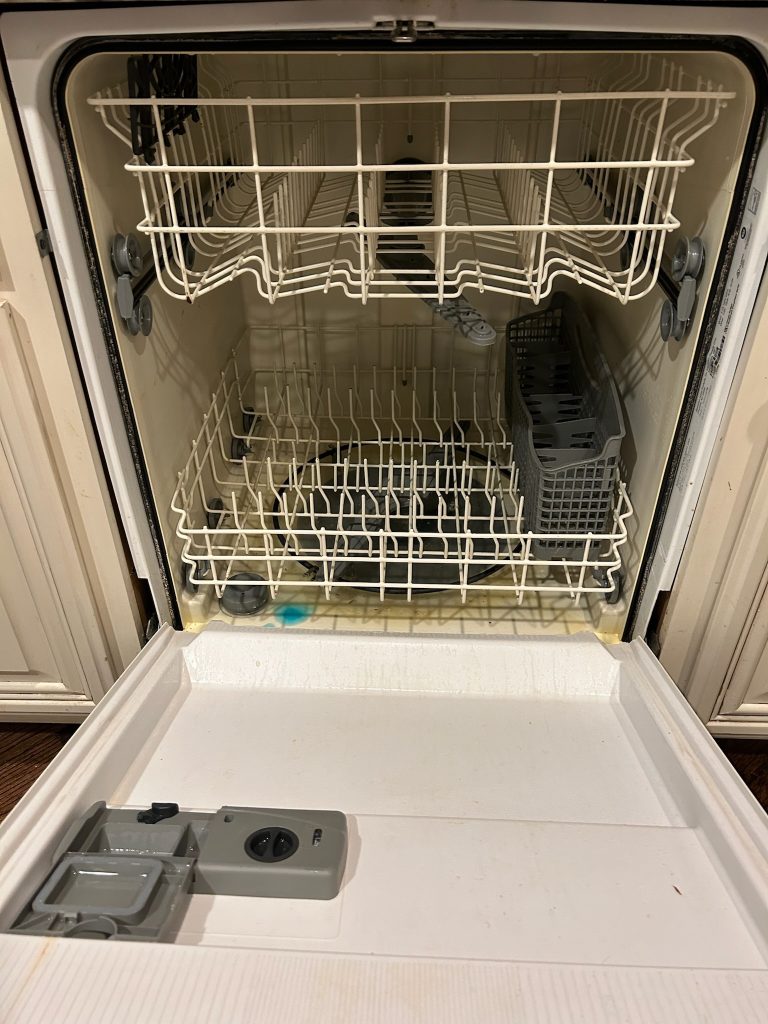
Detergent Clogs and Spray Arm Alignment
If your dishwasher leaves spots, won’t fully dissolve detergent, or sprays water in the wrong places, the culprit is often a detergent clog or a spray arm that is not lining up correctly. This guide walks you through the checks that make the biggest difference and explains when it is time to call a professional in McKinney, TX.
Last week, a homeowner in McKinney set a normal wash cycle, added detergent like always, and waited for clean dishes. Instead, the bottom of the tub had residue and the detergent pod looked partially intact. The cups were still streaky, and some areas barely got water spray.
That combination usually points to either a detergent clog that prevents proper flow or a spray arm alignment issue that blocks water coverage. Below, you will learn what to check first, the most common failure points, and how to decide whether a simple cleaning will fix it or whether you need professional dishwasher repair services.
Quick Answer
If detergent is not dissolving or dishes are coming out streaky, start by checking the detergent dispenser area, the filter, and the spray arms for blockage or misalignment. Rinse out any visible debris, confirm the spray arms spin freely, and make sure they are seated correctly. If the problem returns quickly or you notice persistent clogging, a technician can inspect internal channels and components that are difficult to access safely. For most households, a careful cleaning plus a correct reassembly solves detergent clog and spray coverage problems. If not, schedule professional dishwasher repair services from Texas True Appliance Repair in McKinney, TX.
What to Check First
Before you replace anything, focus on the two systems that control cleaning: where detergent dissolves and how water reaches every rack.
1) Detergent dispenser and residue
Look for leftover powder, sticky residue, or a pod that never fully opened. If the dispenser door is stuck or blocked, the wash cycle cannot release detergent at the right moment.
2) Filter and drain area
A partially clogged filter can cause poor circulation, which can leave detergent behind and reduce spray force.
3) Spray arm alignment
Spray arms must sit squarely and spin without scraping. If an arm is off by even a little, water coverage can become uneven.
One practical rule: if you find residue, do not just wipe the dishes. Check the dispenser area and the filter first, because that is where clogs tend to start.
Professional observation: Many “detergent problems” are actually circulation problems. When water cannot move through the system properly, detergent dissolves poorly and dishes look under-clean even if the soap you used is fine.
Main Things Customers Should Understand
Detergent clogs and spray arm alignment issues usually show up in patterns. If you know what pattern you are seeing, you can avoid guesswork.
Detergent clogs: what they look like
Detergent clogs commonly cause one or more of these symptoms:
- Detergent not fully dissolved (powder stays visible or pods look intact).
- Streaks and film on glasses and flatware.
- Residue in the dispenser area that persists across multiple cycles.
- Water that seems weak compared to how the dishwasher used to clean.
Spray arm alignment: what goes wrong
Spray arms can become misaligned after routine rack loading, impact, or improper reassembly after cleaning. Alignment problems often show up as:
- Uneven cleaning (some areas look clean while others are missed).
- Spray that does not reach the back of the racks or corners of the tub.
- Grinding or scraping during cycle start-up.
A quick decision table: clog vs. alignment
| What you notice | More likely cause | Best next step |
|---|---|---|
| Pod still intact or powder visible after cycle | Detergent release path blocked or poor circulation | Inspect dispenser area and filter, then re-run a short cycle |
| Dishes look under-clean mostly in certain zones | Spray arm alignment or blocked spray holes | Confirm arms are seated and spin freely |
| Filter area has debris and water drains slowly | Partial clog affecting flow | Clean filter and check drain path for obstruction |
| New cleaning results improve briefly, then return | Hidden internal buildup or recurring circulation restriction | Schedule a professional inspection of internal components |
If you suspect the issue is tied to another appliance in your kitchen, it can help to compare how water and waste systems are behaving. For example, a clogged garbage disposal can affect kitchen drainage behavior and overall plumbing flow patterns.
Why This Matters in McKinney, TX
In McKinney, TX, many homes rely on older plumbing runs and established kitchen habits like running full loads with heavy food residue. Over time, that can increase the chance of detergent buildup and residue that blocks small flow paths. If your household uses hard-to-rinse sauces or frequently loads cookware with stuck-on particles, your dishwasher has to work harder to distribute detergent and keep the spray arms clear.
Texas True Appliance Repair focuses on practical fixes that restore proper wash coverage and detergent release, whether you are in McKinney or nearby places like Allen, Plano, Frisco, Prosper, and Richardson.
Need help diagnosing detergent clogs or spray arm alignment?
Texas True Appliance Repair can inspect the parts that are hard to check safely on your own and help you get consistent cleaning results.
(469) 596-1814Common Mistakes to Avoid
These are the missteps that keep dishwasher problems coming back.
Common mistake to avoid: Skipping the filter and focusing only on the dishes. If the filter or circulation path is restricted, you can clean the detergent tray and still see detergent residue after every cycle.
- Overloading the racks: Too many items can block water spray and interfere with spray arm rotation.
- Reassembling spray arms incorrectly: If the arm is not seated the right way, it may run but still miss key areas of the tub.
- Assuming the detergent brand is wrong: Detergent choice matters, but frequent undissolved detergent often points to a clog or release-path issue.
- Scraping instead of rinsing: Scrape off large debris, but avoid packing leftover food into corners where it can circulate and build up.
- Ignoring repeated symptoms: If you see the same residue pattern after cleaning, it is a sign the restriction may be deeper than surface buildup.
Customer Checklist
- Turn off the dishwasher and let it cool before checking the dispenser and interior.
- Check the detergent dispenser for stuck residue and confirm the door opens freely.
- Inspect and clean the filter and remove visible debris from the filter area.
- Remove spray arms and confirm they spin freely after reinstallation.
- Verify spray arms are seated correctly and not rubbing against racks.
- Run a short cycle with an empty tub once the parts are reassembled correctly.
- If residue returns quickly or spray coverage remains uneven, schedule professional inspection.
Representative Scenario
A customer in McKinney, TX reported that every few loads, detergent pods would come out partially intact and glasses would have a dull film. They cleaned the visible areas and wiped the tub, but the issue repeated. During inspection, Texas True Appliance Repair found that debris around the wash circulation path was limiting how effectively detergent dissolved and how consistently water reached the rear of the racks. After clearing the restriction and confirming spray arm seating, the dishwasher returned to more even spray coverage and consistent detergent release.
If you have other appliances sharing the same kitchen workload, you may also want to check related service pages like refrigerator repair services for cooling or odor issues, or washer repair if you are seeing buildup in multiple areas of the home.
Frequently Asked Questions
Why does my dishwasher detergent pod come out partly intact?
When a pod comes out partially intact, it usually means the detergent did not dissolve or release properly during the cycle. The most common causes are a detergent dispenser area that is blocked by residue, restricted water circulation, or a spray arm issue that reduces cleaning water flow. Start by checking the dispenser for stuck buildup and cleaning the filter. If it keeps happening after you clean those areas, the restriction may be deeper inside the system and may require professional inspection.
How can I tell if the problem is detergent clogging versus spray arm alignment?
Detergent clogging often shows up as visible detergent residue after the cycle and streaky film on dishes. Spray arm alignment issues typically cause uneven cleaning, where certain zones of the racks are missed even though the detergent may release normally. A helpful check is to clean the filter, confirm the dispenser door opens freely, and then remove and re-seat the spray arms to ensure they spin without scraping. If the same pattern returns quickly, it points to an underlying restriction.
What should I inspect before calling for dishwasher repair services?
Focus on three areas: the detergent dispenser and its door movement, the filter and debris around it, and the spray arms for correct seating and smooth rotation. If you find heavy residue in the dispenser area or debris in the filter, that is a strong indicator of a flow or release-path issue. After reassembly, run a short cycle with the tub empty to confirm the system is distributing water correctly. If detergent residue and uneven spray persist, Texas True Appliance Repair can inspect internal components.
Can I fix detergent clogs by simply running more hot water?
Running hotter or extra cycles may help temporarily, but it does not address the root cause if detergent cannot reach the right flow path or if debris is restricting circulation. If detergent is not dissolving, the dispenser area may be blocked, or water coverage may be inconsistent due to spray arm misalignment or blocked spray holes. A proper filter and dispenser check tends to be more effective than repeated cycles, because it targets where the restriction usually starts.
What if my dishwasher cleans fine sometimes but not every cycle?
Intermittent performance often suggests buildup that reappears under certain load conditions, such as heavier soil loads, frequent residue on plates, or partial blockages that shift with water flow. It can also happen when spray arms are close to correct alignment but not fully seated, causing coverage gaps only in certain positions. Since you are seeing a pattern, cleaning the filter and verifying spray arm seating are the best first steps. If the issue returns quickly, a technician can check internal channels.
Get your dishwasher back to consistent cleaning
If detergent residue keeps coming back or spray coverage looks uneven, Texas True Appliance Repair in McKinney, TX can help you troubleshoot the root cause and restore proper wash performance.
Dishwasher repair services