
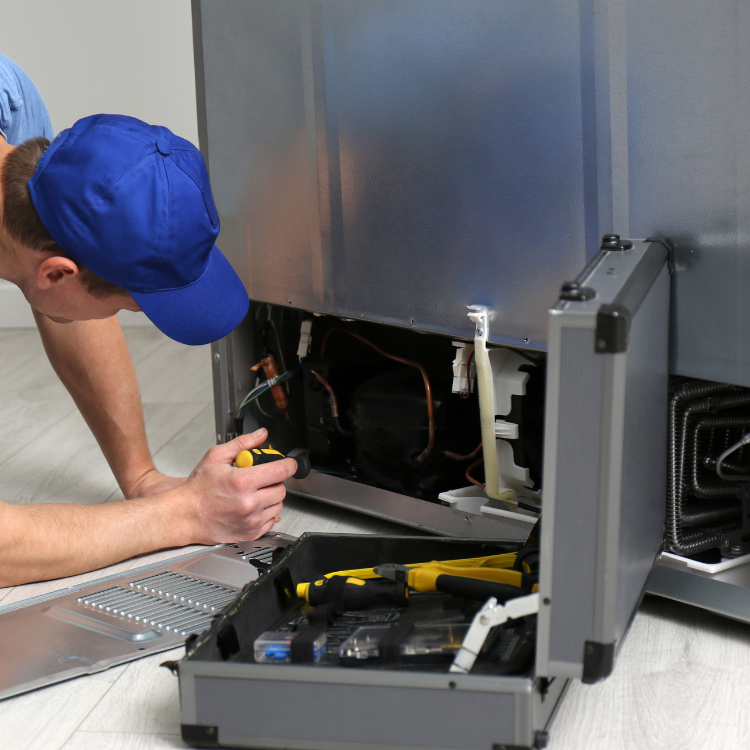
How Much Appliance Repair Costs and What Affects It
If your refrigerator, dishwasher, washer, or oven starts acting up, the first question is usually the same: what will it cost to fix? This guide breaks down the common cost drivers so you can make a practical decision in McKinney and surrounding North Texas communities.
Last week, everything seemed fine, and then your dishwasher stopped mid-cycle or your fridge started warming up. You might be thinking about whether to keep using it, wait for “later,” or call for help right away, especially if you have a household routine or a business to run.
Even when you know the appliance is broken, the cost is not always obvious because diagnosis, parts, and labor complexity vary. This guide helps you understand what typically affects appliance repair services costs, what to check before you call, and how to plan for a repair decision in McKinney, TX.
- Quick answer
- What to check first
- Main things customers should understand
- Why this matters in McKinney, TX
- Common mistakes to avoid
- Customer checklist
- Frequently asked questions
Quick Answer
Appliance repair costs usually depend on what failed, how hard it is to access, and whether the fix requires specific parts. The most affordable outcomes often come from catching the issue early, providing clear symptoms (what it does and when it started), and letting a professional diagnose the problem instead of guessing. For many common appliance problems, you can reduce surprises by checking basic power, water, and error codes first, then requesting a clear explanation of the cause and the repair plan. If you’re deciding between options, ask what part is involved and why it needs replacement.
What to Check First
Before you call, do a short, safe check that can prevent unnecessary troubleshooting. Start with what you can verify without tools: power source, breaker status, and any visible signs of leaks or blockages. If your appliance shows an error code, write it down exactly as displayed. For dishwashers and washers, confirm water supply is on and that hoses are not kinked. For refrigerators, check whether the temperature issue is isolated or if the whole unit is affected.
Power and controls
Confirm the unit turns on normally, check the breaker, and note any blinking lights or error codes.
Water and draining
For washers and dishwashers, look for kinks, leaks, or standing water that suggests a drain issue.
Blockages and airflow
For fridges, ensure vents are not blocked and that the problem is not caused by an intake or fan obstruction.
Main Things Customers Should Understand
When customers ask about cost, they’re really asking how the repair estimate is built. In practice, the biggest variables are diagnosis time, the specific component involved, parts availability, and how much disassembly is needed to reach the failed part. A small mechanical issue can be straightforward, while a control board or sealed-system component typically takes more time and careful handling.
Professional observation: The “same symptom” can come from different causes. For example, a fridge that is not cooling can involve airflow issues, a fan problem, or another component, and the right repair depends on what the technician finds during diagnosis.
1) The failed part and whether it’s specialized
Some repairs involve common wear items, while others involve specialized electronics or components that are harder to replace. If the appliance needs a specific part for your model, cost can rise due to part pricing and fitting requirements. If you have an older unit, the parts used to restore it may also be more model-specific.
2) Labor complexity and access
Two appliances with similar symptoms may cost differently because of how the repair is accessed. If the failed component sits behind multiple panels, requires careful removal, or must be aligned after installation, labor time increases. This is especially common with built-in or tightly installed kitchen appliances.
3) How much testing is required
Good diagnosis is not just about replacing parts. Technicians often run tests to confirm the root cause, then retest after repairs to ensure the appliance works as intended. That testing step is a key reason professional appliance repair technician work can be worth it, even when the end result is a single replacement part.
4) Residential vs. commercial usage
Commercial kitchen equipment repair often involves different operating patterns, heavier usage, and uptime priorities. That can change the scope of troubleshooting and the care required around safety and operational continuity. If the appliance is supporting a restaurant or other business, the repair decision is frequently tied to keeping service running.
5) What you can share during intake
Costs are easier to control when the technician starts with accurate information. Describe what changed (for example, not draining, unusual noises, inconsistent heating, or temperature swings), how long it has been happening, and whether anything happened beforehand such as a power surge, a recent move, or a water supply interruption.
Practical recommendation: If you can, stop operating the appliance when you notice a clear safety concern such as repeated burning smells, active leaks, or signs of electrical damage. Continuing to run a failing unit can worsen the problem and increase repair complexity.
| Cost driver | What it means in real life | How to reduce uncertainty |
|---|---|---|
| Diagnosis time | Extra testing to confirm the true cause of the symptom. | Provide error codes, dates, and what the appliance was doing when it started. |
| Part type | Common components vs. model-specific electronics or sealed assemblies. | Ask which part is involved and why it matches the symptoms. |
| Access and disassembly | How many panels or steps are needed to reach the failed component. | For built-ins, mention installation details so access can be planned. |
| Testing after repair | Verification that performance is restored, not just temporarily improved. | Request a clear “what to expect” check after the repair is completed. |
| Residential vs. commercial | Operating demands and continuity needs can affect troubleshooting scope. | For businesses, explain the appliance’s role and how downtime impacts you. |
Why This Matters in McKinney, TX
In McKinney, TX, homes and businesses often run dishwashers, washers, and refrigerators year-round, and seasonal changes can make symptoms show up at the worst time. Heat and humidity can stress cooling systems and increase the impact of airflow problems, while busy weekdays can delay when people notice a slow draining issue. When you live with an appliance that is not performing consistently, it becomes tempting to use it anyway, which can turn a simple repair into a more complicated one.
Another North Texas reality is that many kitchens are designed for convenience, not service access. When a built-in dishwasher or a tightly installed oven has an issue, reaching the correct component can take more time, which is one reason a professional diagnosis matters. For homeowners who want help with a specific appliance type, Texas True Appliance Repair can guide you to the right service path, whether you need refrigerator repair services or dishwasher repair services.
Refrigerators
Get help with refrigerator repair services when cooling, freezing, or temperature consistency becomes unreliable.
Dishwashers
Explore dishwasher repair services for problems like poor cleaning, leaks, or drainage issues.
Commercial kitchens
Review commercial appliance repair services if your equipment supports restaurant operations.
Need a clear repair plan before you decide?
Texas True Appliance Repair can help you identify the likely cause and the repair approach for your appliance in McKinney and nearby areas. Bring the symptom details you noticed, and we will focus on practical next steps.
Contact Texas True Appliance RepairCommon Mistakes to Avoid
Most cost surprises come from preventable missteps. When customers try to self-diagnose without knowing the cause, they may replace the wrong part, miss a safety issue, or worsen damage by continuing to run the appliance. Another common problem is waiting too long when the appliance is showing repeated error codes, unusual sounds, or persistent leaks. The longer the issue continues, the more likely it is that related components will get strained.
- Ignoring error codes and describing symptoms vaguely, which makes diagnosis slower.
- Keeping the unit running despite burning smells, active leaks, or signs of electrical failure.
- Forcing a restart repeatedly when the appliance indicates a fault, which can complicate troubleshooting.
- Assuming all cooling or draining issues are the same, even when symptoms look similar.
- Skipping model details like brand and model number, which are often needed to identify compatible parts.
Customer Checklist
Use this checklist to make your call more efficient and help a professional appliance repair technician get to the cause faster. It is also a good way to compare options if you are deciding whether to repair now or consider a different solution.
- Write down the symptom: what it does, what it does not do, and when it started.
- Record any error codes exactly as shown on the display.
- Check basics first: power, water supply, draining, and any visible blockages.
- Note the appliance type (refrigerator, dishwasher, oven/range, washer, dryer, microwave, or garbage disposal) so you can match the right service.
- Share installation context if it is built-in or part of a commercial setup.
- Ask what the diagnosis is pointing to and how the repair will be tested afterward.
Representative scenario
A homeowner in McKinney reports that their refrigerator stops cooling consistently. The compressor sounds normal at first, but the temperature slowly rises over the day. They also notice that the issue comes and goes, which makes it easy to keep opening the fridge while waiting. After a technician checks airflow components and verifies operation during the failure pattern, the repair focuses on the component causing the inconsistent cooling. Because the symptoms were described clearly and the error behavior was consistent, diagnosis is faster and the repair plan is more straightforward.
Frequently Asked Questions
What usually makes appliance repair cost more than expected?
The biggest drivers are diagnosis complexity and repair access. If the appliance’s symptom can come from multiple causes, more testing may be needed to confirm the root problem. Cost can also rise when the failed component is hard to reach, requires more disassembly, or involves a model-specific part. In commercial appliance repair services, the scope can be broader because uptime matters and the equipment may be used continuously.
Should I keep using my refrigerator or dishwasher if it’s acting up?
If the appliance is only mildly underperforming, you may be able to use it temporarily, but repeated failure patterns often worsen the issue. For safety, stop using the appliance and get it checked if you notice active leaks, burning smells, or any signs of electrical damage. For refrigerators, inconsistent cooling can also lead to food spoilage, so it is wise to address temperature problems promptly. A professional diagnosis can prevent guesswork and reduce unnecessary parts replacement.
How can I help a professional appliance repair technician diagnose the problem faster?
Share what changed and when it started. Write down the error code (if any), note whether the problem is constant or intermittent, and describe what you observe during normal use. If the appliance is draining poorly, mention whether there is standing water. If it is not heating, note whether it fails immediately or only after a cycle begins. Having brand and model details ready can also help technicians plan the repair approach.
Do commercial appliance repair services work differently from residential repairs?
Yes, the repair process can differ because commercial equipment often runs harder and downtime can impact operations. Restaurant appliance repair company support typically focuses on returning equipment to reliable service while keeping safety and proper operation in mind. The specific steps depend on the equipment type, but the goal is the same: diagnose the cause, repair the failed component, and confirm performance. If your equipment is part of daily service, communicate how downtime affects your business.
Can the same symptom mean different problems?
Absolutely. Many appliance issues share surface symptoms, but the cause can vary. For example, cooling problems may involve airflow, a fan, or another component. Drainage problems can be caused by blockages, pump-related issues, or other parts. That is why diagnosis matters. When you provide clear symptom details and error codes, it helps a professional appliance repair technician match the symptom pattern to the correct repair plan.
Ready to get your appliance back to reliable operation?
If you are in McKinney, TX, or nearby areas like Allen, Frisco, Plano, or Prosper, Texas True Appliance Repair can help you move from uncertainty to a practical repair plan. Share what you noticed, and we will focus on the cause and the next steps.
(469) 596-1814
Texas True Appliance Repair
Texas True Appliance Repair provides local appliance repair services for homeowners and businesses in McKinney, TX and surrounding North Texas communities. Whether you need refrigerator repair services, dishwasher repair services, oven repair services, washer repair, clothes dryer repair, microwave repair, or garbage disposal repair, our focus is on practical diagnosis and repair planning you can understand.
Explore more services on the Texas True Appliance Repair website.