
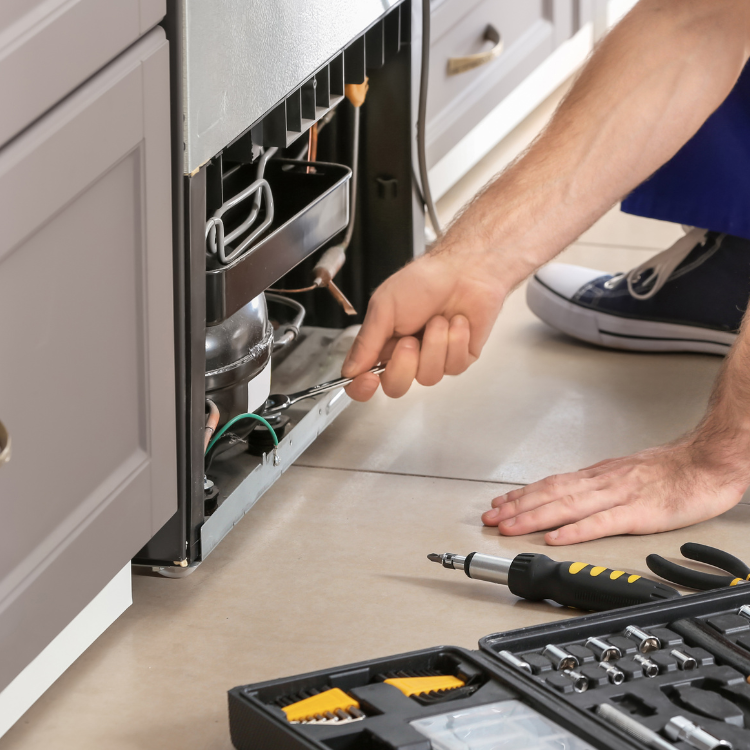
Professional Refrigerator Repair for Water Dispenser Problems
A McKinney family calls us in late summer because their refrigerator water dispenser started doing something subtle at first—weak flow, then sputtering—until it finally stopped dispensing altogether. The fridge is still running, the food is staying cold, but nobody wants to keep buying bottled water when the dispenser used to work fine. On the commercial side, we see the same pattern in offices and break rooms: a water dispenser that won’t reliably dispense can turn into complaints, delays, and extra maintenance calls when the real issue is usually something fixable—if it’s diagnosed correctly.
Water dispenser problems aren’t always “the dispenser.” In North Texas, they commonly trace back to water pressure issues, filter buildup, clogged inlet lines, or a failing inlet valve. Let’s walk through what typically causes the problem, what we check first, and what you can do to prevent the same failure from coming back.
Quick Answer
Most refrigerator water dispenser failures come from one of these: a clogged/expired water filter, low water pressure, a restricted water inlet line, a faulty water inlet valve, or an ice maker/water system issue that indirectly affects dispensing. In many cases, replacing the filter and clearing the water line resolves it—but if the valve or internal water path is failing, the repair requires a technician’s diagnostics.
What We Check When a Refrigerator Water Dispenser Acts Up
When a customer says the dispenser is “weak” or “stops,” our first job is to narrow down whether the system is delivering water mechanically or whether the flow is restricted somewhere along the path.
1) Filter and filter housing (the most common “easy fix”)
If your refrigerator uses a standard water filter, the most frequent cause we see is simply reduced flow from a filter that’s overdue or installed incorrectly. A clogged filter can cause:
- slow, dribbling water
- air bubbles and sputtering
- a complete stop after the system tries to push water through
In a real service case we handled in North Texas, the owner replaced the filter with an aftermarket model—but the dispenser flow never fully improved. Our technician found the filter wasn’t seating correctly in the housing, restricting internal flow. Once the correct filter cartridge was installed and seated properly, the dispenser returned to normal.
2) Water pressure and supply line restrictions
Even if the filter is fine, the dispenser can suffer from insufficient pressure. That can come from:
- a partially closed shutoff valve
- a kinked or compressed water line behind the fridge
- sediment buildup in the supply line
A key technician observation: if the refrigerator is “cold but the dispenser fails,” the compressor isn’t the problem. We focus on the water path. You’d be surprised how often the unit is fine electrically—just starved of water.
3) Water inlet valve (when the fridge has power but no flow)
If the dispenser is activated and nothing comes through (or it comes through briefly and then stops), the water inlet valve becomes a prime suspect. The valve opens to allow water into the refrigerator’s water system. If it’s weak or failing, you’ll see:
- no water or very short bursts
- inconsistent flow
- repeated failure after “working for a day” following a reset
4) Air in the line and recent filter changes
After a filter change, air trapped in the system can cause sputtering for a short time. But if sputtering persists for days, it usually points to restriction or valve issues—not normal “bleed air.”
5) Ice maker connection (sometimes the dispenser symptom is secondary)
Some refrigerators share components between ice making and water dispensing. If the ice maker is struggling—frozen water in the line, slow fill, or a stuck mechanism—it can affect the overall water delivery behavior.
If you’ve noticed ice cubes are smaller than usual or the ice maker is producing less frequently, mention that during service. It can shorten the diagnostic time.
Signs Your Appliance Needs Repair
Here are the most common patterns we see in McKinney and across North Texas:
- Water dispenses slowly and intermittently (often restriction or filter-related)
- Water sputters with excessive air bubbles (often line restriction or filter housing issues)
- Dispenser stops completely (often water inlet valve or supply restriction)
- Water dispenser works but ice maker is failing too (shared water path component)
- Water tastes or smells off (filter media or stagnant water issues; sometimes plumbing)
What Homeowners Often Overlook
Mistake: Keeping a “still working” filter in place too long
Many people assume the dispenser is fine as long as it dispenses at all. But reduced flow can be a warning sign that the filter is near failure. Over time, restriction increases the strain on the inlet valve and can lead to a more expensive repair.
Mistake: Ignoring water quality and taste complaints
If the water tastes unusual or smells “earthy,” it’s tempting to blame the tap. In refrigerators, a compromised filter can cause persistent taste issues. That’s not just unpleasant—it can also indicate filter media breakdown that may not fully protect the system.
Mistake: Troubleshooting without checking the simplest supply points
We regularly hear, “We turned the fridge off and back on.” That sometimes resets internal controls, but it doesn’t restore water flow if the shutoff valve is partially closed or the line is restricted.
Common Mistakes That Lead to Expensive Breakdowns
1. Replacing only the filter when the issue is a valve or line restriction
If the dispenser remains weak after a correct filter change, forcing repeated filter replacements delays the real repair.
2. Using the wrong filter type or skipping proper installation
A filter that’s not compatible or not seated correctly can reduce pressure inside the housing.
3. Pressing the dispenser repeatedly while it’s starved for water
Repeated activation can increase strain and heat in components over time, especially if the valve is struggling to open fully.
4. Not checking behind the fridge when the line has moved
In many North Texas homes, the fridge gets pulled out for cleaning or remodeling. A kinked line behind the unit can show up weeks later as “suddenly the dispenser quit.”
Repair, Maintenance, or Troubleshooting Checklist
If you want to do safe, basic checks before scheduling service, here’s a practical list you can follow.
Before calling for service (safe homeowner checks)
- Verify the water shutoff valve is fully open (not just “mostly open”)
- Check the filter status
- Replace if it’s overdue
- Confirm it matches your refrigerator’s model requirements
- Look for obvious line kinks behind the fridge (only if accessible without moving heavy appliances unsafely)
- After a filter change, purge properly
- Dispense water for a short period per your manual’s guidance to clear air
- Observe symptoms
- Is it weak, sputtering, or completely dead?
- Does it happen immediately or after a few seconds/minutes?
Technician-level diagnostic steps (what a professional will confirm)
- Measure supply pressure feeding the refrigerator water system
- Inspect the inlet valve operation (electrical signal and mechanical flow)
- Check for restrictions inside the water line and internal water path
- Evaluate ice-maker related components if dispensing and ice production are both abnormal
Recommended next step
If you’ve changed the filter correctly and the dispenser still doesn’t behave normally, the most cost-effective move is professional diagnostics rather than guessing. This prevents unnecessary parts replacement and reduces downtime.
Quick Comparison: Repair vs. Replacement for Water Dispenser Issues
Most refrigerator water dispenser failures are repairable. Replacement is typically only considered when the refrigerator has multiple major failures or the unit is nearing the end of its reliable service life.
| Situation | Typical Outcome | Why |
|---|---|---|
| Overdue/clogged filter or incorrect filter | Repair/replace filter | Often restores proper flow quickly |
| Low water pressure / shutoff issue | Fix supply restriction | Dispenser problem resolves without internal replacement |
| Water inlet valve failing | Repair valve | Restores controlled water flow |
| Multiple system failures (valve + major cooling issues) | Evaluate repair cost vs. replacement | If the refrigeration system is also unstable, replacement may be smarter |
If you’re deciding whether to repair, a technician can estimate parts + labor based on actual diagnostics—not assumptions.
Anonymized Service Case Example (What Actually Fixed It)
We recently worked with a North Texas household where the dispenser produced only a few drops, then stalled. The homeowner had already replaced the filter twice—once with a generic cartridge and once with a different “compatible” brand. The flow remained poor.
On site, the technician noticed the filter housing seal wasn’t seating fully after the second replacement. That restriction caused the dispenser to pull against an internal pressure imbalance. After installing the correct filter cartridge for the model and confirming proper seal alignment, the dispenser returned to normal flow. In this case, the “repair” wasn’t a new valve—it was correcting the internal flow path that was getting restricted by an improper installation fit.
McKinney or North Texas Relevance: Why Water Dispenser Problems Show Up More Here
North Texas homes often experience heavy seasonal demand changes. During hot stretches, you’ll see more refrigerator use (more drinking through the dispenser, more ice demand for coolers and family gatherings). That increased demand can turn a marginal filter or slightly restricted water line into a full failure.
We also see variations in water hardness and mineral content across the region, which can contribute to buildup in water pathways over time. When that buildup combines with an aging filter, the dispenser’s flow can degrade faster than expected—especially in households that run the dispenser frequently.
If you manage an office or multi-family property in McKinney, this matters even more: break rooms are “high-use zones,” so small flow problems become customer-facing issues quickly. Fast diagnostics help prevent repeated calls and keep downtime from spreading across multiple units.
Our Experience Repairing Appliances in Texas Homes and Businesses
Texas True Appliance Repair focuses on accurate diagnostics for refrigeration and water systems—not guesswork. For dispenser complaints, our approach is to identify where the water delivery is failing:
- at the filter/housing level
- at the supply pressure level
- at the water inlet valve
- or inside the internal water path
That’s why we encourage homeowners and property managers to describe the symptom pattern (weak, sputtering, or dead) and any related issues (ice maker behavior, filter changes, recent fridge movement). Those details often determine the fastest, most affordable repair route.
If you also have other refrigeration or kitchen equipment concerns, we can help with more than just dispensers. For example:
- If you’re dealing with a broader cooling issue, start with refrigerator repair support.
- If you suspect a wider kitchen equipment downtime problem in a business setting, see our commercial kitchen repair solutions.
- For homeowners troubleshooting other common household problems, dishwasher troubleshooting assistance can prevent additional water-related wear from spreading across appliances.
- If you need rapid diagnostics, we offer same day appliance diagnostics for qualifying issues.
- And if your kitchen runs on schedule and you’re dealing with a built-in or freestanding unit that impacts service, our garbage disposal repair can restore daily workflow when plumbing problems show up near the same time as appliance water issues.
Ready to Restore Your Appliances or Commercial Equipment?
Water dispenser problems are frustrating, but they’re usually diagnosable quickly when the right checks are done first. If you’re in McKinney, TX, and your refrigerator water dispenser is weak, sputtering, or completely stopped, getting accurate diagnostics early can prevent unnecessary part swaps and reduce the chance of repeat failures.
About Texas True Appliance Repair
Texas True Appliance Repair provides residential appliance repair, commercial kitchen equipment repair, refrigerator diagnostics, dishwasher repair, oven repair, and emergency appliance services throughout McKinney, TX and surrounding North Texas communities. The company focuses on accurate diagnostics, reliable repairs, fast response times, and helping homeowners and businesses reduce costly appliance downtime through professional service and preventative maintenance.
FAQ
How do I know if my refrigerator water dispenser is worth repairing?
If the fridge cools normally and the issue is isolated to water flow, it’s usually repairable. Most dispenser failures involve the filter system, water inlet valve, or a restriction in the water line. A technician can confirm which component is failing and estimate repair cost based on diagnosis—not guesswork.
Why is my water dispenser sputtering after I changed the filter?
Sputtering can happen briefly due to air in the line after a filter change. If it lasts more than a short period, it often points to a restriction, an improperly seated filter, or a partially failing valve that can’t maintain steady flow.
Could the ice maker be causing the dispenser problem?
Yes. Many refrigerators share parts or water delivery components between ice making and water dispensing. If ice production is slow or inconsistent, it can correlate with water delivery issues that also affect the dispenser.
What’s the fastest way to stop the dispenser problem while waiting for service?
Replace the filter only if it’s overdue and confirmed correct for your model. Also check that the shutoff valve is fully open. Avoid repeatedly activating the dispenser for long periods if it’s not delivering water, since that can strain components when the system is restricted.
Does hard water in North Texas affect refrigerator water dispensers?
Hard water and mineral content can contribute to mineral buildup inside water pathways over time. That buildup can restrict flow and accelerate issues like weak pressure or valve strain—especially when filters are overdue or the dispenser is used heavily during hot Texas months.