
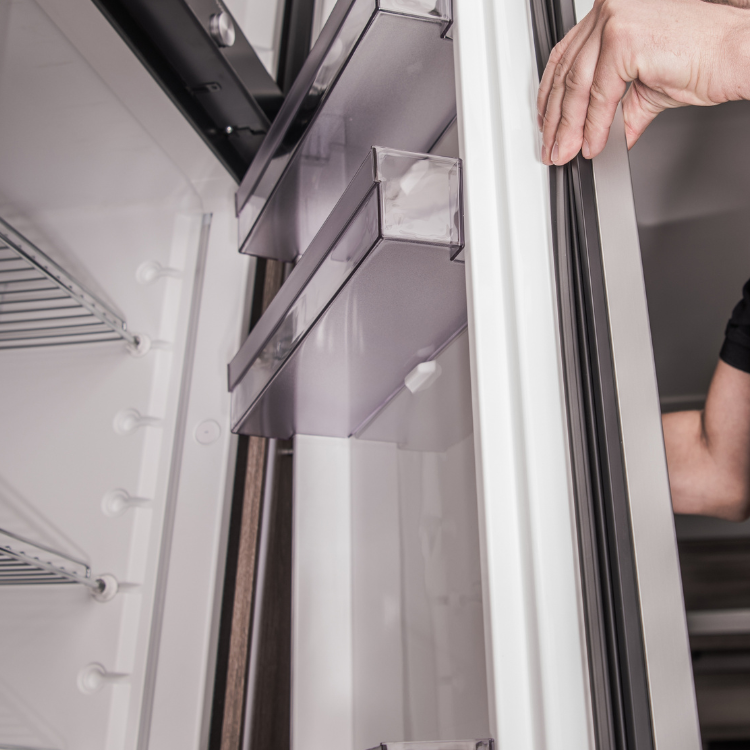
Refrigerator Repair: Seal Checks for Frost-Free Comfort
Last July, a McKinney homeowner called us because their “frost-free” refrigerator was building ice anyway—mostly along the back wall and around the freezer’s air return. The food wasn’t fully thawing, but the refrigerator compartment was running warm, their energy bills were climbing, and the freezer fans sounded like they were working harder than normal.
A lot of people assume frost-free systems never develop freeze-up issues. In reality, the refrigeration cycle is only as efficient as the door seal, airflow paths, and defrost performance. When a seal leaks warm air, the unit has to fight that heat constantly—then frost starts forming where it shouldn’t.
In this article, I’ll walk you through how we check door seals and related components, what usually causes repeated frost and temperature swings, and when repair is the smarter move than waiting for the unit to fail completely.
Quick Answer
If your refrigerator is building frost, the most common culprits are a failing door gasket (seal), air leaks around the door, and defrost system issues (heater, thermostat, or control board). Start with a simple seal inspection and airflow test. If frost is recurring and temperatures are unstable, you’ll typically need a technician to verify defrost operation and check for restricted airflow.
For reliable results, professional appliance repair services also include checking the evaporator fan, drain/air channels, and verifying temperatures at both compartments—not just “replacing a part and hoping.”
What Homeowners Often Overlook
Most refrigerator problems aren’t caused by one “big” failure. They’re caused by small issues that add up—especially during North Texas heat.
Here are the oversights we see most often:
- Door gasket looks “mostly fine.” Even a small gap can let warm, humid air in. That humidity becomes frost when it hits cold surfaces.
- Shelves and bins aren’t seated correctly. A bin that’s slightly out of position can block airflow and make one area freeze while another area warms.
- Overstuffing prevents proper air circulation. In frost-free models, airflow needs room to move. When it doesn’t, you get uneven temps and frost pockets.
- Frequent door opening with warm items inside. Putting hot leftovers or uncovered dishes directly into the refrigerator loads the system with moisture and heat.
How Seal Checks Actually Work (Technician Insight)
In the field, we don’t treat “frost-free” as a guarantee. We treat it as a system with multiple steps that must work together.
1) We inspect the gasket contact points—not just the rubber
A door seal can look intact but still fail at:
- corners
- the hinge side
- areas where the door has been pressed repeatedly
- spots where the gasket has hardened or shrunk
We check whether the gasket is:
- warped or flattened
- torn or stretched
- dirty in a way that prevents full contact
- loose from the door channel
2) We confirm airflow is balanced
If the gasket leaks, the freezer has to remove more humidity than normal. That can lead to more frequent frost accumulation on the evaporator area.
3) We look for the “pattern” of frost
This matters. Frost at the back panel can point to normal moisture management—until it becomes thick, repeated, or accompanied by cooling failures.
In that July case, frost was prominent around the air return area, and the refrigerator compartment was warm. That combination often indicates either:
- warm humid air entering via a door leak (seal issue), and/or
- defrost not clearing the evaporator properly (defrost issue)
4) We verify temperatures and run behavior
We check:
- freezer temperature stability
- refrigerator compartment performance
- how long the unit takes to recover after the door is opened
- whether the fan cycles correctly (some fan or airflow issues can mimic seal problems)
If the seal checks out, we shift focus to defrost components and the control logic.
Common Mistakes That Lead to Expensive Breakdowns
Here are the mistakes that most often turn a manageable repair into a bigger problem:
Mistake 1: Ignoring a slow seal problem until the unit can’t keep up
A gasket doesn’t fail overnight. It degrades. If you keep using the fridge while it’s quietly losing efficiency, the compressor and fans run longer than they should.
Mistake 2: “Thawing it out” repeatedly
People sometimes unplug the refrigerator and let it melt. That can temporarily fix symptoms, but if the seal is leaking or defrost isn’t working, the frost returns—often faster next time.
Mistake 3: Cleaning the gasket wrong
Using harsh solvents or abrasive cleaners can damage rubber and shorten gasket life. Warm soapy water is typically the safe approach.
Mistake 4: Replacing parts without diagnosing the airflow path
One of the most frustrating scenarios for homeowners is paying for a part that doesn’t solve the underlying issue. If the gasket is leaking, no defrost replacement will fully prevent freeze-up.
Mistake 5: Delaying service because “it still gets cold”
Refrigerators often appear “okay” until the moisture load becomes too high. By the time the food is at risk, the system may already have compounding issues.
Repair vs Replacement: What Usually Makes Sense
Most refrigerator seal issues are repairable without replacing the whole unit. But there are a few decision points we use in real jobs:
| Situation | Typical Recommendation |
|---|---|
| Door gasket is worn/doesn’t seal | Replace gasket and verify alignment |
| Frost recurs quickly even after seal improvement | Inspect defrost system (heater, thermostat/thermostat fuse, control) |
| Compressor is running continuously with weak cooling | Deeper diagnosis; may require major repair or replacement depending on age/efficiency |
| Multiple sealed-system problems | Replacement often becomes more cost-effective |
Best recommendation we can give: get a proper diagnosis early. Seal and defrost corrections are usually far more affordable than waiting for a full cooling failure.
Appliance Maintenance Checklist (Seal + Frost Prevention)
Use this checklist to reduce repeat frost and temperature swings. If you find issues, it’s still smart to schedule a professional inspection—especially in complex frost-free systems.
Door Seal & Fit
- [ ] Check gasket for gaps using the paper test around the perimeter
- [ ] Inspect hinge-side sealing (common leak point)
- [ ] Clean gasket with mild soap and water; avoid harsh chemicals
- [ ] Confirm the door closes evenly and doesn’t “spring” open
Frost & Airflow
- [ ] Look for frost buildup patterns (back wall, air return, corners)
- [ ] Ensure vents inside the freezer are not blocked by food
- [ ] Verify drawers and bins are seated correctly
Performance Monitoring
- [ ] Confirm freezer and fridge temps are stable (use a thermometer if needed)
- [ ] Pay attention to unusual fan sounds or repeated cycling
- [ ] Notice whether the refrigerator recovers slowly after door openings
What We Commonly See in North Texas Appliances
North Texas summers aren’t gentle on refrigerators. High humidity plus frequent door openings increases moisture load. When the door doesn’t seal tightly, that moisture gets trapped inside and freezes on the evaporator surfaces.
We also see:
- harder working compressors because the unit is recovering from heat infiltration
- airflow issues caused by blocked vents or misaligned storage
- defrost system wear from long run times
And because power fluctuations and temperature swings can happen during peak seasons, appliances that are already borderline can fail sooner than expected. That’s why a seal check is often the first “high value” diagnostic step.
A Realistic (Anonymized) Service Case
A restaurant manager in the McKinney area reported that their prep refrigerator was freezing product in one corner while the rest of the unit ran warm. They tried lowering the temperature and swapping a “suspected” control knob—no change. When we inspected it, we found two issues working together:
1) the door gasket had gaps near the hinge side, letting humid air in
2) the airflow path was partially blocked by a poorly seated shelf arrangement
We corrected the seal contact, adjusted airflow clearance, and then confirmed proper cooling behavior after the unit stabilized. The manager told us the unit stopped cycling strangely within a day and product quality improved immediately—before they lost more inventory.
For commercial settings, downtime costs quickly, so diagnosing the real cause (seal + airflow) mattered more than guessing.
Related Services That Often Pair With Refrigerator Repair
If you’re running a household or business and other kitchen appliances are behaving oddly, the root cause can sometimes be shared—like airflow, temperature stability, or water quality impacts.
If you need help beyond refrigeration, Texas True Appliance Repair can assist with:
- refrigerator repair support when frost, temperature swings, or ice buildup won’t stop
- commercial appliance repair services for businesses that can’t afford refrigeration downtime
- dishwasher troubleshooting assistance if hard water or drainage issues are also showing up in your kitchen
- oven repair services when uneven heating is affecting prep and service times
And if you’re dealing with a larger operation, we can also support equipment needs like garbage disposal repair to keep kitchen operations running smoothly.
Our Experience Repairing Appliances in Texas Homes and Businesses
At Texas True Appliance Repair, we’ve learned that the best repairs are the ones that address the cause, not just the symptom. Seal checks are a perfect example. A gasket problem can masquerade as a defrost failure, and defrost failures can look like “the fridge can’t cool,” especially when frost blocks airflow.
Our process is designed to be clear and practical:
- verify the seal and door alignment
- confirm cooling performance at both compartments
- inspect frost patterns and airflow pathways
- test defrost operation when needed
- recommend the most cost-effective repair or maintenance step
When you’re trying to protect groceries—or keep a commercial kitchen on schedule—accurate diagnostics are worth it.
Ready to Restore Your Appliances or Commercial Equipment?
If your frost-free refrigerator is building ice, running warm, or acting uneven, a seal inspection is often the fastest path to the real cause. The goal isn’t just to stop the frost—it’s to restore stable temperatures and efficiency so the problem doesn’t come back.
About Texas True Appliance Repair
Texas True Appliance Repair provides residential appliance repair, commercial kitchen equipment repair, refrigerator diagnostics, dishwasher repair, oven repair, and emergency appliance services throughout McKinney, TX and surrounding North Texas communities. The company focuses on accurate diagnostics, reliable repairs, fast response times, and helping homeowners and businesses reduce costly appliance downtime through professional service and preventative maintenance.
FAQ
How do I know if my refrigerator is worth repairing?
If the refrigerator cools but has frost issues, seal replacement or defrost repairs are often worthwhile—especially when the compressor is still running normally and temperatures stabilize after recovery. If there’s a sealed-system failure (like a major leak) or multiple high-cost components, replacement may be more cost-effective. A technician diagnosis based on cooling performance and frost patterns is the best way to decide.
Why does my freezer get ice buildup even though it’s frost-free?
Common causes include a door gasket leak, blocked airflow vents, or a defrost system that isn’t clearing the evaporator properly. When warm humid air enters and defrost doesn’t reset correctly, frost can return quickly and unevenly.
What causes uneven cooling between the freezer and refrigerator?
Uneven cooling usually points to airflow issues (blocked vents, fan problems), temperature sensor/control problems, or—very commonly—air leakage from the door seal. Frost buildup can also interfere with how cold air is distributed.
Should I replace the gasket myself?
If you’re comfortable with basic hardware and can order the correct gasket for your exact model, it’s possible. However, improper installation or door alignment issues can keep the leak going. If you’ve already had recurring frost, we recommend professional diagnosis so you don’t miss defrost or airflow problems.
If you’d like, tell me your refrigerator’s model number and what you’re seeing (where the frost forms, whether the fridge warms up, and how often it happens). I can help you narrow down whether a seal issue is the likely starting point.