
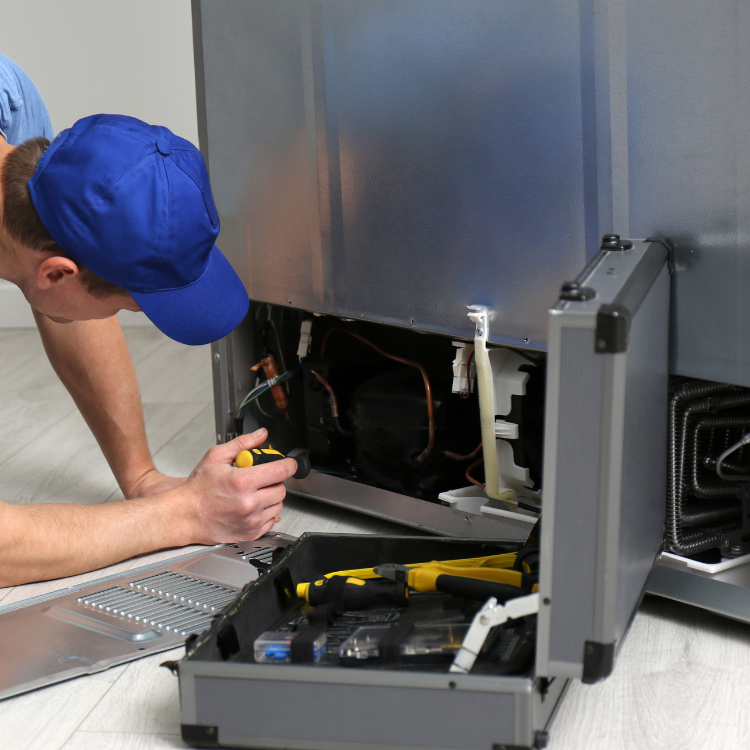
If your fridge is running but the food is warming up, McKinney, TX homeowners and businesses need clear, practical next steps. This guide walks you through quick checks, common causes, and when to call a professional refrigerator repair technician.
Last night the refrigerator felt fine, but this morning the temperature is creeping up. Milk is getting warm, produce is wilting faster than usual, and you can hear the unit running like it is trying, but it is not keeping up.
In McKinney, TX, heat and humidity can make cooling problems show up sooner, especially when a fridge is packed tightly or the door is opened often. This guide helps you understand what to check first, what the most common failure points are, and how to avoid making the issue worse while you decide on repair.
- Quick answer
- What to check first
- Main things customers should understand
- Why this matters in McKinney, TX
- Common mistakes to avoid
- Customer checklist
- Frequently asked questions
Quick Answer
If your refrigerator is not cooling properly, start with the simplest checks: confirm the thermostat setting, verify the door seals are closing tightly, and check that the air vents inside the fridge are not blocked. If the freezer is cold but the fridge is warm, the issue is often related to airflow, a failing damper, or a defrost problem. If both compartments are warm, the cause may involve the cooling system. For consistent cooling and food safety, a professional appliance repair technician should diagnose the exact component rather than guessing.
What to Check First
Before you schedule refrigerator repair services, take a few careful steps. These checks help you separate “easy to fix” issues (like airflow or door sealing) from problems that usually require a professional appliance repair technician.
Professional observation: When the freezer stays cold but the refrigerator section warms up, many technicians focus first on airflow and defrost-related behavior, because those patterns often point to the refrigerator side rather than the entire cooling system.
Main Things Customers Should Understand
Refrigerators are designed to move cold air through the compartments in a controlled way. When cooling drops off, it is usually because cold air is not reaching the fridge section, or because the cooling system is not maintaining the right temperature. Understanding the “pattern” helps you decide what to do next.
| What you notice | What it often suggests | What to do next |
|---|---|---|
| Freezer is cold, fridge is warm | Airflow issues (damper/vent path) or defrost-related temperature control | Check for blocked vents and confirm the fridge door seals. If it persists, schedule refrigerator repair diagnosis. |
| Both freezer and fridge are warm | Cooling system performance problem (not cooling as designed) | Stop troubleshooting beyond basic checks. A professional appliance repair technician can test the relevant components safely. |
| Fridge cools briefly, then warms again | Temperature regulation and component cycling issues | Document how long cooling lasts and whether it matches door openings. Then call for appliance repair services support. |
| Ice buildup or unusual frost patterns | Defrost system behavior problems that can block airflow | Do not repeatedly chip at ice. Let a technician inspect the defrost components during service. |
Helpful tip: If you are using a thermometer, place it in the middle of the refrigerator compartment (not right against a wall) and check after the door has been closed for a while. This helps you track real temperature changes instead of surface cooling.
Why This Matters in McKinney, TX
McKinney’s hot stretches and humid days can push refrigerators harder, especially if the unit is near a heat source, receives direct sunlight, or the kitchen gets warm quickly. In many homes and older apartments around McKinney, TX, fridges may also be tucked into tighter spaces, which can restrict airflow around the cabinet and make cooling issues more noticeable.
Texas True Appliance Repair focuses on practical refrigerator repair services for local households and businesses, including routine problems that show up as food warming, uneven temperatures, or freezer-to-fridge airflow disruptions. If you are dealing with a commercial kitchen equipment setup, cooling consistency is essential for food handling, and that is where our commercial repairs approach can help.
Need help diagnosing refrigerator cooling?
If your fridge is not cooling properly and the basic checks did not solve it, Texas True Appliance Repair can help identify the cause and recommend the right next step.
Schedule refrigerator repairCommon Mistakes to Avoid
When a refrigerator stops cooling the way you expect, it is tempting to keep adjusting settings or repeatedly “fix” it yourself. Some actions can delay the real repair or create new problems.
- Ignoring the door seal: If the gasket is loose or damaged, the fridge will struggle to maintain temperature even if other parts work.
- Overpacking the fridge: Crowded shelves can block vents and prevent proper air circulation.
- Chipping ice aggressively: Frost and ice patterns may point to defrost issues. Damaging components can make repairs harder and more expensive.
- Changing settings repeatedly: Thermostat changes can confuse your diagnosis. Adjust once, then observe.
- Assuming the freezer issue is unrelated: Whether the freezer is cold or warm changes the most likely causes. Use that pattern to guide troubleshooting.
Customer Checklist
Use this quick checklist before service. It helps your technician focus on the most likely causes and reduces trial-and-error time.
What to gather:
- The exact symptom: fridge warm, freezer warm, or both compartments warming.
- How long it has been happening and whether it came on suddenly.
- Any frost or ice patterns you have noticed.
- Whether vents inside the fridge are blocked by food or containers.
- Whether the door closes evenly and the seal looks intact.
- Any recent changes: moved the fridge, cleaned it, power interruption, or adjusted temperature controls.
Representative Scenario
A McKinney homeowner noticed the freezer stayed cold, but the refrigerator section started warming up over two days. The vents were partially blocked by food containers, and the door gasket looked slightly loose near one corner. After clearing the vents and testing the seal with a sheet of paper, the fridge improved briefly, then returned to warm temperatures. A technician confirmed the cooling problem was related to the refrigerator side airflow and temperature regulation, then recommended the appropriate repair steps for that system.
Frequently Asked Questions
Why is my freezer cold but my refrigerator not cooling?
When the freezer stays cold but the refrigerator warms, the issue is often tied to airflow between compartments or temperature regulation on the fridge side. Common causes include blocked vents, a failing damper or air path, or defrost-related behavior that affects how cold air is delivered. Start by checking for blocked vents and confirming the door closes tightly with the gasket. If the pattern continues, it is a good idea to book professional refrigerator repair services so the technician can test the components involved in airflow and cooling control.
How can I tell if the problem is the door seal or something inside the fridge?
A simple gasket test can help. Close the fridge door on a sheet of paper, then gently pull it out. If the paper slides out easily around multiple spots, the seal may not be tight. Also look for gaps, warped corners, or residue that prevents a full closure. If the seal appears fine and the fridge still warms, the cause is more likely related to airflow, temperature control, or defrost behavior. In that situation, a professional appliance repair technician can narrow down the component responsible and reduce guesswork.
Should I unplug my refrigerator if it is not cooling?
Unplugging may stop further cooling attempts, but it does not fix the underlying cause. If you need to protect food, you can move items to a cooler environment while you plan service. Avoid repeated on and off cycles as a troubleshooting method, because it can make temperature patterns harder to interpret. Instead, document what you see (freezer cold vs. warm, frost patterns, and how quickly food warms), then contact a local appliance repair company like Texas True Appliance Repair for a proper diagnosis.
Can blocked vents cause a refrigerator not cooling properly?
Yes. Refrigerators rely on controlled airflow to keep temperatures even. If vents are blocked by containers, tall items, or overpacked shelves, cold air cannot circulate properly, and the thermostat may not reflect the real conditions inside the fridge. Start by rearranging items so vents are clear and the airflow path is open. If the fridge still warms after vents are cleared and the door seal is tight, the problem may be airflow control or defrost-related, which typically requires professional testing.
Is cooling trouble ever related to other appliances in the home?
Sometimes, but usually the refrigerator issue is independent. Other appliance problems can share electrical concerns, but cooling patterns inside the fridge, such as freezer staying cold while the fridge warms, often point to refrigerator-specific airflow or temperature regulation components. If you are also dealing with other kitchen appliance issues, you may find it helpful to review related repair options, such as dishwasher repair services for dishwashing problems or oven repair services for cooking inconsistencies. For refrigerator cooling, the safest approach is professional diagnosis.
Get back to reliable cooling
If your refrigerator is not cooling properly, Texas True Appliance Repair serves McKinney, TX and nearby areas with professional appliance repair technician support. Share what you have observed, and we will help you decide the right repair path.
Contact Texas True Appliance Repair
Texas True Appliance Repair provides local appliance repair services across McKinney, TX and surrounding communities including Allen, Carrollton, Celina, Frisco, Little Elm, Melissa, Plano, Prosper, and Richardson. Whether you need refrigerator repair services or support for other household appliances, our goal is to help customers get dependable performance from their equipment with clear, practical troubleshooting and repair.
Contact: (469) 596-1814 | texastrueappliancerepair.com