
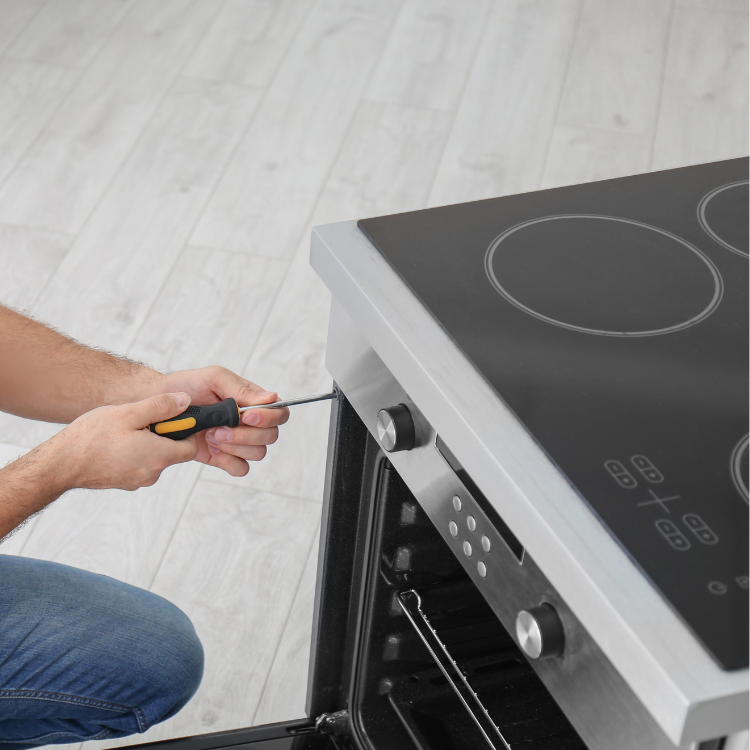
Commercial Appliance Repair Keeps Services Running Seamlessly
Last spring, a McKinney-area restaurant called in after their dishwasher started draining slowly—then stopped fully mid-rush. The kitchen staff didn’t just lose clean plates; they lost workflow. By the time the building manager reached out, the line was backing up because staff couldn’t run dishes fast enough, and the steam from overworked equipment started changing kitchen conditions.
That’s the reality for commercial operators in North Texas: when a key appliance goes down, it doesn’t stay “down” for only one shift. It snowballs into labor issues, sanitation concerns, and sometimes even food safety risks. The good news is that many commercial breakdowns are predictable when you know what to watch—especially with refrigeration, dishwashers, ovens, and other high-use kitchen equipment.
Quick Answer
Commercial appliance repair works best when it’s fast, diagnostic-first, and designed around your schedule. If your equipment is showing inconsistent cooling, slow draining, temperature swings, or error codes, a professional technician should inspect the most failure-prone components (heating elements, drain pumps, thermostats/sensors, water supply lines, control boards, and airflow restrictions) before you waste time replacing parts.
Key goal: restore uptime quickly without creating a “temporary fix” that fails again next week.
Commercial Kitchen Downtime: What We Commonly See
In commercial kitchens, the failures that cause the most disruption usually fall into a few patterns:
1) Dishwashers that drain slowly (or stop)
From my technician experience, slow draining is often not “just a clogged filter.” It can be:
- a drain pump struggling due to debris buildup,
- a partially blocked hose or standpipe,
- a failing pressure switch,
- or hard-water scale that changes how components sense water level.
When staff keeps running cycles because the machine “eventually clears,” the system overheats and stresses parts that weren’t meant to work that hard.
If you’re dealing with this, you may want to review dishwasher repair services and troubleshooting steps before the problem escalates.
2) Ovens and ranges heating unevenly
Uneven baking or inconsistent broiler performance often points to calibration or control issues, but we also see:
- failing igniters,
- worn temperature sensors,
- gas pressure problems,
- or thermostat/control board drift from heat cycling.
A quick “turn it up” response can mask the issue while increasing repair complexity later. For teams troubleshooting temperature problems, oven repair services is usually the fastest way to get a real diagnosis instead of guessing.
3) Refrigeration struggling under Texas heat
North Texas summers put real load on refrigeration systems. We frequently see:
- condenser coils coated with grease/dust,
- doors left slightly open during rush,
- airflow blocked by product placement,
- and ice buildup from restricted defrost components.
When refrigeration can’t hold stable temps, everything downstream changes—food quality, safety processes, and replacement costs.
For refrigeration support, use refrigerator repair services as your starting point for proper diagnostics.
4) “Small” issues that become emergency service calls
A commercial ice machine that won’t cycle right, a microwave that intermittently shuts off, or a garbage disposal that can’t handle prep waste can all create delays that compound across the day. The longer the delay, the more likely you’ll see secondary damage from people trying to work around the failure.
Key Technician Insight: Why the Same Appliance Fails Twice
One of the most helpful observations I can share is this: repeated failures usually aren’t random. In many cases, the first repair didn’t fully resolve the root cause.
Examples I’ve seen:
- A dishwasher part is replaced, but the real issue was hard-water scale restricting flow—so the new part fails under the same conditions.
- A refrigerator is “recharged” or a component is swapped, but the airflow path is still blocked by debris or poor placement.
- An oven is adjusted, but the sensor is out of calibration and the control keeps “chasing” the wrong temperature.
That’s why diagnostic scope matters. A true repair should verify temperatures, water flow, drain performance, and control behavior—not just swap a component.
Signs Your Appliance Needs Repair (Fast)
If you’re deciding whether to call a technician now or wait until after service slows down, watch for these red flags:
- Dishwasher: water not draining fully, residue on dishes, cycles running longer than normal, unusual error codes
- Refrigeration: fluctuating temperatures, excessive frost, warm spots in one section, ice buildup
- Oven/range: inconsistent heating, longer preheat times, burning unevenly, burner or igniter cycling
- Microwave: power levels dropping, door latch errors, intermittent shutdowns
- Garbage disposal: jammed frequently, loud humming without grinding, slow drainage
- Washer/dryer (for staff housing or on-site laundry): clothes not drying, leaks, repeated cycle stops
Common Mistakes That Lead to Expensive Breakdowns
Mistake 1: Waiting because “it still works”
Commercial teams often keep equipment running until it fully fails. The issue is that many systems fail in stages—running longer means more heat, more water cycling, and more strain on components.
Mistake 2: Cleaning the outside, ignoring the inside
A shiny front panel won’t tell you if:
- condenser airflow is restricted,
- drain lines are scaling up,
- or water inlet screens are clogged.
Regular internal checks are what prevent the “sudden” breakdown.
Mistake 3: Overloading dishwashers and refrigerators
We see this frequently. Overpacking affects circulation and drainage. In refrigeration, restricted airflow makes the compressor work harder. In dishwashing, overloaded racks can prevent proper spray contact and worsen drain performance.
Mistake 4: Replacing parts without verifying the cause
If you swap components repeatedly without measuring water flow, temperature response, or drain function, you can end up paying for parts while the real problem remains.
Repair, Maintenance, or Troubleshooting Section: A Practical Checklist
Use this checklist to reduce downtime and help your team communicate clearly with a technician.
Daily / Shift Checks (Commercial)
- Dishwashers: confirm cycles complete normally; check for standing water at the end of a cycle
- Refrigeration: confirm door seals close properly; watch for condensation near doors and drawers
- Ovens/ranges: note any uneven cooking patterns; track changes in preheat and recovery time
- Microwaves and disposal units: report intermittent shutdowns or repeated jams immediately
Weekly Checks (Commercial Kitchen Equipment)
- Inspect and clean accessible filters, strainers, and spray areas on dishwashers
- Check drain lines for slow flow signs
- Verify refrigeration air vents are not blocked
- Look for unusual noise from compressors, drain pumps, or fans
Maintenance Before Seasonal Strain (North Texas)
- In summer, ensure refrigeration airflow is strong and condenser coils are cleaned on schedule
- Watch water quality impacts (hard water can increase scale buildup over time)
Troubleshooting “Quick Tests” You Can Do Safely
- Dishwasher: Does it drain completely after the cycle ends?
- Refrigeration: Are temperatures stable after doors close and product settles?
- Oven: Does temperature recovery change between light-use and peak-use times?
- Disposal: Does it hum when you run it with water? That’s a sign to stop and inspect rather than force it repeatedly.
If your issue is specifically tied to drains or disposal performance, you can also explore garbage disposal repair for guidance on what typically causes repeated clogs and failures.
Repair vs Replacement: Making the Right Call
Here’s a common decision framework we use in the field:
Repair makes sense when:
- the unit is otherwise structurally sound,
- the failure is isolated (drain pump, sensor, igniter, control board, etc.),
- parts are available and the repair restores stable performance.
Replacement is worth considering when:
- multiple components are failing at once,
- the unit is nearing the end of service life,
- the cost of repeated repairs approaches replacement pricing,
- repairs won’t restore efficiency (for example, refrigeration that can’t hold stable temperatures even after component fixes).
A practical example: if a dishwasher is draining slowly due to repeated scale and pump stress, replacement sometimes becomes the smarter long-term move—especially if your water conditions are consistently hard and the machine cycles nonstop.
McKinney / North Texas Relevance: Why Summer Changes Everything
In North Texas, high temperatures and heavy daily usage stress commercial appliances in ways that don’t show up in mild seasons.
A few real-world factors that matter here:
- Refrigeration load increases when ambient temps rise and doors open frequently
- Hard-water scaling builds faster on water-dependent components (dishwashers, some ice systems)
- Power demand peaks can create control board stress and intermittent faults in equipment that’s already worn
That’s why we recommend planning maintenance before the busiest stretch. Waiting until after a full breakdown often costs more—not only in labor, but in lost service time.
Anonymized Service Case: Restoring Uptime Without Guessing
A local restaurant manager contacted Texas True Appliance Repair after their commercial dishwasher started leaving residue and then stopped draining properly during the middle of a weekend rush. The staff had already cleaned the exterior and replaced one small part, but performance never returned to normal.
After diagnostics, the technician found:
- debris buildup affecting drain flow,
- scale restricting water movement,
- and a drain pump that had been operating under strain.
The repair plan focused on restoring proper water delivery and drain performance—not just replacing a single component. The result was a stable cycle length and clean dish output again, with fewer “mid-service surprises” over the following weeks.
If you want the same diagnostic-first approach for other equipment, we also support commercial appliance repair services for a range of kitchen and business appliances.
Emergency Commercial Appliance Repair: What to Expect
When equipment fails during service, you need more than “a quick fix.” You need accurate troubleshooting so the repair holds.
A professional technician will typically:
- check the error code or failure symptoms,
- inspect the most likely causes first (based on the appliance’s design and usage patterns),
- verify performance after repair (not just “it turns on”),
- and recommend the next step if parts or replacement timelines require planning.
If you’re looking for faster response during urgent issues, ask about same day appliance repair options based on availability.
Appliance Maintenance Checklist (For Teams and Homeowners)
Whether you manage a restaurant or a busy household, this checklist helps reduce breakdown frequency.
Maintenance Checklist
- [ ] Clean/inspect accessible filters and spray areas (dishwasher)
- [ ] Check door seals and airflow paths (refrigeration)
- [ ] Remove grease and debris from condenser areas (where accessible)
- [ ] Confirm water supply lines and screens are clear (scale prevention)
- [ ] Keep vents unobstructed around appliances
- [ ] Watch for temperature recovery changes (ovens and refrigeration)
- [ ] Stop using equipment when warning signs appear (standing water, warm spots, repeated error codes)
What Homeowners Should Know (Even If You Run a Small Business)
Many homeowners in McKinney manage shared spaces too—laundry areas, rental properties, or home offices with high-use appliances. The same principles apply:
- hard water and scale buildup,
- airflow restrictions,
- and “temporary workarounds” that cause further damage.
If a household appliance is acting up, address it early with proper diagnostics rather than waiting for it to fully fail.
FAQ
How quickly should commercial appliances be repaired to avoid losing business?
If the appliance directly affects food safety or service output—like refrigeration or dishwashing—repairs should be prioritized immediately. Even a short delay can lead to operational bottlenecks, backup in workflow, and increased sanitation risk. A technician can assess what can be stabilized quickly and what needs parts, then help you plan around your service schedule.
My dishwasher drains slowly, but it still runs. Is that still a problem?
Yes. Slow draining often means debris buildup, pump strain, or scale restricting flow. Continuing to run cycles can overheat parts and lead to complete failure. It’s usually more cost-effective to diagnose the cause early rather than replace components after they’ve been damaged by repeated stress.
Can hard water really shorten appliance lifespan?
Hard water contributes to scale buildup in water-heated and water-supplied components. Over time, scale can restrict flow, reduce sensor accuracy, and increase energy use. In dishwashers and some refrigeration-related systems, that can translate into faster wear and more frequent repairs if it isn’t addressed.
Are microwaves and disposals worth repairing?
Often yes, especially for intermittent faults like door latch errors, power regulation issues, or recurring clogs that can be corrected. If the unit is still structurally sound, repair is typically the better option. For disposal problems, repeated jams can also indicate a maintenance issue that should be corrected before it damages internal parts.
Ready to Restore Your Appliances or Commercial Equipment?
If your kitchen equipment, refrigeration, or dishwashing system is showing early warning signs, fast diagnostics can prevent the type of downtime that disrupts service and budgets. Texas True Appliance Repair helps businesses and homeowners in McKinney, TX get reliable repairs and practical maintenance guidance so your appliances stay dependable through peak demand.
About Texas True Appliance Repair
Texas True Appliance Repair provides residential appliance repair, commercial kitchen equipment repair, refrigerator diagnostics, dishwasher repair, oven repair, and emergency appliance services throughout McKinney, TX and surrounding North Texas communities. The company focuses on accurate diagnostics, reliable repairs, fast response times, and helping homeowners and businesses reduce costly appliance downtime through professional service and preventative maintenance.