
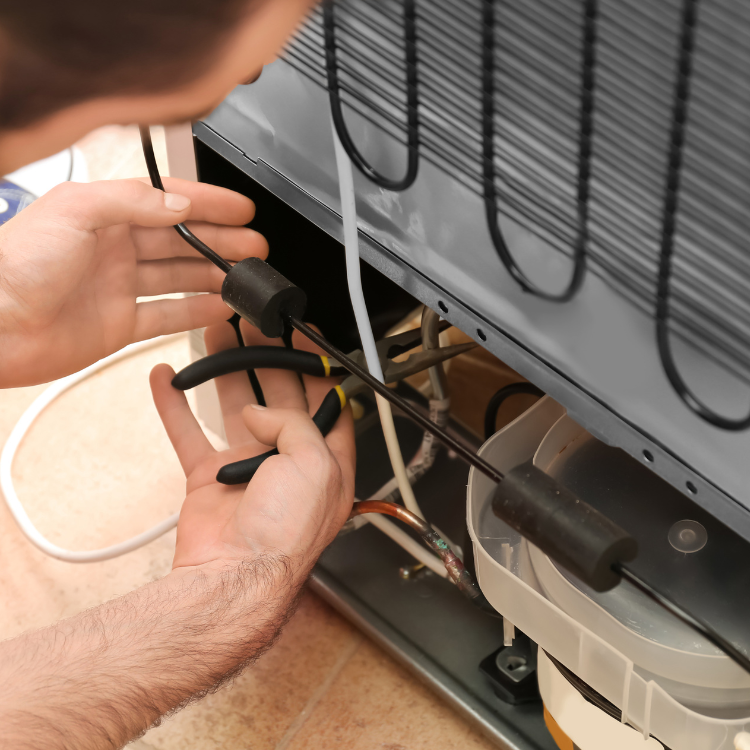
Commercial Appliance Repair Prevents Costly Downtime
Last Friday, a McKinney-area restaurant called us because their walk-in cooler was “barely cooling.” The manager didn’t want to wait for a non-urgent visit—because every hour the temperature climbed meant food spoilage risk, lost inventory, and missed revenue. By the time their prep line started slowing down, the building staff had already moved product around to keep things running. That’s the real cost of appliance problems in North Texas: downtime doesn’t just stop one machine—it disrupts the whole operation.
Commercial refrigeration, dishwashers, ovens, and dish/warewashing systems are especially sensitive to small issues. A weak compressor contact, a failing door seal, a partially clogged drain, or a thermostat calibration drift can look “minor” until the business feels the impact. The good news? Most costly breakdowns can be prevented—or at least delayed—when repairs are handled with proper diagnostics early instead of guesswork.
Quick Answer
Commercial appliance repair prevents downtime when technicians diagnose the root cause (not just symptoms), fix the part that’s actually failing, and address common “secondary issues” that lead to repeat failures—like airflow restrictions, clogged filters/drains, calibration drift, and electrical contact problems.
For businesses, the fastest path to stability is:
- respond quickly when temperatures or wash performance start changing,
- verify airflow, drainage, and electrical behavior during service,
- and schedule maintenance before peak usage seasons.
Commercial Refrigeration, Dishwashing, and Cooking: What Actually Causes Downtime
In commercial kitchens and businesses, the equipment works harder than most homeowners realize. Doors open frequently, loads are heavier, and cleaning schedules can be inconsistent—especially during busy weeks. From my own service experience, downtime usually starts from one of a few patterns:
Refrigeration: small airflow problems become big temperature problems
A “not cooling enough” complaint often traces back to:
- restricted airflow from dirty coils or fan issues,
- a door seal that’s letting warm air in,
- ice buildup caused by a defrost problem,
- or a control issue that’s not activating the right cycle at the right time.
A common technician observation: when a cooler is running constantly but the temperature still creeps up, it’s rarely “just low refrigerant.” Constant run time often means the system can’t move heat out effectively—dirty coils, blocked airflow, or a failing evaporator fan can make the compressor work harder without solving the problem.
Dishwashers: cleaning performance drops before they “break”
Dishwashers don’t always fail dramatically. More often, they start leaving residue, taking longer to cycle, or failing to fully drain. Those issues can come from:
- clogged filters and spray arms,
- heating problems (water not reaching the right temperature),
- pump/drain blockages,
- or hard water scale building up inside components.
And in many North Texas facilities, hard water is a recurring factor. Scale doesn’t only affect performance—it accelerates wear on parts by restricting flow and heat transfer.
Ovens and ranges: calibration drift and burner/control issues
Oven problems that lead to downtime aren’t always “the oven won’t turn on.” Uneven temperatures, delayed preheat, or inconsistent burner performance can slow service enough to feel like a full outage. In practice, this often involves:
- ignition/control problems,
- temperature sensor drift,
- or improper burner adjustment that changes how efficiently the unit heats.
If a kitchen has to re-fire dishes or shorten menu prep to compensate, the lost time adds up quickly.
Quick internal diagnostic reality check
When we arrive, we don’t just look for a failed part—we verify what the appliance is doing:
- Is it cycling correctly (refrigeration)?
- Is water flow and drainage working (dishwasher)?
- Is the unit heating to the expected range and holding steady (oven/range)?
That approach reduces “replace-and-hope” repairs that can cost more time and money.
What Homeowners and Businesses Often Overlook
Commercial operators are busy, so it’s understandable when maintenance gets pushed aside. But there are a few common oversights that repeatedly lead to emergency calls.
Common mistake: waiting until the unit is completely down
By the time a refrigeration unit is fully failing, the system may already have:
- accumulated heavier ice/scale,
- increased electrical stress,
- and damaged components from running out of balance.
Common mistake: ignoring early wash or temperature changes
A dishwasher that starts leaving spots or residue is a warning sign. If you keep running it “because it still works,” the buildup can clog drains and strain pumps. Same concept with refrigeration—if the cooler is trending warmer, that’s not a “monitor it later” situation.
Common mistake: skipping airflow and drain checks during service
A lot of repeat issues come from not verifying the basics:
- Are vents/air paths blocked by storage?
- Is the drain line clear?
- Are filters and spray arms actually clean and unobstructed?
- Is the unit level and operating as designed?
Repair vs Replacement: When Downtime Costs More Than Parts
Not every failure deserves a full replacement. But some situations do justify upgrading or planning replacement sooner—especially for commercial equipment that can’t afford repeated repairs.
Here’s a practical way to think about it:
| Situation | Repair is usually the better first move | Replacement may make sense |
|---|---|---|
| Unit is repeatedly tripping breakers or showing unstable electrical behavior | Repair after electrical diagnosis | If wiring/components are unsafe or outdated and repairs keep failing |
| Replacement parts are available and the unit is otherwise stable | Yes | If the unit is near end-of-life and costs keep escalating |
A repair recommendation I often make: if diagnostics show the issue is isolated and the appliance can be restored to stable operation, repair is usually the cost-effective move. But if we see multiple failed systems tied to a single underlying problem—like chronic airflow restriction or repeated drain clogs—then addressing that root cause is essential, and replacement can become the smarter plan depending on age and usage.
Appliance Maintenance Checklist (For Commercial Kitchens and Residential Homes)
Whether you manage a restaurant or you’re trying to keep your home running smoothly, this checklist helps catch problems before they become emergency repairs.
Refrigeration and coolers
- Check door seals for gaps and proper closing.
- Watch temperature trends daily during peak usage weeks.
- Ensure vents aren’t blocked by storage.
- Inspect for unusual frost/ice patterns.
- Confirm drain lines are clear (where applicable).
Dishwashers and warewashing systems
- Clean filters regularly and verify spray arms spin freely.
- Remove buildup from strainers and check drain lines.
- Run the unit at correct cycle settings (don’t “short cycle” to save time).
- If you have hard water, ensure any existing water treatment approach is functioning.
Ovens, ranges, and cooking equipment
- Verify temperature accuracy during high-volume days.
- Clean burner areas and check ignition performance.
- Don’t ignore recurring “preheat takes longer” complaints—calibration drift can be gradual.
Electrical and safety basics (often overlooked)
- Don’t repeatedly reset breakers without figuring out why.
- Make sure the equipment is properly grounded and wiring is intact.
- Report error codes as soon as they appear—those codes are data, not noise.
Our Experience Repairing Appliances in Texas Homes and Businesses
Texas True Appliance Repair services McKinney and surrounding North Texas communities, and we see the same themes again and again.
What we commonly see in North Texas appliances
- Refrigeration strain during seasonal heat swings: When temperatures spike, systems that were “barely holding” can suddenly fail because airflow and cooling demand changes fast.
- Hard-water scale affecting dishwashers: Scale builds up where water flow and heat transfer are critical. Over time, that causes residue, poor cleaning, and drain issues.
- Busy scheduling causing delayed service: Kitchens often run through problems until they can’t. That’s when we see secondary damage—like clogged drains leading to pump failure, or small cooling problems turning into defrost failures.
A realistic anonymized service case
We once serviced a commercial dishwasher at a local food operation where the owner said, “It still washes, just not as well.” The unit wasn’t dramatically “broken,” but it was leaving a film and extending cycle time. Diagnostics showed a combination of restricted spray coverage and drain resistance. After cleaning and repairing the affected components, the wash performance returned to normal—and the unit stopped overheating due to poor flow. The business avoided a larger failure that would have likely happened if they kept running it while it was struggling.
Why some appliance repairs fail early
When repairs are done without verifying operating conditions—airflow, drainage, heating behavior, or electrical stability—problems can return quickly. Parts can be replaced, but if the root cause remains (for example, airflow restriction or clogged drainage pathways), the new part often works under the same stress and fails again.
Same-Day and Emergency Options for When Business Can’t Wait
Commercial downtime is expensive, and delays can trigger cascading problems. If your refrigerator is trending warmer, your dishwasher is failing to drain properly, or your oven is heating unevenly during service hours, you don’t want to wait days just to “see what happens.”
If you need fast diagnostics, you can start here:
- appliance repair services for residential and commercial needs in McKinney and North Texas.
And for businesses specifically:
- commercial appliance repair services designed to minimize downtime and restore reliable operation quickly.
McKinney and North Texas Relevance: Why Local Conditions Matter
In McKinney, the weather swings and heavy seasonal use can expose weaknesses in refrigeration and cleaning systems. During hot stretches, coolers and refrigerators cycle harder, and small airflow or door-seal issues become more obvious. Meanwhile, hard water can accelerate dishwasher buildup and reduce cleaning efficiency over time.
The takeaway is simple: performance problems that start slowly can intensify quickly during peak conditions. That’s why fast, accurate diagnostics matter—whether you’re protecting food inventory or keeping your household running efficiently.
Ready-to-Use Repair Resources (Residential and Commercial)
If you’re handling a specific appliance issue, these repair pages can help you understand what to look for before service:
- refrigerator repair support for cooling failures and temperature inconsistencies
- dishwasher troubleshooting assistance when cleaning performance drops or residue remains
- oven repair services for uneven heating, ignition problems, and calibration concerns
- garbage disposal repair for drainage and clog-related kitchen downtime
Quick Answer: Signs Your Appliance Needs Repair
If you’re seeing any of the following, it’s usually time to schedule service rather than waiting:
- Refrigerator or cooler temperatures drifting upward
- Dishwasher leaving residue or failing to drain fully
- Oven heating unevenly, taking longer to preheat, or cycling inconsistently
- Error codes, repeated breaker trips, or unusual noises
- Visible leaks or water pooling around the appliance
FAQ
How do I know if my refrigerator is worth repairing?
If the unit is cooling intermittently or struggling during hot days, it’s often repairable—especially when diagnostics show issues like airflow restrictions, a failing fan, defrost problems, or a sensor/control fault. If the compressor is failing repeatedly or multiple major components are near end-of-life, replacement may be more cost-effective. A technician can assess operating behavior, not just symptoms, and give a clear repair-vs-replacement recommendation.
Why does my dishwasher keep leaving residue on dishes?
Most residue complaints come from restricted spray coverage, clogged filters, drain resistance, or heating issues where water isn’t reaching the proper temperature. Hard water scale can also prevent proper wash action. A thorough inspection of filters, spray arms, drain pathways, and heating components usually identifies the cause quickly.
How can I reduce commercial kitchen downtime if equipment starts acting up?
Document changes (cycle time, temperature readings, error codes), stop using “shortcuts” that strain equipment (like skipping proper cycles), and schedule repair as soon as performance trends change. The sooner the diagnosis happens, the less likely you are to end up with secondary damage—like clogged drains leading to pump failure.
Ready to Restore Your Appliances or Commercial Equipment?
If your business can’t afford delays—or your home equipment is showing warning signs—Texas True Appliance Repair can help with accurate diagnostics and reliable repairs across North Texas.
About Texas True Appliance Repair
Texas True Appliance Repair provides residential appliance repair, commercial kitchen equipment repair, refrigerator diagnostics, dishwasher repair, oven repair, and emergency appliance services throughout McKinney, TX and surrounding North Texas communities. The company focuses on accurate diagnostics, reliable repairs, fast response times, and helping homeowners and businesses reduce costly appliance downtime through professional service and preventative maintenance.