
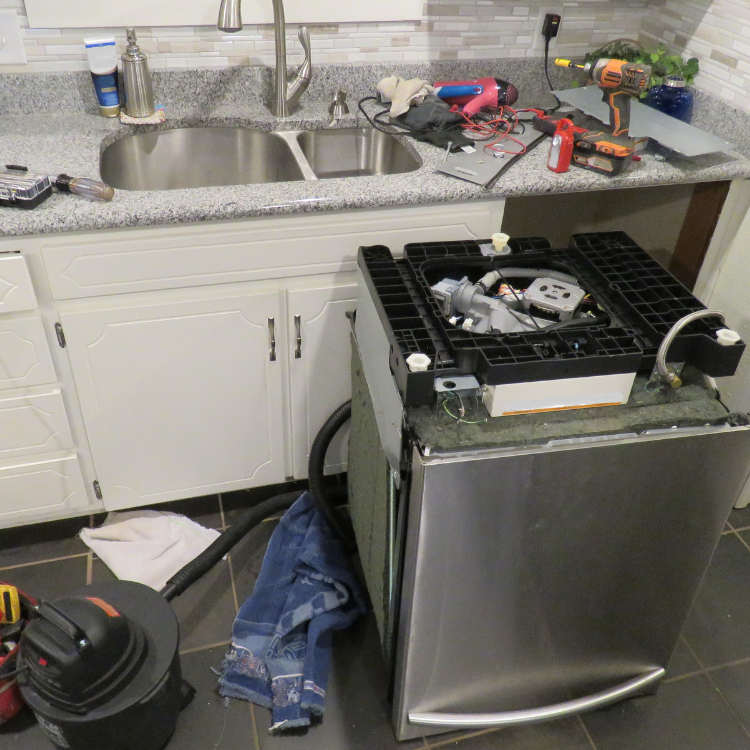
Professional Appliance Repair: From Strange Noises to Smooth Operation
Last summer, a McKinney homeowner called because their refrigerator sounded “busy all night”—a mix of loud clicking, short buzzing, and then warm temps by morning. The freezer still looked mostly cold, but the refrigerator section was creeping up, and the ice buildup in the freezer had started to look uneven. By the time we checked it, the unit wasn’t just making noise. It was working harder than it should, and that extra strain was starting to shorten the life of key components.
That’s a common pattern we see across North Texas homes and busy properties: strange noises and small performance changes are often the first warning signs of a repair problem—before the appliance fully fails.
Quick Answer
If your appliance is making new noises, running constantly, leaving residue, leaking, or heating unevenly, it usually needs diagnostics—not guessing. In many cases, a technician can identify the specific failing part (or an airflow/water issue) and restore smooth operation with a targeted repair. For commercial equipment, delaying repair often costs more than the fix because downtime affects food safety, service times, and revenue.
When “Normal Sounds” Aren’t Normal Anymore
Appliances communicate. Sometimes that communication is subtle—an extra hum, a slightly longer cycle, a vibration that wasn’t there before. Other times it’s obvious: grinding, rattling, frequent clicking, or a burner that won’t ignite cleanly.
What strange noises often mean (and what I check first)
From my experience servicing refrigerators, dishwashers, ovens, washers, and commercial kitchen equipment, noises usually fall into a few diagnostic buckets:
- Refrigerators: clicking (start relay/defrost control), buzzing (compressor-related load), rattling (fan or ice interference), or squealing (wearing fan motor or failing bearings).
- Dishwashers: grinding (chopper/jam), rattling (spray arm interference), humming with no drain (pump or obstruction).
- Ovens/ranges: popping/ignition clicking (spark/igniter issues), ticking (temperature control), or banging (loose burner components).
- Washers/dryers: thumping (out-of-balance load, worn suspension), squealing (belt/bearing wear), or scraping (drum or drum support problems).
A realistic service case (anonymized)
One of our recent refrigerator diagnostics involved a customer who said, “It cools, but it never stops clicking.” When we pulled the back panel, the evaporator fan area had ice that shouldn’t have been there. The fan couldn’t move air properly, so the system compensated—running longer and cycling more frequently. The repair wasn’t just “replace a part.” We addressed the root cause affecting airflow and defrost performance, then verified temperature stability after repair.
That approach is what prevents the same failure from coming back a month later.
Signs Your Appliance Needs Repair
Here are common “tell me something’s wrong” signs homeowners and property managers shouldn’t ignore:
- A refrigerator that runs constantly or can’t hold steady temps.
- Ice that forms unevenly or clumps strangely.
- Dishwasher residue that wasn’t there before (especially with hard water).
- Visible leaks under a dishwasher, washer, or garbage disposal.
- Oven temperature swings (food cooking unevenly or taking longer).
- Burners that won’t ignite reliably or ignite with delays.
- Washer vibration that increases over time or smells like mildew after cycles.
- Dryer airflow changes (longer drying times, unusually hot laundry rooms).
- Commercial kitchen downtime symptoms: refrigeration temperature drift, inconsistent steaming, or slow recovery after peak service.
What Homeowners Often Overlook
In the field, I see the same avoidable issues repeatedly—especially in North Texas where heat, humidity, and hard water can work against appliances.
1) Ignoring airflow problems in refrigerators
A refrigerator can look “mostly fine” while airflow is restricted. Dust on coils, blocked vents, or a freezer door gasket that isn’t sealing properly can trigger longer run times and abnormal noises.
2) Assuming a dishwasher problem is “just dirty dishes”
Many dishwasher complaints are actually water quality or drainage issues. Hard water can leave scale that interferes with heating and spray performance. A drain pump that’s slightly weak may still drain—but not enough to prevent residue buildup.
3) Delaying washer and dryer vent attention
A dryer vent that’s partially blocked often causes overheating, longer cycles, and premature wear. Eventually, the appliance compensates, and that’s when repairs get more expensive.
4) Trying to self-diagnose gas/ignition issues
With ovens and ranges, replacing parts without a real test can waste money. Gas systems require careful verification—ignition timing, airflow, burner condition, and safety checks.
Common Mistakes That Lead to Expensive Breakdowns
Here are the mistakes that most often turn a manageable repair into a bigger one:
- Continuing to run the appliance after leaks or repeated warnings.
- Resetting breakers without checking the actual fault (especially for refrigeration and commercial equipment).
- Overloading washers and dishwashers, which strains pumps, motors, and drainage paths.
- Using the wrong detergent or cleaners (dishwasher pods vs. rinse aid habits, abrasive cleaning that damages seals, or de-scaling too aggressively).
- Skipping calibration checks for ovens/ranges that have drifted—burners may still light, but cooking performance will suffer.
A practical example: a dishwasher that leaves residue often gets “cleaned” by running a harsher cycle or swapping detergent. If the real issue is drainage flow or heater performance, the residue will persist. The faster route is diagnostics on the water heating and wash/drain components.
Appliance Maintenance Checklist
Use this to reduce breakdown risk and keep performance steady—especially during heavy-use seasons in North Texas.
Refrigerator & freezer quick checklist
- Check door seals for gaps or weak suction.
- Keep the air vents inside the fridge from being blocked by food.
- Wipe down external coils if your model allows (or schedule professional coil cleaning).
- Make sure the unit isn’t pushed too close to the wall, blocking airflow.
Dishwasher quick checklist
- Run a monthly inspection of the filter and clean it as needed.
- Confirm spray arms spin freely (no stuck debris).
- Use rinse aid if you have hard water and notice spotting or residue.
- Check under-sink plumbing if you ever notice dampness.
Washer & dryer quick checklist
- Inspect hoses and connections for bulges or dampness.
- Clean the lint screen every load and monitor drying times.
- Schedule dryer vent cleaning if drying time increases or the laundry room stays unusually hot.
Oven/range quick checklist
- Watch for uneven heating or burner ignition delays.
- Keep burners and igniters clean (without damaging components).
- If a knob or control feels loose, treat it as a safety and performance issue—not a “minor annoyance.”
Repair vs Replacement: What I Tell Customers in McKinney
When an appliance starts acting up, the question isn’t “Can it be fixed?”—it’s “Should it be fixed?” That depends on the failing component, the appliance’s overall condition, and how much life it has left.
A simple decision rule technicians use
- Repair is usually the smart move when the issue is tied to a specific component (fan motor, pump, igniter, heater, control board) and the rest of the unit is healthy.
- Replacement may make sense when multiple systems are failing, the appliance is very old, or repairs would be stacked close together.
Quick comparison (typical scenarios)
| Situation | Repair often wins when… | Replacement often wins when… |
|---|---|---|
| Refrigerator noise + temp drift | Airflow/defrost component is failing | Compressor or multiple sealed-system issues are failing |
| Dishwasher residue/leaks | Filter/drain/pump/heater is the root cause | Repeated leaks plus major control failures |
| Oven not heating evenly | Calibration, igniter, or bake element issue | Multiple heating elements/control failures |
| Commercial refrigeration temp swings | One or two components are failing | System is beyond expected service life or repeated breakdowns |
If you’re weighing options, a technician should be able to explain:
1) what failed,
2) why it failed,
3) what it will cost to repair,
4) and what to expect after repair.
What We Commonly See in North Texas Appliances
North Texas has a few realities that show up in our diagnostic work:
- Heat load on refrigeration: Long compressor run times create stress. When airflow is restricted, noise patterns become more frequent.
- Hard water effects in dishwashers: Mineral buildup can cause spotting, reduce cleaning performance, and contribute to heater inefficiency.
- Power fluctuations and surge behavior: Electronics can act “quirky” when power isn’t stable—especially on older control boards.
- Heavy usage in growing neighborhoods: New families and busy households run dishwashers, laundry, and cooking equipment more frequently than the average household did years ago.
One firsthand observation I can’t stress enough: when a refrigerator makes abnormal noise and the temperature isn’t stable, don’t just listen for “sounds getting better.” The system may be forcing performance while parts wear faster. Diagnostics help confirm whether the noise is a symptom of defrost/airflow issues, a fan motor problem, or a compressor-related stress condition.
Our Experience Repairing Appliances in Texas Homes and Businesses
Texas True Appliance Repair supports both homeowners and commercial customers across McKinney and surrounding North Texas communities. Residential calls often involve refrigerators, dishwashers, washers/dryers, and ovens that gradually degrade—until noise or temperature drift forces action.
On the commercial side, downtime is a serious cost. A restaurant can lose hours of service if refrigeration fails during peak demand, or if dishwashing performance drops when staff need consistent sanitation cycles. For businesses, we focus on fast diagnostics, repair plans that reduce repeat failures, and practical recommendations for protecting equipment between service visits.
If you operate a commercial kitchen and need help quickly, see our commercial appliance repair services for restaurant-grade equipment repair planning.
Appliance-Specific Repair Focus (Where Noise Usually Starts)
Refrigerator repair support for clicking, buzzing, and uneven cooling
If your fridge is making repetitive clicking, buzzing, or struggling to hold temperature, start with a refrigerator repair support approach: airflow checks, defrost performance verification, fan operation tests, and seal evaluation before parts get swapped randomly.
Dishwasher troubleshooting assistance for residue and drainage issues
Dishwashers that leave spots or residue often need more than a new detergent. We frequently troubleshoot wash circulation, filter condition, and drain pump performance. If this matches your situation, you can use our dishwasher repair services to get to the root cause instead of treating symptoms.
Oven repair services for uneven heating and ignition problems
If your oven heats unevenly or ignition acts delayed, the problem might be an igniter, temperature sensing, burner condition, or calibration drift. For a repair-focused plan, review oven repair services and expect diagnostics that verify both safety and performance.
Garbage disposal repair when the noise is “grinding” or intermittent
Grinding noise can be food blockage, jam, or a failing unit. If your disposal is acting up, our garbage disposal repair guidance focuses on safe checks and restoring reliable operation without repeated jams.
McKinney & North Texas Relevance: Why Timing Matters Here
In McKinney, refrigeration and dishwashing systems work under higher seasonal demand. When it’s hot outside, refrigerators are already running harder; a small airflow issue can push the system into longer cycles. For restaurants and other businesses, that same strain shows up as performance inconsistency—especially if equipment is used heavily through lunch and dinner rushes.
That’s why we emphasize timely diagnostics. A repair done early on a failing component often costs less than replacing multiple parts after the appliance has been forced to compensate for a problem.
Quick “Emergency” Guidance for When You Can’t Wait
If your refrigerator temperature is rising, or your dishwasher is leaking into flooring, don’t wait for a “scheduled time” if food safety or property damage is at risk. The best next step is fast evaluation so you can protect contents, reduce damage, and restore operation.
For urgent situations, you can also explore same day appliance repair options when available to get your appliance back on track sooner.
FAQ
How do I know if my refrigerator is worth repairing?
If the unit still cools but temps drift, or the noise started recently, repair is often worth considering. A technician should diagnose airflow, defrost performance, fan operation, and seals before concluding it’s a lost cause. If the sealed system is failing (compressor issues) and the fridge is very old, replacement may be more cost-effective. The key is targeted diagnostics—not guessing based on age alone.
Why does my dishwasher leave residue even after I clean it?
Residue can come from hard water scale, clogged spray jets, poor wash circulation, or weak drain/pump performance. Cleaning the filter helps, but it doesn’t fix heater or circulation problems. If residue persists, ask for troubleshooting focused on wash water temperature, spray arm movement, and drainage flow.
What causes ovens to heat unevenly?
Uneven heating can be caused by a failing bake element, faulty temperature sensing, calibration drift, or issues with burner components. If only one side heats more than the other, the fix is usually component-related rather than a “recipe problem.” A proper oven test helps determine whether calibration or heating elements are the real culprit.
How quickly should a restaurant address commercial refrigeration problems?
If product temperature is drifting, speed matters. Delaying repair can lead to food safety risk, lost inventory, and service interruptions. A technician should check temperature recovery, airflow/defrost behavior, fan operation, and system performance. The goal is to restore stable temps quickly and prevent repeat failures.
Ready to Restore Your Appliances or Commercial Equipment?
From strange noises to inconsistent heating, most appliance problems have a root cause you can’t see just by watching. Fast diagnostics protect your time, your food, and your budget—and they prevent the “fix one part, break another” cycle.
About Texas True Appliance Repair
Texas True Appliance Repair provides residential appliance repair, commercial kitchen equipment repair, refrigerator diagnostics, dishwasher repair, oven repair, and emergency appliance services throughout McKinney, TX and surrounding North Texas communities. The company focuses on accurate diagnostics, reliable repairs, fast response times, and helping homeowners and businesses reduce costly appliance downtime through professional service and preventative maintenance.