
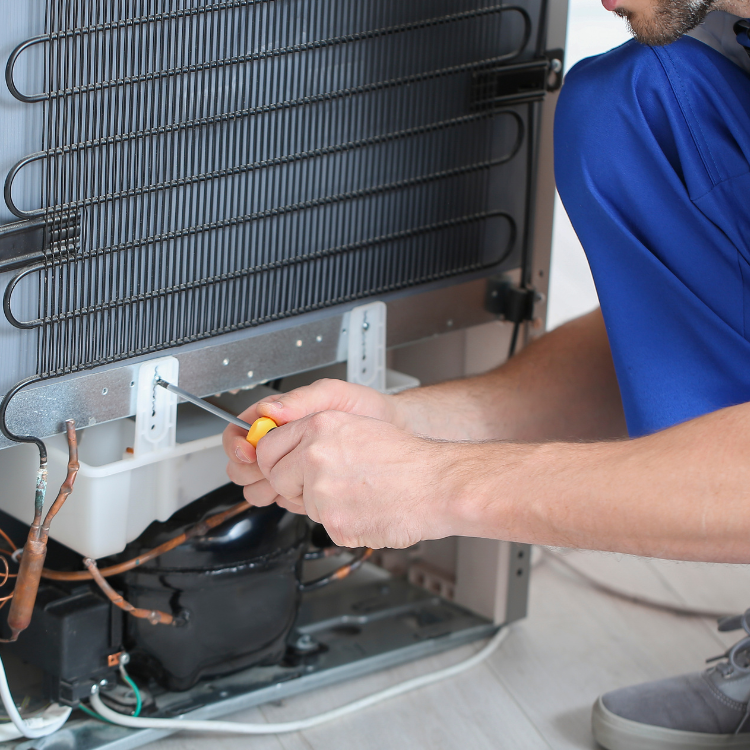
Commercial Appliance Repair: Service Calls Tailored for Restaurants
Last Friday, a McKinney restaurant called in because their walk-in cooler was “barely cold.” By the time the line cooks started swapping pans and staging ingredients differently, the real damage was already happening—temperature-sensitive items were warming, and the manager was staring at a clock that doesn’t care about parts delivery.
In restaurants, refrigeration and dishwashing failures aren’t just inconveniences. They’re operational disruptions that can snowball into spoiled product, health-code risk, and lost sales. That’s why commercial appliance repair service calls need to be fast, diagnostic-first, and built around how a kitchen actually runs—especially when you’re trying to keep prep moving and minimize downtime.
Texas True Appliance Repair handles commercial kitchen equipment repair and restaurant appliance repair company needs across North Texas, with an emphasis on clear diagnostics and practical solutions that work with busy schedules.
Quick Answer
For restaurants, the best commercial appliance repair services focus on:
- Rapid diagnosis (not guessing) to reduce downtime
- Correct parts and system-level checks (not just swapping components)
- Safety and food-safety verification for refrigeration and dishwashing
- Preventive adjustments to stop the same problem from returning
If your cooler, dishwasher, oven, or ice system is acting up, schedule service quickly—especially during Texas heat or busy service windows. In many cases, an early diagnostic prevents a more expensive failure later.
What Commercial Kitchens Need From a Repair Service Call
A residential repair is often “fix it when you can.” A restaurant repair is “fix it now, or we’re paying for it in real time.”
Here’s what we plan for on our service calls to kitchens and smaller commercial spaces:
- Priority triage: Which appliance affects food safety first—refrigeration, then dishwashing, then cooking equipment.
- Downtime strategy: Can the restaurant keep operating with reduced capacity while the repair is underway?
- System-level troubleshooting: Many “it stopped working” calls are caused by airflow problems, clogged filters, weak seals, electrical faults, or incorrect temperature control—not the most obvious component.
- Documentation for managers: We typically leave with a clear explanation of what failed, what was tested, and what should be watched next.
A realistic case we see often (anonymized)
A local restaurant reported that their dishwasher was running longer cycles and leaving dishes cloudy. The first assumption was a “failed heater.” On inspection, the technician found hard water scale restricting flow and causing poor heating efficiency—so the unit wasn’t reaching the temperatures needed to clean and sanitize consistently. The fix wasn’t just a part replacement; it required addressing the flow restriction and verifying correct operation after cleaning.
That’s the difference between a parts swap and true commercial troubleshooting.
What Homeowners and Businesses Often Overlook
Even when owners call quickly, a few common habits can turn a manageable issue into a repeat breakdown.
Common mistakes that lead to expensive breakdowns
- Ignoring temperature drift in refrigeration. “It’s not cold like it used to be” often means airflow restriction, failing controls, or a developing sealed-system issue.
- Running dishwashers with hard water buildup. Scale affects heating performance and circulation, which can cause residue, longer cycles, and premature component failure.
- Resetting breakers repeatedly without diagnosing. Electrical faults can be intermittent—resetting may mask the cause while increasing stress on components.
- Using ovens and ranges outside calibration. If burners or temperature controls drift, cooks compensate by changing cooking time and settings, which can stress igniters, thermostats, and control boards.
- Delaying venting or exhaust attention. In kitchens, grease and airflow restrictions raise heat and reduce performance, increasing the chance of recurring oven or hood-related issues.
Signs Your Restaurant Appliance Needs Repair (Before It Becomes a Shutdown)
From what we see across North Texas commercial kitchens, these are the most common “early warnings”:
- Refrigeration:
- Cooler temps fluctuate during peak service
- Ice buildup on wrong surfaces or excessive frost patterns
- Condenser coils look dirty or airflow feels weak
- Dishwashers:
- Cloudy film or residue that wipes off but returns
- Longer cycle times
- Inconsistent wash pressure or slow draining
- Ovens and ranges:
- Uneven heating (hot spots/cold spots)
- Burner ignition delay or repeated clicking
- Temperature seems off compared to previous performance
- Microwaves and smaller cooking equipment:
- Uneven heating or power dropping mid-cycle
- Garbage disposals and food prep sinks:
- Slow drainage that causes standing water and sanitation issues
Repair, Maintenance, or Troubleshooting: What We Recommend
Restaurants don’t need “generic maintenance advice.” They need practical steps tied to what actually fails.
Refrigeration troubleshooting priorities (quick technician perspective)
When a cooler isn’t holding temperature, we start with:
1. Airflow and fan operation: weak circulation can mimic a bad compressor.
2. Door seal and gasket condition: even small leaks matter in frequent-use environments.
3. Condenser coil cleanliness and airflow restriction: Texas heat makes this worse.
4. Temperature control verification: sensors and controls can drift.
5. Defrost behavior (if applicable): incorrect defrosting leads to icing and reduced cooling capacity.
If the diagnosis points to a sealed-system problem, we’ll be transparent about whether repair is practical or whether replacement better protects your food safety and long-term costs.
Dishwashers: the hard-water reality
In North Texas, hard water is a frequent contributor to dishwasher problems. Scale impacts:
- heating efficiency
- water circulation
- rinse performance
- drain behavior
If you’re dealing with residue or slow cycles, the most cost-effective path is usually:
- inspect and verify water flow and heating performance
- address scaling and restrictions
- confirm proper wash and rinse temperatures during operation
For targeted support, you can explore dishwasher repair services from Texas True Appliance Repair.
When to repair vs replace (a practical decision lens)
Here’s a simple way managers can think about it:
| Situation | Often Best Choice |
|---|---|
| Unit fails but core parts test good, and repair restores performance | Repair |
| Repeated failures in short intervals | Repair with root-cause correction (or evaluate replacement) |
| System is old, parts are scarce, and performance is unreliable | Replacement planning |
| Food safety risk and downtime is costly | Repair quickly or replace to stabilize operations |
In many restaurants, the “right” choice is the one that restores consistent operation fast—not the one that minimizes the invoice today.
Appliance Maintenance Checklist for Restaurants (Use This Between Service Calls)
If you want to reduce repeat breakdowns, assign a checklist to a shift lead or maintenance tech. Keep it simple and repeatable.
Weekly
- Check cooler/freezer temperature logs (and investigate drift early)
- Inspect door seals/gaskets for gaps or wear
- Run a quick visual inspection of dishwasher:
- spray arm movement
- draining speed
- obvious leaks
Monthly
- Inspect condenser and airflow paths (where accessible)
- Check dishwasher filters and clean per manufacturer guidance
- Inspect oven/range burner operation and ignition behavior
Every quarter (or based on usage)
- Schedule a professional inspection for refrigeration cycles and wash/sanitize performance
- Review water quality and scaling indicators (dishwashing performance changes are often the first sign)
McKinney and North Texas Relevance: Why Seasonal Strain Changes the Repair Game
North Texas summers are brutal on refrigeration. In McKinney and surrounding areas, we frequently see:
- hot, heavy air load on condenser systems
- increased door openings during busy service
- faster buildup on coils and filters
- more frequent “weak cooling” complaints rather than sudden total failure
That seasonal strain is why waiting for a complete breakdown can be costly. A cooler that’s struggling in July can fail faster if airflow restrictions and scaling aren’t addressed early.
Our Experience Repairing Appliances in Texas Homes and Businesses
One firsthand observation from years of service: many “mystery failures” aren’t mysteries at all—they’re patterns.
For example:
- Refrigerators and coolers often fail early when airflow is blocked (dust on coils, restricted vents, or accumulated debris).
- Dishwashers often degrade due to hard water scale and incorrect expectations about cycle time.
- Ovens and ranges frequently show inconsistent performance when controls drift or when burners aren’t operating consistently under kitchen conditions.
That’s why we lean on diagnostic testing—checking what the appliance is doing, not just what it’s saying. If you’re searching for a local team that can handle both restaurant downtime and the technical cause behind it, Texas True Appliance Repair is built for that mix.
If you’re dealing with cooking equipment specifically, see oven repair services for support with stove and oven repair technician diagnostics and repairs.
Emergency Commercial Appliance Repair: What to Do When Time Matters
If refrigeration or dishwashing fails during peak hours, the best immediate step is to:
- limit product exposure (move temperature-sensitive items to stable storage)
- keep doors closed as much as possible
- avoid repeated resets that can worsen electrical faults
- document symptoms (error codes, cycle behavior, when it started)
Then call for emergency commercial appliance repair so the diagnostic happens quickly. When you’re trying to keep service running, minutes matter.
For refrigeration-specific help, consider refrigerator repair support—the same diagnostic principles apply to commercial refrigeration challenges.
A Quick Note on Reliability and Parts
Restaurants often ask whether it’s better to repair or replace parts immediately. Our recommendation depends on what testing shows:
- If components test within spec and the real issue is airflow, scaling, or sensor drift, repair is usually the most economical path.
- If the unit can’t reliably hold temperature or sanitize performance, replacing key components—or the appliance—may protect your operation better long term.
Either way, the goal is the same: stable performance that keeps your kitchen running predictably.
FAQ
How quickly should we call for commercial appliance repair?
If refrigeration temperature is drifting or a dishwasher isn’t cleaning and sanitizing consistently, call as soon as you notice the change. For kitchens, waiting “a few days” can mean wasted product and increased risk during inspections. If the unit is completely down, treat it as urgent and request emergency commercial appliance repair so diagnostics are prioritized.
Why does our dishwasher leave residue even though it runs through full cycles?
Residue can be caused by restricted water flow, hard water scale, clogged filters, weak wash pressure, or heating performance issues. We typically verify circulation, drain behavior, and whether the dishwasher reaches the temperatures needed for effective cleaning and sanitizing—not just whether it finishes a cycle.
Is it worth repairing a cooler that’s struggling in summer?
Often, yes—especially if testing shows airflow issues, control/sensor drift, or maintenance-related restrictions (like coil buildup). If diagnostics reveal a sealed-system failure, replacement may be the safer long-term choice for reliability. The right answer depends on what the unit is doing during operation, not just its age.
Can an oven be “off” even if it heats?
Yes. Uneven heating or temperature drift can happen due to thermostat/control issues, burner problems, or calibration drift under heavy use. That’s why we check operation patterns and control behavior, then recommend the appropriate repair or adjustment.
Ready to Restore Your Appliances or Commercial Equipment?
If your restaurant equipment is slowing service—coolers warming, dishwashers leaving residue, or cooking equipment heating unevenly—get diagnostics quickly so you can protect food safety and reduce downtime.
About Texas True Appliance Repair
Texas True Appliance Repair provides residential appliance repair, commercial kitchen equipment repair, refrigerator diagnostics, dishwasher repair, oven repair, and emergency appliance services throughout McKinney, TX and surrounding North Texas communities. The company focuses on accurate diagnostics, reliable repairs, fast response times, and helping homeowners and businesses reduce costly appliance downtime through professional service and preventative maintenance.