
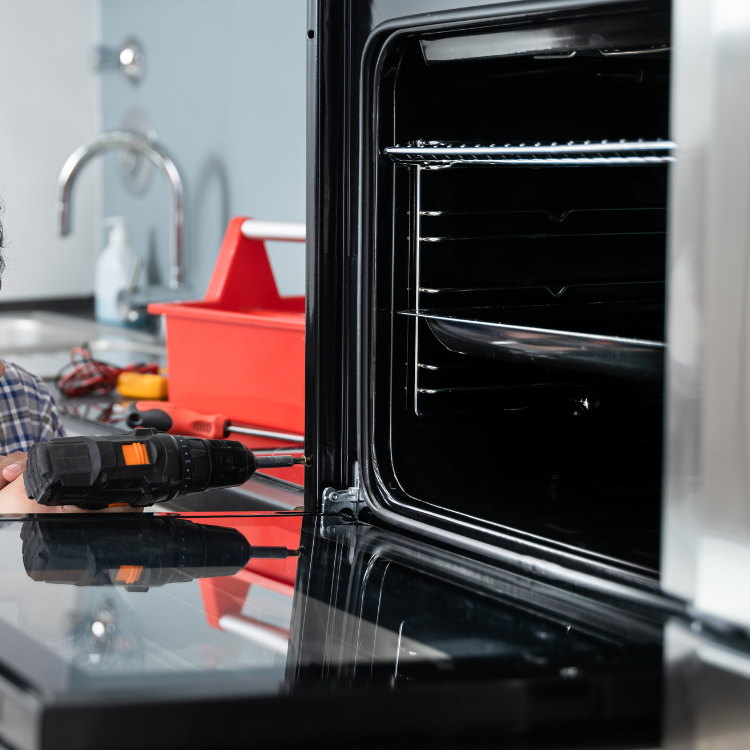
Expert Appliance Repair for Control Board Failures
Last July, a McKinney homeowner called Texas True Appliance Repair because their refrigerator was “running but not cooling.” The display was lit, the fan sounded like it was trying, and the ice maker was quiet. By the next morning, the freezer was warm enough that food began to thaw—exactly the kind of problem that turns a small breakdown into a food-loss emergency during Texas heat.
In many cases like this, the culprit isn’t the compressor or the thermostat first. It’s often the control board (also called the main electronic control). When the control board can’t properly read inputs or send power to the right components, the appliance behaves in a confusing, half-working way that makes troubleshooting harder than it looks.
Quick Answer
Control board failures usually show up as “normal power, wrong behavior”—lights on, fans running inconsistently, heaters not cycling, error codes that don’t make sense, or features that stop working while the unit still appears powered. Replacing the board can be the right fix, but only after a proper diagnosis—because power issues, moisture intrusion, faulty sensors, and wiring problems can mimic control board symptoms.
If you’re dealing with a refrigerator, dishwasher, or oven that won’t perform as expected, the fastest path to a reliable repair is professional diagnostics that check the inputs and outputs, not just the display.
How Control Boards Fail (and What You’ll Notice)
A control board is basically the appliance’s brain. It receives signals from sensors and switches, then controls relays and power to key parts like:
- Compressor and condenser fan (refrigerators)
- Drain pump and heating element (dishwashers)
- Ignition system, bake/convection elements, and temperature regulation (ovens/ranges)
- Wash motor, drain components, and water inlet behavior (washers)
When the board fails, you typically see one of these patterns:
1) Appliance “turns on,” but the cycle never completes
Example: A dishwasher starts, drains partially, then stops or leaves dishes wet. The control board may not be energizing the heater or may be failing to interpret the water temp/thermistor properly.
2) Intermittent operation
Example: An oven preheats to a different temperature than set, or it shuts off early. Boards can develop weak connections or failing components that only act up under heat or after a power fluctuation.
3) Features stop while the unit still powers on
Example: Refrigerator lights work but cooling is weak, or the ice maker stops producing while the main compartment seems to “sort of” function.
4) Error codes that don’t match the symptom
Modern appliances sometimes display codes related to communication, sensor readings, or relay function. If the board can’t interpret inputs correctly, the code can point you in the wrong direction unless it’s tested properly.
What We Commonly See in North Texas Appliances
North Texas appliances live hard lives. In McKinney and surrounding communities, we see a few repeat offenders that can contribute to control board problems:
- Power fluctuations and short surges: Texas summer storms can create brief voltage dips/spikes that stress electronics.
- Moisture intrusion: Dishwasher leaks, refrigerator defrost water, and ice maker line issues can allow moisture to reach the control area.
- Hard water scaling: Scale doesn’t just affect performance—it can lead to sensor and heater issues that overload circuits.
- Seasonal workload spikes: Refrigeration and dishwashers run more frequently in summer, and that increased heat cycling can expose weak electronic components.
A firsthand technician observation
On one service call, the dishwasher “needed a control board” based on symptoms—yet when we removed the inner door panel, we found corrosion around the wire connections caused by a slow leak. The control board wasn’t the original failure; moisture damage had progressed upstream and downstream, and the board ended up being the last component to show the problem. That’s why we test before replacing.
Common Mistakes That Lead to Expensive Breakdowns
Mistake 1: Replacing the control board without checking power and wiring
Control boards are expensive. But if the root cause is a failing sensor, shorted heater, corroded connector, or a wiring harness issue, swapping the board may only delay the inevitable.
Mistake 2: Ignoring small leaks or condensation
A minor drip under a dishwasher or a wet area behind a refrigerator seems harmless until it reaches electronics. Moisture can cause intermittent faults that get worse over time.
Mistake 3: Resetting the appliance repeatedly instead of diagnosing
Yes, power cycling can clear certain faults. But if the board is failing—or if there’s a continuing short circuit—resets won’t fix the underlying electrical issue. They can also complicate diagnostics by wiping fault history.
Mistake 4: Skipping venting and airflow basics
For ovens, ranges, and some refrigeration setups, blocked vents or restricted airflow can overheat components. Electronics dislike heat. Heat doesn’t always “break” a board immediately—it often accelerates failure.
Appliance Maintenance and Troubleshooting Checklist (Before You Call)
Use this checklist to narrow down what’s happening. It won’t replace professional diagnostics, but it helps you avoid guessing.
Quick inspection checklist
- Look for moisture: Any wet panels, rust spots, or damp wiring areas?
- Check for error codes: Write down the exact code(s) and what the appliance was doing when it appeared.
- Inspect power connections: Loose plugs, damaged cords, or tripped breakers.
- Verify airflow: For refrigerators, confirm the vents aren’t blocked by food or ice buildup.
- Listen for cycle completion: Does the appliance start normally and then stop? Or never start the correct step?
Refrigerator-focused troubleshooting
- Is the compressor running consistently?
- Are the evaporator fan and condenser fan behaving normally?
- Any signs of ice buildup in the wrong areas?
- Are you seeing temperature swings rather than steady cooling?
Dishwasher-focused troubleshooting
- Does it drain fully at the end of a cycle?
- Is the water staying too cool (poor drying, lukewarm wash)?
- Any residue that suggests wash circulation problems (and not just soap choice)?
- Any visible leaks around the door seal or lower front panel?
Repair vs Replacement: When a Control Board Is Worth Fixing
Control boards can often be repaired or replaced depending on the appliance design and the failure type. In practice, the decision usually depends on:
Repair (or board-level troubleshooting) is often appropriate when:
- The board shows a specific failure pattern tied to a testable circuit.
- The board damage is limited and connections or corrosion are the main issue.
- The appliance is otherwise healthy (good compressor, clean airflow, correct thermistor behavior).
Replacement is often the right call when:
- The board has failed internal components (relays, power regulation circuits).
- The appliance repeatedly throws “control” or “communication” style faults.
- The board is exposed to moisture damage that has progressed beyond connectors.
What we recommend in real cases
We typically recommend diagnostics first—especially with control boards—because the board is frequently the “most visible” component. The hidden causes (wiring harness corrosion, failing sensors, heater shorts, or defrost moisture pathways) are what determine whether a new board will actually solve the problem long-term.
A Realistic Service Case (Anonymized)
A local restaurant in North Texas contacted Texas True Appliance Repair because their reach-in refrigerator kept warming during peak service. The unit had power, interior lights worked, and the display showed activity—but temps climbed steadily.
Our technician checked more than the display:
- Tested sensor readings and compared them to actual temperature behavior
- Verified relay action during normal cooling cycles
- Inspected the control compartment for moisture exposure
- Checked airflow and defrost behavior that can indirectly stress the control system
The root issue turned out to be a combination of a failing control circuit and a moisture-related failure at a connector point. The final outcome required control board replacement plus connector remediation to prevent recurrence. The restaurant avoided additional downtime and didn’t have to repeat repairs after the first “fix.”
Our Experience Repairing Appliances in Texas Homes and Businesses
Whether it’s a residential refrigerator repair or a commercial kitchen equipment repair, the approach is the same: we treat the symptom like a clue, not the whole story.
Texas True Appliance Repair focuses on:
- Accurate diagnostics (testing before replacing)
- Professional appliance repair technician practices (checking wiring, sensors, and power delivery)
- Practical repair expectations for both homeowners and facility managers
- Reducing repeat failures by identifying the true cause—not just the part that looks bad
If you’re looking for broader coverage, we also support appliance repair services for homes and businesses across the area.
McKinney / North Texas Relevance: Why Timing and Diagnostics Matter Here
In North Texas, you don’t get “extra time” to experiment with appliance fixes. Summer heat stresses refrigeration systems, and thunderstorms can create power events that are hard on electronics. Meanwhile, many households and businesses in McKinney rely on appliances daily—so a slow repair process becomes lost time, lost food, or lost service.
That’s where fast diagnostics and the right repair plan matter. For example, if a freezer warms due to a control board issue, the decision isn’t only “replace the board or not”—it’s also “how quickly do you restore stable temperatures to protect food?”
If you’re dealing with a refrigerator that’s acting strangely, our refrigerator repair services are built around identifying the actual failure pathway, not guessing.
Repair, Replacement, or Maintenance: What to Do Next
Here’s a practical recommendation based on how control board failures usually present:
1. Document the behavior (what works, what doesn’t, any codes).
2. Schedule diagnostics rather than ordering parts blindly.
3. Ask for a test plan: what sensors and outputs are being checked?
4. If replacement is needed, address contributing causes (moisture intrusion, corrosion, wiring harness issues, or power instability).
5. After repair, request performance verification—for refrigerators, stable temps and proper cycling; for dishwashers/ovens, correct cycle completion and heating behavior.
If your issue involves the dishwasher, you may find it helpful to review dishwasher repair services and troubleshooting guidance we use to pinpoint control-related faults.
Quick Comparison: Control Board vs Other Common Causes
| Symptom | Control Board Failure Can Look Like… | Other Common Causes |
|---|---|---|
| Appliance powers on but won’t complete cycle | Relay not energizing / wrong signal interpretation | Failed sensor, clogged filter, wiring corrosion |
| Intermittent heating or inconsistent temps | Board not regulating power consistently | Thermostat/thermistor issues, element failure |
| Error code(s) appear unexpectedly | Board communication or output circuit faults | Harness damage, moisture, control sensor drift |
| Cooling seems weak but fans run | Board not controlling compressor/defrost correctly | Defrost system issues, airflow restriction |
This is why we test. The symptom can be similar across multiple failures, but the fix depends on what’s actually failing in the chain.
Ready to Restore Your Appliances or Commercial Equipment?
If your refrigerator, dishwasher, or oven is acting “half-alive” (power on, wrong behavior, intermittent cycling), don’t waste time replacing parts you haven’t tested. A proper diagnosis can prevent repeat failures and restore reliable performance faster—especially when Texas weather and heavy usage expose weak electronics.
About Texas True Appliance Repair
Texas True Appliance Repair provides residential appliance repair, commercial kitchen equipment repair, refrigerator diagnostics, dishwasher repair, oven repair, and emergency appliance services throughout McKinney, TX and surrounding North Texas communities. The company focuses on accurate diagnostics, reliable repairs, fast response times, and helping homeowners and businesses reduce costly appliance downtime through professional service and preventative maintenance.
We also support commercial appliance repair services for businesses that can’t afford extended downtime.
FAQ
How do I know if my control board is actually failing?
If your appliance powers on but doesn’t perform the correct cycle steps—especially with inconsistent heating/cooling, odd error codes, or features stopping while others seem normal—control board failure becomes a strong possibility. The only reliable way to confirm is diagnostics that test sensor inputs and output control (relays/power delivery), not just the display.
Can a power surge damage my appliance control board?
Yes. Brief voltage dips or surges during storms can stress electronic components and cause intermittent failures. That’s also why we check power pathways and connections during diagnosis—sometimes the board symptoms are driven by a wiring or moisture issue triggered by the event.
What’s the common “small problem” that leads to board failures?
Moisture intrusion. A slow leak from a dishwasher, condensation behind a refrigerator panel, or corrosion at a connector can gradually damage circuits. When electronics are exposed to moisture, the control board often becomes the part that fails last.
Is same day appliance repair realistic for control board issues?
Often, yes—if parts availability and diagnostics line up. Control board-related problems can usually be identified quickly, then we move into repair options. If you need urgent service for food safety or business uptime, ask about same day appliance diagnostics when you contact us.