
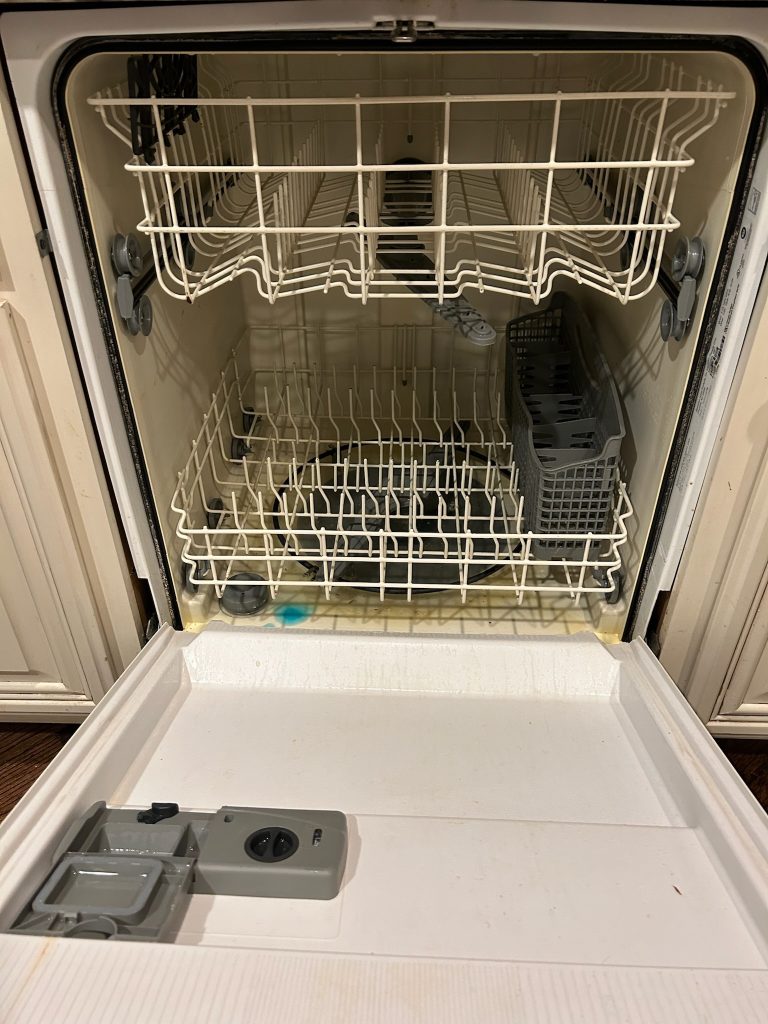
Expert Dishwasher Repair for Clogged Spray Arms
A common call we get in McKinney during the busier parts of the year starts with the same complaint: “Our dishwasher isn’t cleaning anymore—and now the dishes feel gritty.” The owner usually notices it after a few weeks of “it still mostly works,” then suddenly the problem worsens. Glassware comes out spotty, plates look streaked, and sometimes water pools at the bottom. In many cases, the culprit isn’t a broken pump or a failed control board—it’s clogged spray arms that can’t spin or can’t push water with enough pressure.
In North Texas, that failure pattern is especially frustrating because dishwashers run frequently—family meals, school schedules, and weekend hosting. Add hard water and mineral buildup, and spray arm clogging becomes a regular maintenance issue, not a rare one.
Quick Answer
If your dishwasher’s spray arms are clogged, water can’t reach dishes properly, which causes poor cleaning and residue. The fix usually involves removing and cleaning spray arm components, clearing the sump area and filter, and addressing hard-water/mineral buildup. If spray arms repeatedly clog quickly, there may be a deeper issue—like a failing wash pump, restricted drain/sump flow, or a damaged filter system. For reliable results, a professional dishwasher repair technician should diagnose water flow and verify the underlying cause.
What We Usually See With Clogged Spray Arms
When I troubleshoot these, the pattern is pretty consistent:
- Top rack items are worse than bottom rack items (or vice versa), depending on which spray arm is partially blocked.
- Fine grit or white film appears on dishes and utensils.
- Water doesn’t fully rinse off food residue, especially on starch-heavy foods (rice, pasta, potatoes).
- The spray arm may spin slowly or stop mid-cycle.
- Lower spray arm holes look restricted (sometimes you can see a “ring” of buildup).
A realistic scenario from the field (anonymized)
A McKinney homeowner called after switching to a new dish soap “because it said it was stronger.” The dishwasher still left residue. When we removed the spray arms, several jets on the upper arm were blocked with a mix of grease and mineral scale. The bottom arm was partially restricted too. The filter wasn’t clogged with big debris—it was the fine buildup that kept water from distributing correctly. Once the spray arms and sump area were cleaned, cleaning performance returned to normal.
That’s the key: spray arm clogging isn’t always obvious. It can be mineral-heavy, grease-heavy, or a combination.
Hand-on technician observation
In many homes, the filter looks “pretty clean” on the surface. But when you pull it and inspect it under good light, you often find a thin layer of hard scale in the micro-mesh and in the sump corners. That layer doesn’t stop water entirely—it just reduces flow enough that spray arms can’t maintain strong, even coverage.
Signs Your Dishwasher Needs Repair (Not Just Another Rinse)
A dishwasher with clogged spray arms often shows these symptoms:
- Dishes come out spotty, filmy, or with stuck-on residue
- Spray arms won’t rotate fully or stop during the wash
- You see pooled water at the bottom after a cycle
- Dishes feel greasy or gritty
- The dishwasher takes longer than usual to complete cycles
- You notice a sour smell from standing water
If you’re dealing with pooled water, it can be more than spray arm clogging—drain flow issues and sump restrictions can cause both poor cleaning and residue.
Common Mistakes That Lead to Expensive Breakdowns
1) Skipping the filter cleaning step
Many homeowners clean the spray arms but ignore the filter and sump area. If the sump is restricted, the spray arms will clog again quickly.
2) Pre-rinsing everything (and using the wrong setup)
Modern dishwashers and detergents are designed to work with soil removal and detergents’ enzymes. Constantly pre-rinsing can sometimes leave grease in a way that later redeposits, and it also encourages people to use too much detergent “to compensate.” The result can be extra residue that contributes to clogging.
3) Running “heavy” cycles with light maintenance
If you run a normal cycle with heavy food load and never fully clear buildup, you’ll eventually get restricted jets. What looks like a “sudden failure” is often the end of a gradual restriction.
4) Forcing spray arms that don’t want to turn
If a spray arm is stuck from scale, forcing it can damage the mounting mechanism or crack plastic components. That turns a clean-out job into a parts replacement.
Repair, Maintenance, or Troubleshooting Checklist
You can often improve cleaning performance quickly with the steps below. If the issue persists after cleaning, the problem may be water flow, pump performance, or a drain restriction—and that’s where professional diagnostics help.
Dishwasher Spray Arm Troubleshooting Checklist
Step 1: Inspect symptoms and confirm the pattern
- Are the top rack items worse, the bottom rack, or both?
- Does the dishwasher leave standing water at the bottom?
- Is there a white film (hard water/mineral scale) or a greasy residue?
Step 2: Remove and clean the spray arms
- Take out the upper and lower spray arms (and any middle arm, if your model has one).
- Check the spray holes/jets for visible blockage.
- Clean jets using a soft brush and rinse thoroughly.
- If buildup is stubborn, soak removable parts in warm water with a dishwasher-safe descaling solution, then rinse.
What to look for: jets that have a “reduced opening” or look partially filled with mineral scale.
Step 3: Clean the filter and sump area
- Remove the filter assembly (and any fine mesh inserts).
- Rinse and scrub under running water until debris is gone.
- Check the sump corners—fine scale can hide there.
If you consistently see residue in the sump, you may need more frequent cleaning or a deeper flow diagnostic.
Step 4: Check for obstructions in the drain path
- Look for small debris in the drain area.
- Confirm the dishwasher can drain fully after a cycle.
- If it doesn’t drain well, spray arms may run with reduced circulation, and cleaning will always be compromised.
Step 5: Run a test cycle
- After reassembly, run a short cycle with no dishes.
- Watch the spray arm operation: it should rotate strongly and evenly.
- If rotation is weak or stops, the issue may be wash pump performance, blocked internal channels, or a restriction in circulation.
When to stop DIY and call for service
If you’ve cleaned the spray arms and filter thoroughly and the dishwasher still can’t build pressure or drain properly, it’s usually not just “gunk.” Common underlying causes include:
- Wash pump wear (reduced pressure over time)
- Restricted sump channels from hard water and detergent residue
- Drain pump or drain hose restriction causing poor circulation
- Incorrect loading causing blockage of spray arm rotation
A professional technician will verify water flow and circulation, not just clean visible parts.
Repair vs Replacement: What Makes Sense for a Dishwasher?
When a dishwasher fails, many people jump straight to replacement—especially if it’s older. But clogged spray arms are often a repair-friendly issue. Here’s a simple way to think about it:
| Situation | Most likely outcome | Why |
|---|---|---|
| Spray arms are clogged; cleaning improves after cleaning | Repair/maintenance | Root cause is usually buildup and restricted jets |
| Spray arms clog again within weeks | Further diagnosis/repair | There may be a circulation or drain restriction |
| Dishwasher doesn’t drain and leaves water | Repair recommended | Drain flow affects cleaning and can worsen other components |
| Repeated pump-related symptoms, poor pressure, leaks, or control faults | Repair vs replacement | Costs can rise if multiple components are failing |
Recommendation: If your dishwasher cleans poorly and you’re seeing residue or incomplete rotation, start with spray arm and sump diagnostics. If the same problem returns quickly, don’t keep repeating clean-outs—get the water flow system checked.
What Homeowners Should Know (and Commercial Managers Too)
Dishwashers are deceptively simple. Inside, they rely on consistent circulation: the pump pulls water from the sump, pushes it through jets, and drains it out cleanly. If any part of that loop is restricted—by scale, grease, or debris—spray arms can’t do their job.
For restaurants and busy kitchens, this becomes a downtime problem, not just an inconvenience. A dishwasher that can’t clean properly can slow prep and service, forcing staff to hand-rinse more than planned. That’s where professional troubleshooting matters: you want the machine back in production with confidence, not just “temporarily better.”
If you manage a business and want a broader look at commercial reliability, you may also find value in commercial repairs for appliances and equipment when downtime impacts your kitchen flow.
Why Some Repairs Fail Early
We sometimes see repairs “work for a week” and then the problem returns. The usual reasons:
- Only the spray arms were cleaned, not the sump/filter where residue collects.
- The underlying cause—like hard-water scale buildup—wasn’t addressed with proper cleaning frequency or descaling.
- The dishwasher was loaded in a way that blocks rotation or traps spray water in certain areas.
- A drain restriction created poor circulation, so clogs formed again rapidly.
A good repair focuses on the entire water path, not just the visible parts.
McKinney & North Texas Relevance: Hard Water, Heavy Use, and Heat
In North Texas, hard water and frequent use are a real factor. Mineral buildup doesn’t just show up as white spots—it can accumulate in tiny jet openings and in the sump corners where flow is slower. During hotter months, dishwashers may also get used more often (more hosting, more meals, more frequent loads), which accelerates residue accumulation.
That’s why we recommend treating spray arm clogging as a maintenance signal. If you’re cleaning often but still seeing poor cleaning performance, it’s worth checking circulation and drain function—because the dishwasher may be struggling with flow long before it “fails” completely.
Our Experience Repairing Dishwashers in Texas Homes and Businesses
Texas True Appliance Repair works across residential dishwashers and commercial kitchen equipment repair needs. For many clogged spray arm cases, we start by verifying:
- whether the spray arms rotate with strong, even pressure,
- whether the sump/filter assembly is restricting flow,
- whether drainage is complete (standing water often points to circulation problems),
- and whether the dishwasher’s wash system is operating as designed.
If the fix is maintenance, we’ll tell you exactly what to clean and how often to prevent repeat clogs. If parts are involved—like a pump issue or damaged components—we’ll explain what’s failing and why it affects cleaning performance.
If you want to compare service options across other kitchen appliances, you can also explore dishwasher repair services for a more complete troubleshooting approach.
Quick Example: What a Technician Finds (and What It Means)
Here’s a common “mid-diagnosis” discovery: the spray arms are clean, the filter is clean, and the jets look open—but cleaning still isn’t consistent. In those cases, we check circulation. Sometimes the wash pump is losing pressure, and the spray arms can’t maintain a full sheet of water coverage. Other times, the drain path is partially restricted, which reduces effective circulation.
The takeaway for homeowners: if you’ve cleaned the obvious parts and you’re still getting residue, the problem is likely in the water movement system—not just the spray arms.
Related Repair Options You Might Need
Dishwashers don’t work in isolation. If the kitchen has other water-related appliance issues, you may be dealing with broader plumbing or drainage strain. For example, if you’re also seeing slow draining in the sink, it can overlap with dishwasher drain performance. If that’s your situation, this garbage disposal repair page can help you connect the dots between dishwasher drainage and sink disposal function.
And if your home has multiple appliances behaving oddly at the same time—often due to power fluctuations or cycle timing issues—you may want to plan for broader appliance repair services so the diagnosis is coordinated rather than piecemeal.
When You Need Same-Day Service
If you’re dealing with a dishwasher failure during a busy week, waiting can cost you time and frustration. Texas True Appliance Repair offers same day dishwasher repair service when available, because getting the machine back online quickly helps prevent residue buildup from turning into a bigger circulation problem.
FAQ
Why does my dishwasher leave gritty residue even after I clean the filter?
Gritty residue often comes from fine mineral scale and grease that builds up in the sump corners and in spray arm jets. If you clean only the filter but the spray arm holes are restricted—or if the sump is still scaled over—water can’t reach dishes with proper coverage. A technician will check water flow and internal circulation, not just the filter.
Are clogged spray arms a hard-water problem?
Often, yes. Hard water can deposit minerals that slowly narrow spray jet openings and reduce pressure. If you have recurring clogs, you may also need a better descaling routine and a check of drain/circulation performance so residue doesn’t keep redepositing.
My dishwasher runs but dishes still aren’t clean—could it be a pump issue?
It could. When spray arms can’t spin with strong, even pressure, cleaning suffers. Clogs are common, but reduced wash pump performance or internal flow restrictions can cause the same symptom. If spray arm cleaning doesn’t restore performance, diagnostics should focus on circulation and wash system pressure.
How quickly should a restaurant replace or repair a failing dishwasher?
Commercial kitchen downtime adds up fast. If the dishwasher can’t clean reliably, staff often shift to hand-washing and extra labor, which increases costs and can create health/sanitation risks. In most cases, quick diagnostics and repair are preferred over waiting—especially if the machine is affecting daily service.
Ready to Restore Your Appliances or Commercial Equipment?
If your dishwasher’s spray arms are clogged and cleaning performance keeps slipping, don’t keep guessing—get the water path diagnosed so you fix the real cause and avoid repeat clogs.
About Texas True Appliance Repair
Texas True Appliance Repair provides residential appliance repair, commercial kitchen equipment repair, refrigerator diagnostics, dishwasher repair, oven repair, and emergency appliance services throughout McKinney, TX and surrounding North Texas communities. The company focuses on accurate diagnostics, reliable repairs, fast response times, and helping homeowners and businesses reduce costly appliance downtime through professional service and preventative maintenance.