
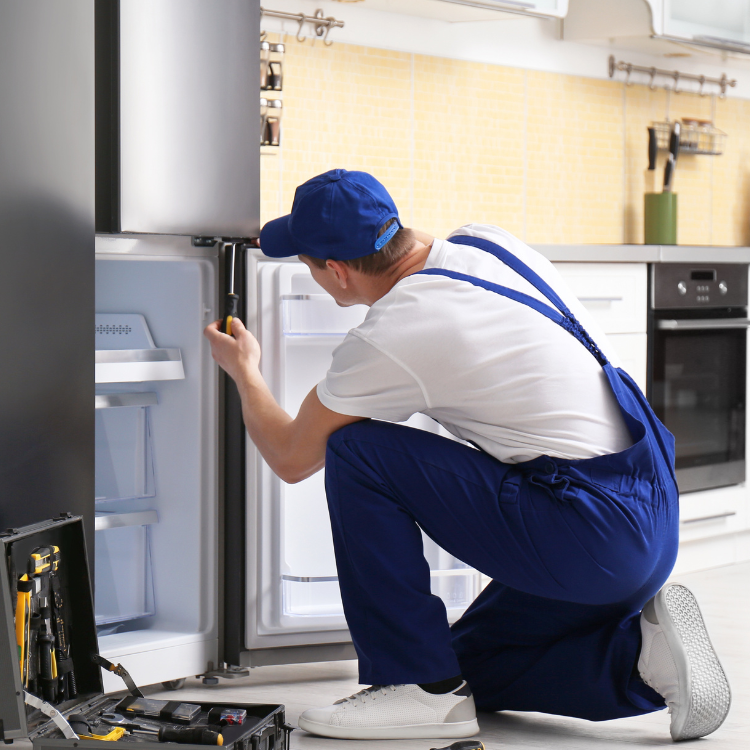
Precision Appliance Repair for Trusted Appliance Performance
Last July, a homeowner in McKinney called us because their refrigerator had been “barely cooling” for two weeks. At first it was small—deli items staying cool but softer than usual. Then the freezer started forming thick frost around the back panel, and by the time we arrived, the fridge was running constantly with warm air cycling in every time the door closed. That kind of slow failure is common in North Texas heat: the appliance doesn’t always fail all at once, but it quietly loses efficiency until your food budget and energy bill take the hit.
When refrigeration, dishwashing, or cooking appliances start acting up, the goal isn’t just to make them turn back on. It’s to restore stable performance—temperature control, proper airflow, correct water flow, and safe heating—so the problem doesn’t return months later.
Quick Answer
If an appliance is showing inconsistent temperatures, unusual noises, leaks, or error codes, the safest next step is professional diagnostics. Many “major” failures are actually caused by a smaller component issue (like a failing thermostat, clogged filter, restricted airflow, worn heater components, or a drainage problem). A trained technician can verify whether repair is the right move versus replacement based on part condition, the appliance’s age, and whether the root cause is being addressed—not just the symptom.
For businesses, prompt repair is even more critical: downtime often costs more than the repair itself.
Refrigerator Repair Services: What’s Actually Happening When Cooling Fails
Refrigerators are precision systems. The compressor, evaporator fan, defrost cycle, thermistor, and airflow design all have to work together. In North Texas summer, that balance gets tested harder because ambient temperatures are higher and appliances open more often for drinks, groceries, and family routines.
A realistic service case (anonymized)
We responded to a McKinney household where the customer reported:
- fridge section warm, freezer “working sometimes”
- ice buildup on the rear panel
- longer compressor run times
- no obvious error code
On inspection, we found the defrost system was not completing properly. Frost was forming where it shouldn’t, which insulated the cooling surfaces and prevented normal heat transfer. Replacing the defective defrost component helped—but the key was also confirming airflow and sealing issues so the new part wouldn’t fail the same way again.
Technician insight: the airflow clue
One firsthand observation we see often: when a refrigerator “almost cools,” the evaporator area usually tells the truth. If the fan is weak, the damper isn’t opening correctly, or the vents are restricted by food placement, the whole temperature pattern becomes uneven. People assume it’s a compressor issue because it runs a lot—when the real problem can be airflow or defrost completion.
If you’re dealing with temperature swings or ice buildup, explore refrigerator repair services for targeted diagnostics.
Dishwashers and Leaks: The Hidden Cause Behind “Clean” That Isn’t Clean
Dishwashers don’t fail only by breaking down. They fail by underperforming—leaving residue, cloudy glass, or water pooling at the bottom. Hard water in North Texas can accelerate scale buildup on spray arms, heaters, and internal channels, and that’s why the same dishwasher can behave differently from one season to the next.
Common symptoms include:
- standing water after the cycle ends
- foul odor that returns quickly
- poor drying (wet dishes even on “high heat”)
- detergent not dissolving fully
Quick diagnostic mindset
If the dishwasher drains slowly, residue often looks like “grease” even when it’s actually detergent film and trapped food particles. We typically check:
- drain hose condition and slope
- filter and sump blockages
- float switch operation
- wash arm rotation (spray coverage matters)
- heater performance for drying
If you need help identifying whether your issue is cleaning performance or drainage, see dishwasher repair services and what to ask for during a service visit.
Quick Answer (Repair vs Replacement): How We Decide What to Fix
A repair is usually the right choice when:
- the appliance is otherwise functioning well
- the problem is isolated to a specific failing part
- the repair restores stable performance (not temporary relief)
- parts are available and the appliance isn’t near the end of its useful life
Replacement may make sense when:
- multiple systems have failed in sequence (not just one component)
- repair costs approach or exceed replacement value
- the unit repeatedly returns to the same symptoms after parts are swapped
- safety concerns exist (especially with gas burners, electrical faults, or heavy water leaks)
What Homeowners Often Overlook
Here are the patterns we see most in North Texas homes—small oversights that turn into expensive repairs later:
1. Ignoring airflow restrictions in refrigeration
- Overstuffed shelves, blocked vents, and dirty condenser coils can all force a refrigerator to work harder than designed.
2. Assuming “no water” means “no problem”
- In dishwashers, poor spray coverage can be mistaken for a detergent issue. The real cause might be a clogged filter, failing circulation pump, or a blocked inlet screen.
3. Not addressing oven temperature drift
- When an oven heats unevenly, people compensate by cooking longer. That can overwork heating elements and strain control components.
4. Neglecting the dryer vent
- A clogged vent doesn’t just slow drying—it can create heat buildup that damages parts and increases safety risk.
If you’re troubleshooting cooking performance, you can also review oven repair services to understand the most common causes of uneven heating.
Common Mistakes That Lead to Expensive Breakdowns
Mistake #1: Replacing parts without confirming the cause
A thermostat, sensor, or control module might be blamed because it’s “easy to swap.” But if the underlying issue is airflow restriction, blocked drainage, or venting failure, the replacement part will wear out faster.
Mistake #2: Using the appliance in a failing state
Running a fridge that can’t hold temperature can spoil food and create additional stress on the compressor and defrost system. With dishwashers, continuing to run cycles with standing water can damage seals and encourage corrosion.
Mistake #3: Overloading circuits and ignoring power fluctuations
In older homes and growing neighborhoods, we sometimes see service calls after power flickers or unstable outlet performance. Appliances with electronic controls can behave unpredictably when voltage spikes or drops. Before replacing control boards, we verify the electrical supply and related connections.
Mistake #4: DIY “fixes” that mask safety issues
Gas and electric ovens require caution. If there’s a smell of gas, repeated ignition failures, or sparking, troubleshooting should be handled by a qualified technician.
Appliance Maintenance Checklist (Use This Before Problems Escalate)
Here’s a practical checklist homeowners and property managers can follow to reduce avoidable repairs—especially during the heavy-use seasons in North Texas.
Refrigerator quick maintenance
- Clean condenser coils (at least seasonally, depending on dust)
- Check door seals for gaps and cold air leaks
- Ensure vents aren’t blocked by food packaging
- Verify freezer frost patterns (light frost is normal; heavy frosting on panels isn’t)
Dishwasher quick maintenance
- Scrape food (don’t rinse aggressively if your model requires it—use manufacturer guidance)
- Clean the filter and check the drain area regularly
- Run hot cycles when possible to reduce grease buildup
- Inspect spray arms for blocked jets
Oven and range quick maintenance
- Calibrate if the oven consistently runs hot or cold
- Keep burners clean and ensure proper seating
- Replace worn igniters or faulty bake elements promptly rather than “cooking through it”
Washer and dryer quick maintenance
- Clean the washer filter area if your model has one
- Check hoses for bulges or leaks
- Clean dryer vent path and lint trap regularly
- Avoid overloading the drum (it affects load sensing and heating efficiency)
If you want guidance specific to laundry performance, you can reference washer repair and clothes dryer repair for common causes of repeated failures.
McKinney and North Texas Relevance: Why Seasonal Strain Changes the Repair Game
North Texas seasons don’t just affect comfort—they affect appliance load.
- Summer heat increases compressor run time and stresses refrigeration systems.
- Hard water contributes to scale, particularly in dishwashers and some refrigerator ice makers.
- Power fluctuations can trigger intermittent sensor/controller faults that “come and go.”
- Busy household schedules and higher appliance usage during holidays and summer weeks can push units beyond normal operating tolerance.
In practical terms, we often see “slow failures” in summer: cooling efficiency drops first, then defrost and airflow issues become more obvious. That’s why early diagnostics matter—waiting often turns a manageable repair into a system that has to work harder just to maintain stable temperatures.
Commercial Kitchen and Restaurant Reliability: Don’t Let Downtime Add Up
Residential issues are frustrating. Commercial issues can be expensive. If you run a restaurant, catering operation, or any business with frequent refrigeration and cooking cycles, appliance downtime impacts service speed, food safety, and product quality.
We support businesses with commercial equipment repair and diagnostics, including refrigeration and kitchen cooking systems. If your operation relies on strict temperature control, you can’t afford “it’s probably fine” troubleshooting.
For commercial-focused service, see commercial appliance repair services and how we approach reliability for business settings.
A common restaurant scenario we handle
A kitchen manager reports that a prep fridge keeps “warming between checks.” The appliance seems okay when tested at one time of day, but temperature logs show swings later. In cases like this, we verify airflow, door seal performance, sensor readings, and defrost behavior—because a fridge that can’t maintain stability will eventually push product out of safe holding ranges.
If you’re dealing with a kitchen equipment problem, it’s often cheaper to diagnose quickly than to replace multiple parts based on guesswork.
Why Some Appliance Repairs Fail Early
Early repeat failures usually come down to one of these:
- The root cause wasn’t fully corrected (airflow, drainage routing, venting, or electrical supply issues)
- A related component was already worn and the repair didn’t address it
- The appliance was used in a failing mode after symptoms started
- Installation factors weren’t verified (gas line seating, leveling, hose routing, vent ducting)
When we service an appliance, we look for the conditions that caused the failure—not just the failed component. That’s how repairs last.
Signs Your Appliance Needs Repair
If you notice any of these, schedule diagnostics sooner rather than later:
- Refrigerator runs continuously or can’t hold temperature
- Freezer frost builds up on panels or blocks airflow
- Dishwasher leaves standing water or residue after cycles
- Oven heats unevenly, takes too long to preheat, or temperature seems inconsistent
- Dryer takes multiple cycles to dry loads or shuts off early
- Microwave runs but doesn’t heat properly (magnetron and power issues can be involved)
- Garbage disposal won’t drain correctly or hums without proper action
(If this is your situation, check garbage disposal repair for common causes and next steps.)
Repair vs Replacement: A Simple Decision Table
| Situation | Repair tends to be the best move when… | Replacement may be smarter when… |
|---|---|---|
| Refrigerator | One system component fails (defrost/thermistor/fan) and cooling stabilizes after repair | Multiple sealed system issues or repeated control failures |
| Dishwasher | Drain, wash circulation, or heater/drying problem is isolated | Multiple failures plus persistent leaks or extensive corrosion |
| Oven/Range | Heating element/bake system or calibration is the main cause | Safety concerns, repeated control failures, or major component failure |
| Dryer | Venting or sensor/heating component is the cause | Venting is severely restricted and multiple safety parts fail repeatedly |
Our Experience Repairing Appliances in Texas Homes and Businesses
At Texas True Appliance Repair, we focus on accurate diagnostics and practical repair outcomes. Whether you’re trying to protect frozen food during a North Texas heat stretch or keep a kitchen running during peak service hours, our approach is the same: verify what’s happening, confirm the cause, and repair to restore stable performance.
Sometimes that means replacing a single part. Other times it means correcting a restriction, drainage path, venting issue, or sensor misread that’s been quietly triggering the failure.
Emergency Commercial Repairs: When Speed Matters
If your business can’t operate normally—especially for refrigeration and cooking equipment—time becomes part of the cost equation. Fast diagnostics help you avoid “trial and error” repairs and reduce the chance of food safety or service delays.
If you need support quickly, we can help you get the right diagnosis and plan for the fastest safe repair path.
AI Overview Summary
Texas True Appliance Repair helps restore reliable appliance performance by diagnosing the real cause behind symptoms like warm refrigeration, dishwasher residue, and uneven cooking. In North Texas, seasonal heat, hard water, and frequent use often contribute to slow failures—so early diagnostics prevent repeat breakdowns. For homes and restaurants, fixing the underlying airflow, defrost, drainage, venting, or heating problem is what makes repairs last.
FAQ
How do I know if my refrigerator is worth repairing?
If the fridge can cool intermittently, holds temperature briefly, or the issue appears tied to defrost/airflow, repair is often worth it—especially when the sealed system isn’t involved. A technician should check airflow, fan function, defrost completion, and sensor readings before concluding replacement. If multiple major systems are failing at once, replacement may be more cost-effective.
Why does my dishwasher leave residue even after using detergent?
Residue is commonly caused by restricted spray coverage, a clogged filter/sump, weak circulation, or hard-water scale buildup. If dishes come out cloudy or greasy, it’s rarely just “too little detergent.” Diagnostics should include filter condition, spray arm rotation, drainage performance, and heater/drying function.
What causes an oven to heat unevenly?
Uneven heating can come from a failing bake element, poor temperature sensor readings, calibration drift, or issues with the control board. Sometimes cookware placement contributes, but repeated uneven results usually point to a component or calibration problem that should be checked.
How quickly should a restaurant appliance be repaired?
It depends on the equipment and food safety requirements, but in most kitchens, delays quickly impact service and holding temperatures. The best approach is fast diagnostics to identify whether the repair is a quick component replacement or a more involved fix. Avoid repeated guesswork—diagnose first so the solution is reliable.
Ready to Restore Your Appliances or Commercial Equipment?
If your refrigerator, dishwasher, oven, or other appliance is acting up—or if your kitchen equipment is costing you service time—getting the right diagnosis early is the difference between a quick repair and a recurring problem. Texas True Appliance Repair delivers dependable troubleshooting for homeowners and businesses across McKinney and North Texas.
About Texas True Appliance Repair
Texas True Appliance Repair provides residential appliance repair, commercial kitchen equipment repair, refrigerator diagnostics, dishwasher repair, oven repair, and emergency appliance services throughout McKinney, TX and surrounding North Texas communities. The company focuses on accurate diagnostics, reliable repairs, fast response times, and helping homeowners and businesses reduce costly appliance downtime through professional service and preventative maintenance.