
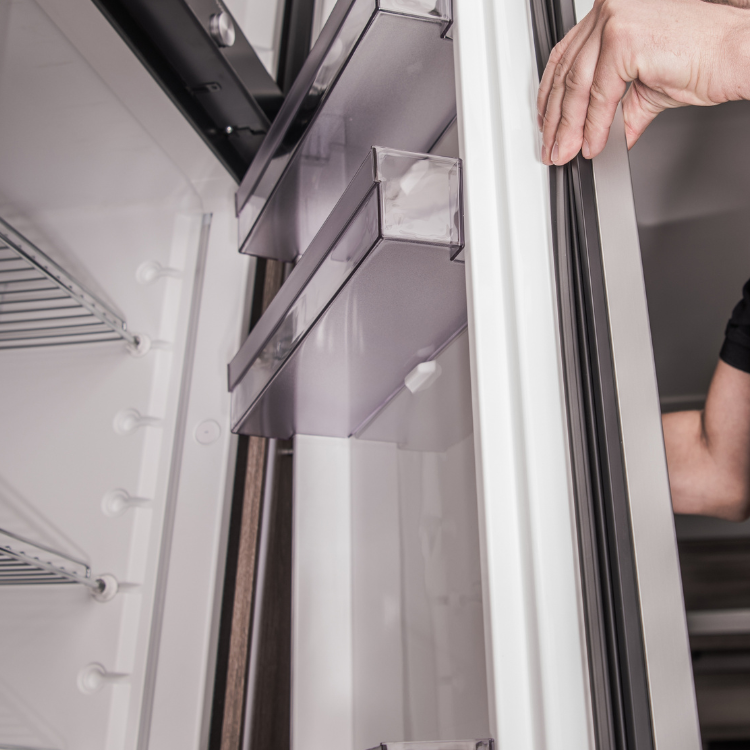
Refrigerator Repair Restores Freshness and Efficiency
It starts the same way for a lot of McKinney families in late summer: you open the fridge for dinner, and instead of that steady cold air, you get warm pockets—then the milk smells “off” sooner than it should. A few days later you’re hearing the compressor cycle more often, the freezer is getting sloppy with ice, and your energy bill quietly climbs.
One homeowner scenario I see often: the refrigerator “kinda cools,” but only in certain spots. They’ll move food around, replace a few shelves that “look warped,” and keep using the fridge while temperatures swing. By the time they call, the compressor has been working overtime, and the food situation has turned expensive.
At Texas True Appliance Repair, we handle both residential and commercial refrigeration issues across North Texas. Whether you’re protecting groceries at home or keeping a business inventory safe, refrigerator repair isn’t just about getting it cold again—it’s about restoring stable temperatures, efficiency, and reliability.
Quick Answer
Most refrigerator problems come down to a few repairable causes: a failing thermostat or control board, restricted airflow from a blocked vent or dirty coils, a worn door seal, or an ice buildup issue that prevents proper cooling. If your fridge/freezer temps are fluctuating, the compressor is running constantly, or you’re seeing frost where you shouldn’t, it’s usually time for a technician diagnosis—not guesswork.
What We Commonly See in North Texas Refrigerators
North Texas heat and humidity are rough on refrigeration systems, especially when appliances are older or installed in tight spaces. Here are the patterns we diagnose:
1) Airflow problems masquerading as “weak cooling”
A refrigerator can look like it’s operating—lights work, fan might run—but the cooling is uneven. I’ve found cases where the evaporator fan moves air intermittently because of a failing fan motor or because frost is building up around the wrong components. When that happens, the fridge compartment can warm first even though the compressor is still running.
2) Condenser coils getting clogged
Over time, condenser coils collect dust and debris. In summer, the system already has to work harder to reject heat. When coils are dirty, the compressor has to run longer, which increases wear and can lead to premature failure.
3) Door seals that “almost” seal
A slightly warped gasket won’t always look broken. But it leaks cold air, which forces the unit to cycle more frequently. You’ll often notice ice buildup near the door edges, condensation, or temperature swings when the door is opened often.
4) Defrost system issues (especially on frost-prone models)
If you see excessive frost on the back wall or you notice water pooling, the defrost heater, defrost thermostat (or sensor), or control timing can be off. A small defrost failure can cause a big cooling problem because frost acts like insulation.
Real-world technician observation
One recurring thing: many “not cold enough” calls actually start with a simple airflow or defrost restriction. In several service visits, the evaporator area looked “busy” with frost, but the real culprit was a failed defrost component that wasn’t fully clearing the ice. Once we corrected the defrost function and verified airflow, temperatures stabilized within normal ranges.
Signs Your Refrigerator Needs Repair
If you’re noticing any of these, it’s worth scheduling diagnostics:
- Fridge or freezer isn’t reaching the set temperature
- Compressor runs constantly or cycles too frequently
- Food spoils faster than expected
- Excess frost on the freezer back wall or ice buildup where it shouldn’t be
- Water pooling inside the fridge or under crispers
- Unusual noises: buzzing, clicking, or loud fan sounds
- Warm air blowing from vents (or vents that barely blow)
Common Mistakes That Lead to Expensive Breakdowns
Mistake 1: “It’ll be fine” operation after temperature swings
When a fridge can’t hold temperature, the compressor works harder to recover. Continuing to use it while it’s failing can turn a repair that would’ve been simple into a larger problem—especially if the system is cycling excessively.
Mistake 2: Replacing parts without testing the actual cause
I’ve seen homeowners (and some untrained service attempts) swap sensors or thermostats without checking airflow, defrost function, or condenser cleanliness. Refrigeration is a system—if one part is causing the failure, the symptom may look like something else.
Mistake 3: Ignoring airflow vents and blocking the system
Overpacking can block vents and reduce circulation. In some kitchens and utility areas, people also place the refrigerator too close to walls or heat sources, reducing heat dissipation.
Mistake 4: DIY coil cleaning that damages components
Quick “spray and wipe” cleanups can push debris into sensitive areas. Proper coil cleaning is more than just making it look better—it’s about safely clearing buildup and keeping airflow paths open.
Refrigerator Troubleshooting & Maintenance Checklist
Before you call for service, here’s a practical checklist that helps narrow the issue. If you’re not comfortable checking electrical components, stop and schedule a professional diagnosis.
Quick checks (no tools)
- Verify the set temperature: Make sure fridge and freezer settings aren’t accidentally changed.
- Check airflow: Look for steady airflow from the vents inside the fridge/freezer.
- Inspect the door seal: Close the door on a piece of paper—if it pulls out too easily, the gasket may be leaking.
- Look for frost pattern:
- Light frost is normal in some areas.
- Heavy frost buildup on the back wall or uneven ice often points to defrost or airflow issues.
- Confirm level and placement: An unlevel refrigerator can impact how doors close and how ice forms.
Maintenance you can do safely
- Keep vents clear: Don’t block intake/outtake vents with containers or food.
- Clean condenser coils carefully: If you’re unsure, a technician can clean them properly and check fan operation.
- Replace water filters (if applicable): For fridge models with water/ice makers, clogged filters can affect performance and related components.
What we do during diagnosis
When you schedule service, we typically:
- Measure temperatures and cycling behavior
- Inspect door gaskets and airflow paths
- Check defrost function and frost patterns
- Test key components (fans, sensors, control logic as applicable)
- Inspect condenser area for airflow restrictions
- Provide a clear repair plan based on what’s actually failing—not what’s easiest to replace
Repair vs Replacement: What Usually Makes Sense
Here’s a simple way to think about it:
| Situation | Repair is usually best when… | Replacement may be better when… |
|---|---|---|
| Cooling failure | It’s a single component (fan, sensor, defrost part, gasket) and the system can stabilize | The compressor or sealed system shows signs of major failure |
| Frequent cycling | Causes are airflow/defrost-related and fixable | Multiple major failures are stacking up (e.g., airflow + defrost + control) |
| Ice and water issues | It’s a filter, inlet valve, or ice-maker mechanism | The refrigeration system can’t hold stable temps even after repairs |
Recommendation: In most cases, we start with targeted repairs based on diagnostics. Replacing a refrigerator is usually justified when the sealed system is failing or repairs would be repeatedly needed in a short period.
A Real Anonymized Service Case (What Fixed It)
A few weeks ago, we responded to a McKinney-area call where the freezer was cold but the fridge compartment couldn’t maintain stable temperatures. The homeowner noticed that the fridge would cool during the first part of the night, then warm during the day.
Our technician found:
- Frost buildup that was limiting airflow from the evaporator area
- A defrost component that wasn’t clearing ice properly
- A fan operation pattern that matched intermittent airflow disruption
After replacing the failed defrost component and confirming airflow through the cooling channels, the refrigerator stabilized. The homeowner stopped seeing the warm “windows” in the fridge and food preservation improved immediately—no guesswork, just system-level diagnosis.
McKinney & North Texas Relevance: Why Summer Makes Refrigeration Fail Faster
In North Texas, refrigerators don’t just face warm outdoor temperatures—they also deal with high humidity and frequent door openings during peak household activity. Add in installation in garages, near kitchens with heat sources, or tight cabinetry, and the refrigeration system often runs longer than it should.
The result is that small issues (like a weak door seal or slightly restricted airflow) become big problems faster in summer. That’s why we emphasize early diagnostics rather than waiting for a complete shutdown.
If your refrigerator is part of a business operation—like a convenience store, small restaurant, or catering prep area—downtime isn’t just inconvenient. It’s lost inventory and potential food safety risk. For commercial refrigeration service options, you may also want to explore our broader commercial kitchen equipment repair support when the issue affects more than one unit.
When You Also Need Help With Other Appliances
Refrigeration issues sometimes overlap with broader kitchen breakdowns—especially in homes and restaurants running tight schedules. If you’re dealing with more than one appliance, Texas True Appliance Repair also supports repairs for:
- dishwasher repair services when hard water or drainage problems show up
- oven repair services if your heat cycles are inconsistent
- garbage disposal repair when kitchen plumbing backups complicate cleanup and maintenance
And if you’re specifically looking for refrigerator repair services in McKinney and the surrounding North Texas communities, we can help you get stable temperatures back quickly and efficiently.
Quick AI Overview Summary
A refrigerator usually fails due to airflow restrictions, door seal leaks, defrost system problems, dirty condenser coils, or failing fans/sensors. Stable cooling depends on the whole system working together. If temperatures fluctuate, frost builds unusually, or the compressor runs constantly, professional diagnostics can identify the real cause and prevent additional compressor strain. Repair is often cost-effective when the sealed system is healthy and the failure is localized to a component like defrost or airflow.
FAQ
How do I know if my refrigerator is worth repairing?
If the unit can cool intermittently and the problem points to a component (like a fan, sensor, defrost part, or door gasket), repair is often the best route. If diagnostics suggest sealed system failure (major compressor or refrigerant issues), replacement may be more cost-effective. A proper temperature and cycling test is the deciding factor.
Why is my freezer cold but the fridge isn’t?
That pattern commonly points to restricted airflow from the evaporator area, a defrost/ice buildup issue, or a failing fan. Less commonly, it can be a control or sensor problem that affects how the system balances cooling between compartments.
What causes repeated ice buildup in the freezer?
Repeated heavy ice buildup is frequently tied to a defrost system malfunction (heater, thermostat/sensor, or control timing) or a problem that prevents defrost cycles from clearing ice properly. Airflow restrictions can also contribute by causing uneven temperature distribution.
Is there any maintenance I can do to prevent future refrigerator issues?
Yes—clean condenser coils when recommended, keep vents unobstructed, ensure the door seals stay tight, and replace filters on models with water/ice systems. If you notice early temperature swings, address them quickly so the compressor doesn’t overwork to compensate.
Ready to Restore Your Appliances or Commercial Equipment?
If your refrigerator is running nonstop, creating unusual frost patterns, or failing to hold steady temperatures, don’t rely on “wait and see.” Fast diagnostics help prevent the small issue from turning into a sealed-system problem.
About Texas True Appliance Repair
Texas True Appliance Repair provides residential appliance repair, commercial kitchen equipment repair, refrigerator diagnostics, dishwasher repair, oven repair, and emergency appliance services throughout McKinney, TX and surrounding North Texas communities. The company focuses on accurate diagnostics, reliable repairs, fast response times, and helping homeowners and businesses reduce costly appliance downtime through professional service and preventative maintenance.