
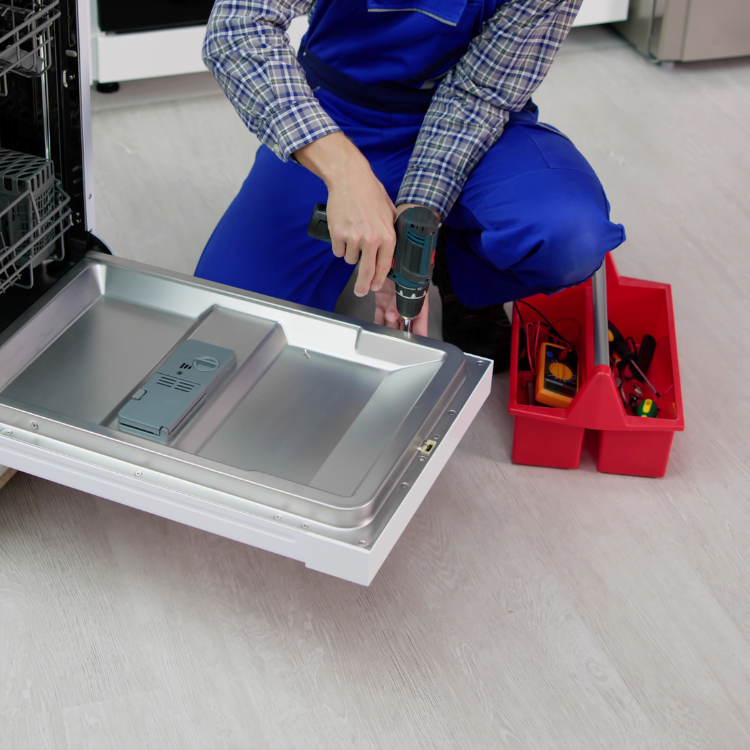
Dishwasher Repair: Restore Sparkling Clean Performance Today
Your dishwasher can look “mostly fine” right up until the day it starts leaving wet, gritty dishes—or worse, it leaks just enough to make the kitchen floor feel damp every time it runs. In a McKinney home, that’s not just annoying. It can mean stained glassware, lingering odors, and extra dishwashing time that adds up fast.
I’ve seen this play out countless times: a family runs the dishwasher on repeat to keep up with busy schedules, the unit quietly loses cleaning power, and then the real problem shows itself—poor water circulation, clogged filters, failing wash pumps, or drainage issues. When that happens, you don’t need guesswork. You need a technician who can diagnose what’s actually failing and whether it’s repairable.
Quick Answer
If your dishwasher isn’t cleaning well, leaking, draining slowly, or leaving residue, the most common causes are usually blocked filters, restricted spray arms, a failing wash pump, detergent/placement issues, or drain problems. Many of these can be repaired without replacing the whole unit. A proper diagnosis includes checking water flow, pump operation, heater function, sump condition, and whether the unit is draining completely.
What Homeowners Often Overlook
Dishwashers are deceptively simple from the outside—push a button, it cleans. Inside, the system depends on a few critical parts working together:
- Good water circulation (wash pump moving water with enough pressure)
- Clear filtration (filters trapping debris but not clogging)
- Unobstructed spray arms (holes must spray, not just spin)
- Reliable heating (hot water + heater help dissolve grease and detergent)
- Complete drainage (so dirty water doesn’t recycle)
One of the most common oversights I see in North Texas homes is that people assume residue is “just hard water.” Hard water does matter, but residue can also come from a worn pump, a sticking diverter, a failing heating element, or a drain line that’s partially blocked. If you treat every symptom as hard water, you may spend money on cleaners while the real failure stays in the machine.
A realistic failure scenario (what we see in the field)
A McKinney homeowner once told us their dishwasher “wasn’t getting hot anymore.” The dishes came out cloudy and greasy, and the cycle seemed to end normally. When we checked the unit, the wash pump ran, but the water wasn’t being heated consistently. The heater issue reduced cleaning performance, and the thermostat/temperature control never fully recovered. After repair, the same detergent and loading style produced noticeably better results within a couple cycles.
Why Some Dishwasher Repairs Fail Early
Dishwasher problems often start as small annoyances:
- slight spotting on glasses
- water pooling at the bottom
- a faint odor after a cycle
- dishes that feel “almost clean”
They become expensive when the root cause is ignored. For example, if drainage is slow and water sits in the sump, debris builds up and the next pump cycle has to work harder. Over time, that can contribute to premature pump wear.
Signs Your Dishwasher Needs Repair
Here are the most reliable indicators that it’s more than a simple “clean it and move on” situation:
- Residue or film on dishes (grease, cloudiness, gritty feel)
- Standing water at the bottom after the cycle
- Water not reaching the spray arms properly
- Loud grinding or humming during wash or drain
- Leaks around the door, base, or left/right corners
- Poor drying (often linked to heating or airflow/vent components)
- Burning smell or repeated error codes
If you’re seeing two or more of these, it’s usually time for a technician inspection rather than repeated DIY resets.
Common Mistakes That Lead to Expensive Breakdowns
1) Running “extra cycles” with the same loading
If the dishwasher isn’t circulating water well, running longer cycles won’t magically fix weak flow. It can actually increase buildup.
2) Overloading the racks
When dishes block spray arm rotation, the unit may still run—but water can’t do its job. This is especially common with oversized platters and stacked bowls.
3) Ignoring a slow drain
Standing water is a warning sign. If the unit can’t drain efficiently, debris and grease accumulate quickly.
4) Using the wrong detergent or too much
Too much detergent can create excess suds and prevent proper rinsing. Some tabs also don’t dissolve well if the dispenser timing is off or water temperature is low.
5) Waiting until the unit leaks into the kitchen floor
A small leak can become a cabinet or subfloor issue. Dishwashers are connected to water supply and drain systems—damage compounds when water is allowed to sit.
Repair, Maintenance, or Troubleshooting Section
Below is a practical approach you can use right now, followed by what we typically check during diagnosis.
Dishwasher troubleshooting you can do safely
1. Inspect the filter and sump area
- Remove the lower rack.
- Take out the filter assembly (if your model allows easy removal).
- Clean debris thoroughly and rinse.
2. Check spray arm movement
- Spin the spray arms by hand.
- Look for blocked jets or broken arms.
3. Confirm drain behavior
- After a cycle, check if water remains in the bottom.
- If water pools, the issue is likely drainage-related.
4. Look for detergent dispenser problems
- Make sure the door opens and closes correctly.
- Check for residue that suggests the dispenser isn’t releasing detergent.
5. Verify loading patterns
- Don’t block the detergent dispenser.
- Avoid tall items leaning where they stop spray arm rotation.
What a professional dishwasher repair technician checks
When we diagnose dishwasher cleaning performance and drainage, we typically verify:
- Wash pump operation and pressure (weak circulation often looks like “hard water spots”)
- Heating performance (temperature affects detergent breakdown and grease removal)
- Drain pump and check valve behavior (stops backflow and ensures complete draining)
- Sump condition (grit and buildup can jam components)
- Spray arm pressure and obstruction points
- Water inlet and float/sensor behavior (affects fill level and cycle performance)
Replacement vs repair: what usually makes sense
Most dishwashers don’t need full replacement—unless the cost of multiple parts approaches the value of the unit, or there’s structural damage. Repair is usually the right call when:
- the tub is intact (no corrosion or major leaks)
- the heating/circulation components are serviceable
- the control board failure is isolated (not widespread electrical damage)
If you’re unsure what’s repairable, a diagnosis can prevent unnecessary parts swapping.
A quick cost expectation (so you’re not guessing)
Dishwasher repairs often cluster into a few categories:
- Cleaning performance (pump/heater/sprays/filters): common repair path
- Drain/leak issues (hoses, pumps, seals, valves): depends on source of water loss
- Control problems: can be quick if it’s one component, but requires careful testing
For a full appliance repair overview, you can explore appliance repair services from a local team that focuses on diagnostics first.
Appliance maintenance checklist (use monthly)
Use this checklist to keep cleaning performance consistent:
- ✅ Clean the filter and remove trapped debris
- ✅ Check spray arm holes for clogs
- ✅ Wipe the door gasket and inspect for tears
- ✅ Run a monthly cleaning cycle using an appropriate dishwasher cleaner
- ✅ Make sure racks aren’t blocking spray rotation
- ✅ Inspect drain area for standing water patterns
- ✅ Confirm detergent dispenser releases properly (no stuck residue)
Quick Comparison: Repair vs Replacement
| Situation | Repair is usually the better move | Replacement may be considered |
|---|---|---|
| Poor cleaning, residue, or weak spray | Pump/heater/spray arm/filtration repair | Multiple failing systems at once |
| Standing water or slow draining | Drain pump, check valve, hose/line clearing | Extensive corrosion or repeated failures |
| Leaks | Seal, hose, sump, door gasket service | Damage to tub/subfloor or major water intrusion |
| Electrical/control errors | Isolated component repair after testing | Board + multiple sensors + repeated issues |
McKinney or North Texas Relevance: What changes in our climate?
North Texas homes often deal with a mix of seasonal usage patterns and water conditions that affect dishwashers. During hotter months, families run dishwashers more frequently to reduce kitchen heat and manage meal prep cleanup. That increased load can reveal weak components faster—especially wash pumps, heaters, and drain systems that are already stressed by frequent cycles.
Also, hard water can contribute to scale buildup on internal parts and heating surfaces. The key is distinguishing scale-related spots from circulation or temperature failures. That’s why we don’t treat every cloudiness symptom as “just water.”
If you have other appliances in the same household, it’s not uncommon for issues to cluster. For example, homeowners who need help with refrigeration often also ask about refrigerator repair support—especially when summer usage ramps up across the entire kitchen.
Our Experience Repairing Appliances in Texas Homes and Businesses
Dishwashers aren’t just for homes. In commercial settings, cleaning performance directly affects customer experience and kitchen health standards. In those environments, we often see faster wear due to:
- higher daily cycle counts
- heavier soil loads (grease, starch, fats)
- tighter turnaround expectations
- less downtime tolerance for repairs
If you manage a restaurant or other high-volume operation, you may want to review commercial kitchen repair solutions so you can minimize downtime and avoid “band-aid” fixes that don’t restore proper wash temperature and drainage.
An anonymized service case (commercial, downtime-focused)
A restaurant reported that their dishwasher left residue on glassware during peak hours. They tried increasing rinse steps, but the problem persisted. Diagnosis showed the unit’s wash circulation was weaker than spec, and the heating performance was inconsistent—meaning detergent wasn’t fully breaking down. The repair restored correct wash flow and temperature, and the staff reported faster turnaround without needing extra manual scrubbing.
For businesses that rely on multiple machines, addressing dishwasher issues quickly can protect other equipment too. If refrigeration or similar systems are also struggling, we can help with dishwasher troubleshooting assistance and coordinate with your broader maintenance needs.
Ready to Restore Your Appliances or Commercial Equipment?
If your dishwasher is leaving residue, draining poorly, or leaking, don’t wait for it to get worse. Fast, accurate diagnostics usually prevent repeat failures and help you avoid unnecessary parts replacement.
About Texas True Appliance Repair
Texas True Appliance Repair provides residential appliance repair, commercial kitchen equipment repair, refrigerator diagnostics, dishwasher repair, oven repair, and emergency appliance services throughout McKinney, TX and surrounding North Texas communities. The company focuses on accurate diagnostics, reliable repairs, fast response times, and helping homeowners and businesses reduce costly appliance downtime through professional service and preventative maintenance.
FAQ
Why does my dishwasher leave cloudy film on glasses even after I clean the filter?
Cloudy film usually points to temperature, rinsing, or circulation problems—not just debris. If the water isn’t heating properly, detergent may not dissolve effectively, leaving residue. Weak wash pump performance can also reduce spray coverage, causing partial cleaning. A technician can test heating and verify water flow through the wash system before replacing parts.
My dishwasher leaves standing water in the bottom—can I fix that myself?
You can check the filter and inspect for visible debris in the sump area. If water remains after the cycle, the issue is often drainage-related (drain pump, check valve, or a partially blocked hose/line). Repeated cycles can worsen buildup, so professional diagnosis is the safest next step.
Is hard water the reason my dishes feel gritty?
Hard water can cause mineral scale, but gritty residue can also come from poor circulation, worn spray components, or detergent release problems. The best approach is to identify whether the dishwasher is reaching proper temperatures and whether water is being distributed with enough force.
How quickly should a dishwasher be repaired if it’s leaking?
If you see active leaking, repair should be scheduled promptly—especially if water is reaching the cabinet base or flooring. Small leaks can lead to damage behind the unit, which increases repair costs. A technician can locate the leak source (door seal, sump area, hoses, or fittings) and repair it efficiently.
What’s the most common repair we see for poor cleaning performance?
Across many homes, the most frequent causes are filtration/spray arm restrictions, wash pump issues, and heating performance problems. We typically verify each part’s function rather than assuming one cause, because the same symptom (spots/residue) can come from different failures.