
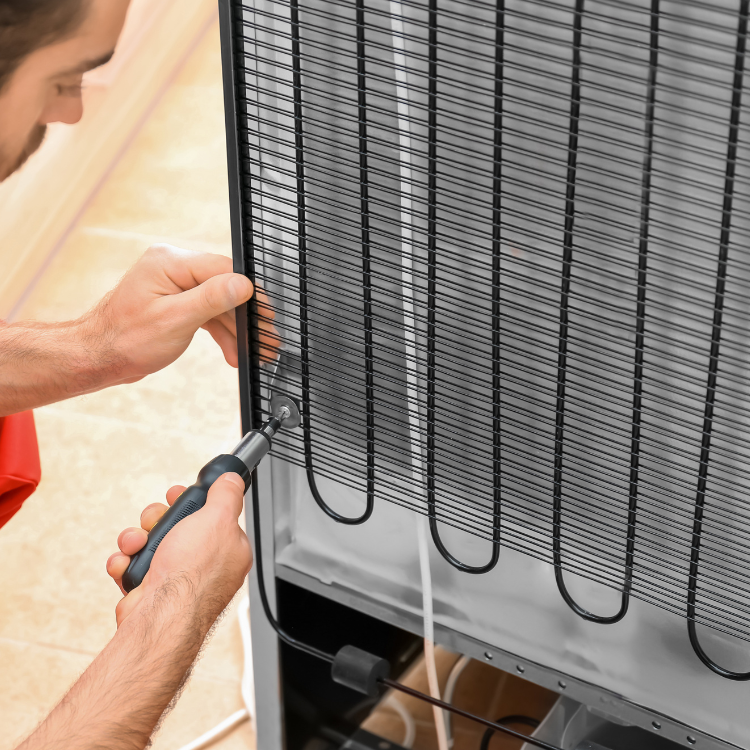
Refrigerator Repair: Stop Spoilage with Expert Cooling Fixes
It’s 6:30 a.m. in McKinney and your refrigerator is suddenly warmer than it should be. The milk feels “off,” the deli drawer is thawed, and the ice bin is empty—again. By lunch, you’re not just dealing with spoiled food. You’re recalculating grocery plans, cleaning up melted spills, and wondering whether you should replace the unit or keep chasing the problem.
This is exactly the kind of refrigeration failure we see when summer heat and long compressor run-times push an aging refrigerator past its tolerance. And in North Texas, when cooling drops even slightly, the damage happens fast—especially with dairy, meal prep, and anything stored near vents or the back wall.
Quick Answer
If your refrigerator isn’t maintaining temperature, the most common causes are usually blocked airflow, a failing thermostat/control board, bad door seals, or compressor/fan issues. Start by checking door seal condition and airflow obstructions, then confirm whether the evaporator fan and condenser fan are running properly.
For reliable results, professional diagnostics matter because a “warm fridge” can be caused by multiple parts that look similar from the outside.
What We Commonly See in North Texas Refrigerators (And Why It Happens)
The “warm fridge, cold freezer” call
One of the most common service scenarios we get is this: the freezer is cooling “okay,” but the refrigerator section won’t hold a safe temp. In many cases, the issue isn’t the refrigerator compartment itself—it’s the air path.
Here’s what we check first:
- Evaporator fan operation: If the evaporator fan isn’t moving air through the vents, the refrigerator compartment slowly warms while the freezer still feels cold.
- Ice buildup on the evaporator coils: A small amount of frost can restrict airflow, and by the time homeowners notice, the system is already struggling.
- Defrost system problems: If defrost isn’t clearing properly, frost accumulates and blocks the vents.
My firsthand technician observation
A pattern I’ve noticed over years of service: many “random” warm-fridge complaints trace back to airflow restrictions that weren’t obvious. Grease splatter, food packaging blocking vents, and even a drawer pushed too far back can redirect airflow enough that the refrigerator can’t stabilize. When I pull the back panel and confirm airflow, the diagnosis often becomes very clear within minutes.
Signs you’re not just dealing with “normal fluctuation”
- Refrigerator section is warm while freezer stays cold
- Condensation or frost on refrigerator back wall
- Excessive cycling (compressor running too often)
- Ice maker stopped producing ice even though the unit is “on”
- Food spoiling sooner than expected even before you notice temperature numbers
Signs Your Appliance Needs Repair
Use these quick checks to decide whether you can troubleshoot safely—or whether it’s time for a technician:
- Temperature won’t stabilize: After 24 hours at a normal setting, the fridge still won’t reach a consistent temperature.
- Unusual noises: Humming, clicking, or continuous fan/compressor sounds can indicate failing relays, fans, or start components.
- Warm air from vents: If cold air is weak or intermittent, airflow components may be failing.
- Frequent ice melting: If the ice bin is refilling with water or ice is consistently small/misshapen, the ice system may be compromised.
Common Mistakes That Lead to Expensive Breakdowns
1) Ignoring door seals until the unit “fails”
A refrigerator can run constantly for weeks with a seal that’s slightly warped or dirty. Homeowners often notice only when food starts spoiling. A quick seal check can prevent a compressor from burning through its lifespan.
2) Overpacking near vents
In many kitchens, items get stored right against vents or shoved back behind drawers. That blocks airflow and forces the system to work harder. Over time, that strain can trigger defrost issues and fan problems.
3) Repeated “resetting” instead of diagnosing
Power cycling can temporarily change how a control board behaves, but it doesn’t fix the underlying airflow restriction, sensor issue, or failing fan. If the problem returns quickly, you’re likely dealing with a repairable component—not just a glitch.
4) Assuming the freezer is fine, so the refrigerator is “fine”
The most expensive mistake is assuming the compartment that feels cold is the compartment that’s working. Airflow issues often create exactly this “split symptom” (cold freezer, warm fridge).
Repair, Maintenance, or Troubleshooting Checklist
If you want to do a safe first pass before calling for help, follow this order. It saves time—and it helps us arrive prepared.
Refrigerator troubleshooting checklist (safe homeowner steps)
- Check the thermostat/damper settings (if your model has a damper control)
- Inspect door gaskets for gaps, tears, or debris
- Clean condenser coils (if accessible) and confirm the area isn’t blocked by dust
- Ensure food isn’t blocking vents inside the fridge
- Verify vents aren’t iced over (carefully look through the back panel vent area if accessible)
- Listen for fan operation:
- Do you hear a fan when the refrigerator runs?
- Is the sound intermittent or absent?
- Check ice maker behavior (if equipped):
- Is water flowing to the ice maker?
- Is the ice forming normally or clumping/melting?
What a technician typically diagnoses
A professional appliance repair technician will usually confirm:
- Whether the evaporator fan is running
- Whether defrost is working (timing and temperature/termination behavior)
- Sensor readings that affect temperature control
- Compressor start components if cooling has dropped across both compartments
- Airflow integrity (including ducting between freezer and refrigerator)
When repair is usually the right choice
Repair typically makes sense when:
- The compressor runs but temperature control is inconsistent
- Fans or sensors are failing
- Defrost components (heater/thermostat/timer/control) need replacement
- Door seals and airflow issues are the root cause
When replacement becomes more likely
Replacement becomes more realistic when:
- Multiple major components fail close together
- The system is struggling to cool consistently and efficiency is already poor
- The unit is older and repair costs approach replacement pricing
Quick Comparison: Repair vs Replacement (Practical View)
| Situation | Repair often makes sense | Replacement may be smarter |
|---|---|---|
| Warm fridge, cold freezer | Airflow/defrost/fan issues are fixable | Compressor and control issues are widespread |
| Both compartments warm | Start components might be repairable | Multiple major failures + repeated breakdowns |
| Ice maker is failing | Water valve/ice module issues are usually targeted | Unit is unable to hold stable temps |
| Door seals are failing | Gasket replacement is straightforward | Cabinet/hinge damage causing ongoing leaks |
McKinney & North Texas Relevance: Why Refrigerators Struggle Here
North Texas summers don’t just feel hot—they increase refrigeration run-time. Your refrigerator works longer to remove heat entering the cabinet, and that extra load exposes weaknesses faster, especially in:
- Older units with aging fans and sensors
- Homes with frequent door openings during summer cooking and hosting
- Kitchens where airflow is restricted by clutter or tight installation spaces
We also see more issues during periods of power fluctuation. Even if the fridge doesn’t fully shut off, control components can behave inconsistently—leading to symptoms like delayed cooling or repeated cycling.
A Real Service Case (Anonymized, But Typical)
A homeowner reported: “Our freezer is getting cold, but the fridge keeps warming up. It’s happening faster now.” The fridge temperature would rise overnight, and by morning they’d find condensation on the back panel.
Technician findings:
- Evaporator fan was running, but airflow was weak.
- Frost buildup was restricting the vent path.
- Defrost performance was failing to clear the coils consistently.
Repair outcome:
- Defrost components were replaced, and the airflow path was restored.
- After calibration and stabilization, the refrigerator returned to proper temperature and stopped cycling unusually.
This is a great example of why “warm fridge” isn’t always a thermostat problem. When airflow and defrost are involved, the refrigerator compartment can’t hold temperature no matter how you adjust the settings.
If You Also Need Other Appliance Help, We Can Coordinate
Refrigeration problems rarely happen in isolation. If you’re troubleshooting your kitchen, it’s common to have other appliances acting up too. Texas True Appliance Repair can help with related repairs across the home and commercial kitchen, including:
- refrigerator repair services when cooling and temperature control fail
- dishwasher repair services if hard water buildup and poor drainage are starting to show up alongside fridge issues
- stove and oven repair technician support when your kitchen schedule depends on consistent heat
- commercial kitchen equipment repair coordination for businesses that can’t afford refrigeration downtime
- same day appliance diagnostics if you’re dealing with multiple breakdowns and need a quick, organized service plan
Ready to Restore Your Appliances or Commercial Equipment?
If your refrigerator is running but not cooling properly, don’t wait for food to spoil. Fast diagnostics prevent the “small” problems—like airflow restrictions or defrost issues—from turning into compressor damage.
About Texas True Appliance Repair
Texas True Appliance Repair provides residential appliance repair, commercial kitchen equipment repair, refrigerator diagnostics, dishwasher repair, oven repair, and emergency appliance services throughout McKinney, TX and surrounding North Texas communities. The company focuses on accurate diagnostics, reliable repairs, fast response times, and helping homeowners and businesses reduce costly appliance downtime through professional service and preventative maintenance.
Key Takeaway
A warm refrigerator usually points to airflow, defrost performance, sensors, or fan operation—not just a “temperature setting” problem. A technician-led diagnosis saves time, prevents repeat failures, and helps you stop spoilage before it becomes a bigger repair bill.
FAQ
How do I know if my refrigerator is worth repairing?
If the compressor runs and the issue is isolated (fans, defrost components, sensors, or door seal problems), repair is often the better value. If the unit can’t hold temperature across both compartments consistently or multiple major components fail at once, replacement may be more cost-effective.
Why is my freezer cold but my refrigerator warm?
The most common causes are restricted airflow from a blocked vent path, evaporator fan issues, or defrost problems causing frost buildup that limits cold air circulation.
What’s the quickest thing I can check before calling?
Inspect the door gasket for gaps and clean any visible debris. Then confirm food isn’t blocking vents. If you have a thermometer, measure the center of the fridge—not the door—to confirm the temperature is actually out of range.
How quickly should I fix a refrigerator that’s spoiling food?
As soon as possible. Even a small temperature drop can spoil dairy and meal-prep quickly in warm Texas weather. Delaying repair can also increase compressor strain, which can raise repair costs.
Can a clogged condenser coil cause fridge problems?
Yes. Dirty coils reduce heat transfer efficiency and can cause the refrigerator to struggle with cooling. If cooling is weak and the compressor runs longer than normal, coil cleaning is often a worthwhile first step—though it doesn’t replace component diagnostics.