
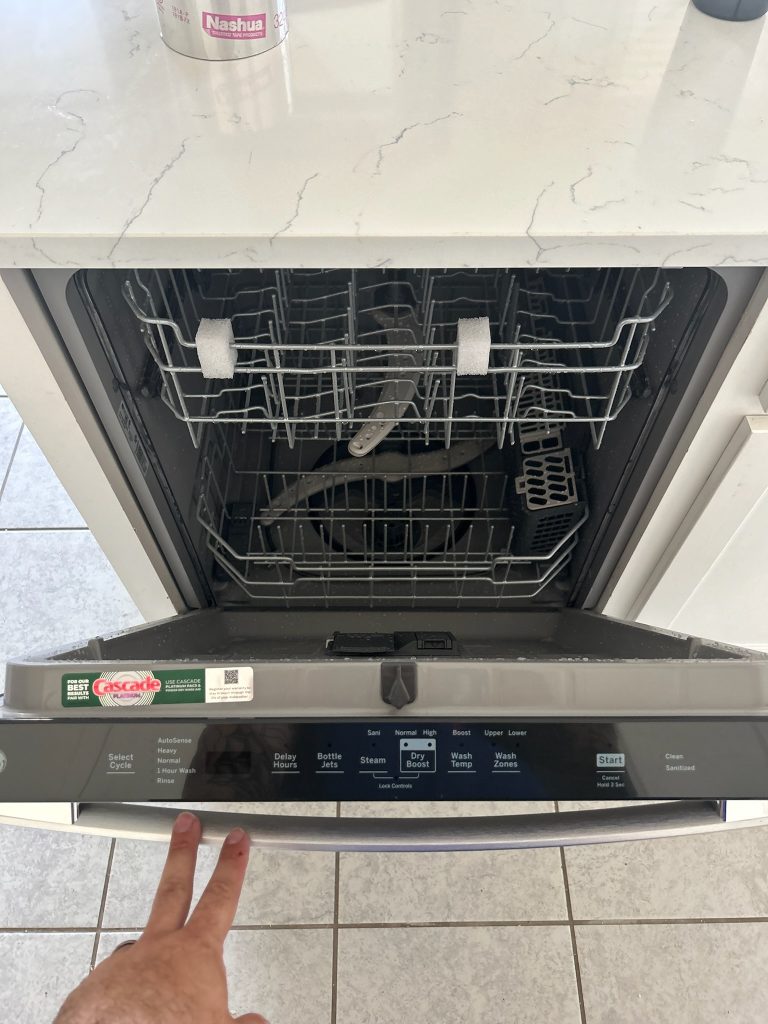
If your McKinney, TX dishwasher leaves water spots, wet plastic, or a damp smell after the cycle, the issue is usually a drying system or rinse-related problem. This guide walks you through the most common causes, what to check at home, and when it makes sense to call for professional dishwasher repair services.
It starts small. You run the dishwasher, unload the plates, and notice they are still wet. Then you spot the bigger issue: puddles in corners, cloudy film, and plastics that never fully dry. In a busy household around McKinney, TX, that becomes more than an inconvenience because you end up re-washing or air-drying everything by hand.
Most people assume the dishwasher “should just dry.” In reality, drying depends on the right water temperature, correct rinse flow, and the appliance’s venting and heating components working together. Below, you will learn how to narrow down what is failing and what a technician typically checks.
Quick Answer
If your dishwasher won’t dry properly, start by checking the rinse aid level, confirm you’re using the right detergent type, and make sure the filter and spray arms are clean. Many “no-dry” complaints come from blocked spray coverage or weak rinse action that leaves dishes too wet. If you still get wet dishes after cleaning and adjusting rinse aid, the drying system may be failing, such as a heater/thermostat issue or venting problems. A professional dishwasher repair technician can test the drying components and restore full cycle performance.
What to Check First
Before you schedule service, do a quick, practical triage. These checks often fix drying problems without replacing parts.
1) Rinse aid and loading
Check the rinse aid dispenser. If it is empty, dishes may stay wet longer and show spots. Also, load items so water can reach all surfaces. Overcrowding prevents proper spray coverage.
2) Filter and spray arms
A clogged filter or spray arm blockage can leave dishes under-rinsed. Pull the bottom rack, inspect the filter, and remove any debris. Confirm spray arms spin freely.
3) Heat and cycle choice
Some cycles use lower temperatures or shorter drying steps. If you recently changed detergents or cycle settings, try the manufacturer-recommended wash cycle for your load, then observe whether drying improves.
Professional observation: Drying problems often show up first on plastics and in corners. If only certain items stay wet, the cause is frequently rinse coverage, loading, or heat/airflow behavior rather than a “broken” dishwasher overall.
Main Things Customers Should Understand
When a dishwasher does not dry properly, the root cause is usually one of these categories. Thinking in categories helps you describe the issue clearly, whether you are troubleshooting or talking with a service technician about related kitchen drainage concerns.
Rinse aid and detergent chemistry
Rinse aid helps water sheet off surfaces so dishes can dry faster. If rinse aid is low, you can end up with droplets clinging to glassware and stainless surfaces. Detergent type also matters: using the wrong product for your dishwasher can reduce rinse performance and leave residue that keeps items wet.
Spray coverage and blocked components
Drying depends on getting dishes properly cleaned and rinsed. If spray arms are restricted by mineral buildup or debris, water may not reach the utensils, lower rack items, or corners. You may notice stains, cloudy film, or wet spots that repeat every cycle.
Temperature and drying heat
Most dishwashers rely on heat to speed drying. If the unit is not reaching the needed wash temperature, items can come out damp even if everything else looks clean. A technician can test the heating-related components that influence cycle temperature and drying performance.
Venting and airflow behavior
Even with good heating, the dishwasher must manage moisture. Some models use a venting approach to help moisture escape after the wash. If venting is restricted, drying can be weak. You might see condensation around the tub or repeatedly damp interior racks.
Model-specific features
Some dishwashers include drying enhancements such as fan-assisted drying or specialized drying steps. If the drying function is not activating, the dishwasher may still clean well but fail to dry items thoroughly.
| What you’re seeing | Most likely cause category | What to try first | When to call for dishwasher repair services |
|---|---|---|---|
| Plastics stay wet or feel tacky | Rinse aid, spray coverage, or drying heat/airflow | Check rinse aid level, re-load for better spray access | If plastics are consistently wet after cleaning filter and confirming rinse aid |
| Water spots on glassware | Low rinse aid or incomplete rinse performance | Refill rinse aid and run a normal cycle with a clean filter | If spots persist even with fresh rinse aid and clean spray arms |
| Damp smell after cycle | Moisture retention and drying performance | Clean filter, wipe out debris, allow racks to vent briefly | If odor returns quickly and drying never improves |
| Wet dishes in corners and lower rack | Blocked spray arms or loading obstruction | Inspect spray arm movement and avoid blocking jets | If coverage issues remain after cleaning and re-loading |
Why This Matters in McKinney, TX
In McKinney, TX, many homes and townhomes run their dishwashers in tight routines, often switching between quick cycles and heavier loads. That can make drying problems more noticeable, especially if the unit is not consistently reaching the temperatures needed for drying. Humidity and daily cooking patterns also mean more grease and starch in the wash water, which can contribute to buildup on filters and spray arms if they are not cleaned regularly.
If you live in Allen, Frisco, Plano, or nearby areas, the same pattern shows up: once spray coverage or rinse performance drops, dishes can come out damp and spotting becomes more frequent. Texas True Appliance Repair focuses on restoring dishwasher performance so your daily cleanup does not turn into extra drying time.
Need dishwasher repair in McKinney?
If you have cleaned the filter and confirmed rinse aid is filled but your dishes still won’t dry, it is time for a professional diagnostic. Texas True Appliance Repair can troubleshoot the drying system and related components.
Schedule dishwasher repairCall: (469) 596-1814
Common Mistakes to Avoid
Dishwasher drying problems can persist when the underlying cause keeps getting “covered up.” Here are mistakes that often delay the fix.
- Skipping rinse aid checks: If rinse aid is empty, drying performance often drops quickly.
- Overloading the racks: Crowding blocks spray jets, leaving water behind in the same spots every cycle.
- Running only quick cycles for everything: Quick cycles may not provide the conditions needed for strong drying.
- Ignoring recurring film or residue: If dishes feel coated, the dishwasher may not be rinsing effectively, which affects drying.
- Cleaning parts only occasionally: Filters and spray arms can build up over time, especially with heavier meal loads.
Customer Checklist
Use this before you call. It helps you identify patterns and gives a technician a clear starting point.
- Rinse aid: Checked and refilled if empty.
- Filter: Removed, cleaned, and reinstalled correctly.
- Spray arms: Inspected for debris and confirmed they spin freely.
- Loading: Re-loaded to avoid blocking the spray jets (especially lower rack and corners).
- Cycle choice: Tried a standard wash cycle and observed whether drying improved.
- Symptoms: Noted which items stay wet (plastics, glassware, silverware) and whether spots or odor appear.
Representative scenario: what a call usually sounds like
A homeowner in McKinney reports that their dishwasher runs normally, but plates are still wet and glasses show spots after every cycle. They have already rinsed dishes before loading, and they are careful not to overload. After checking the filter and noticing it was not as clean as it should be, they clean it and run another load. The dishwasher still leaves dampness, with plastics remaining the worst. At this point, the issue is likely not just routine debris. A technician would typically inspect drying-related performance, heating behavior, and rinse coverage to pinpoint the failing component.
Frequently Asked Questions
Why do my dishes feel wet even after the cycle ends?
Wet dishes after the cycle usually point to a drying system issue or a rinse coverage problem. If rinse aid is empty, water can cling to surfaces longer, causing droplets and dampness. If the filter or spray arms are partially blocked, dishes may not rinse as well, leaving moisture behind. Temperature and airflow behavior also matter. If you clean the filter, verify rinse aid, and re-load properly and the problem repeats, a professional diagnostic can check the drying-related components.
Can using the wrong detergent cause poor drying?
Yes. Detergent affects cleaning and how well the dishwasher rinses away residue. If detergent leaves film or if the rinse performance is not strong enough, dishes can come out damp and spotty. It is worth making sure you are using the detergent type recommended for your dishwasher and avoiding products that do not rinse cleanly. If you recently changed detergents and drying got worse, that is a helpful detail to share with a technician.
What’s the quickest fix I can try for water spots?
Refill the rinse aid dispenser and confirm your filter is clean before running another normal cycle. Water spots often come from minerals and incomplete sheeting-off of water. Also check loading: glasses and bowls should not be blocked so rinse water can reach them thoroughly. If spots persist after rinse aid is refilled and the filter and spray arms are cleaned, the dishwasher may need a drying system or rinse performance inspection.
Why do plastics stay wet longer than plates?
Plastics are more likely to hold moisture because they do not shed water as easily as glass or stainless steel. Even a working dishwasher can leave plastics damp if drying performance is weak or if rinse coverage is limited. If plastics are consistently the worst items, start with rinse aid and loading changes, then inspect spray arms and the filter. If the problem continues cycle after cycle, drying heat or airflow components may be the cause.
Could the issue be related to drainage or another kitchen appliance?
Drying problems are often tied to drying heat, venting, rinse aid, and spray performance. However, poor drainage can contribute to residue and moisture retention, which affects how dry items feel at the end. If you also notice standing water or recurring odors, it may be worth discussing related components during repair. Texas True Appliance Repair also handles other kitchen appliance issues such as garbage disposal repair, which can be relevant in some kitchens.
Get your dishwasher drying like it should
If your dishwasher in McKinney, TX keeps leaving damp dishes even after basic checks, Texas True Appliance Repair can help you troubleshoot what’s actually happening. We focus on getting your dishwasher back to reliable cleaning and drying performance.
Contact Texas True Appliance RepairPhone: (469) 596-1814